

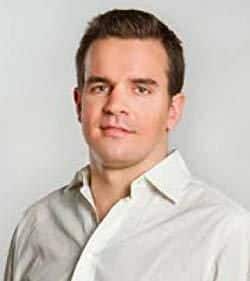

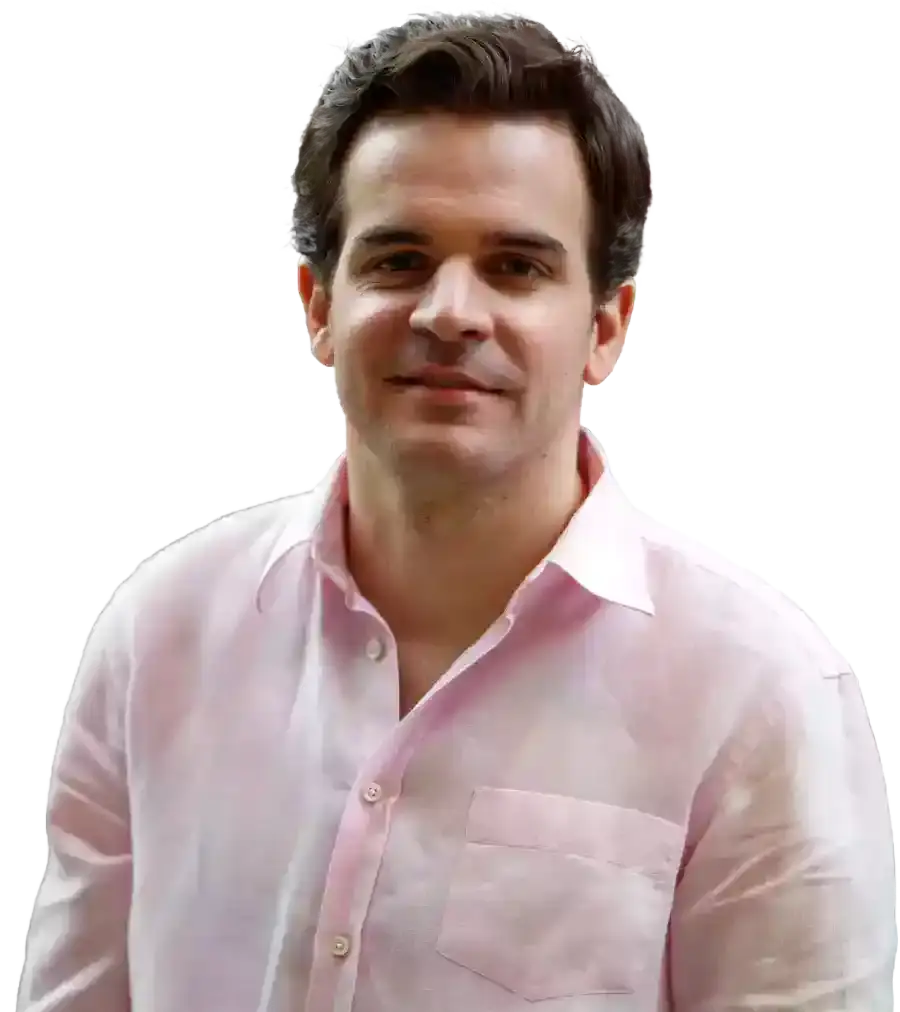
Yuval Golan’s story does not begin with a pitch deck or a carefully engineered career plan. It begins with a six-year-old boy in Israel being told by his mother that his allowance was over, and that if he wanted more toys, he would need to figure it out himself. So he did.
Too young to be hired, Yuval sold his own toys, started running deliveries, and learned before most kids learn multiplication that value is created, not given.
That instinct, sharpened by Israeli culture’s trademark skepticism of authority and intolerance for nonsense, would become the through-line of a life spent building businesses across borders, systems, and uncertainty.
This is the story of how a kid from Startup Nation became a global entrepreneur, survived geopolitical gray zones, navigated China, COVID, capital markets, and ultimately built a platform designed to fix one of the most broken systems in the world: cross-border real estate ownership.
Listen to the full podcast episode and review the transcript here
*FREE DOWNLOAD*
The Ultimate Guide To Pitch Decks
The Israeli Mindset: Question Everything, Build Anyway
Growing up in Israel means growing up surrounded by contradiction. Respect is not automatic, authority is challenged, and everyone has an opinion, usually three. For Yuval, this environment was formative. It produced curiosity, confidence, and an early comfort with friction.
The idea that rules were fixed or careers were linear never quite landed. If something didn’t make sense, you questioned it. If something didn’t exist, you built it. That mindset followed him into the Israeli Air Force, where service is mandatory.
Later, in civilian life, Yuval quickly realized that staying in one place was limiting his perspective. “How can you appreciate where you’re from,” Yuval asks, “if you’ve never lived anywhere else, explored other places, or befriended the local people?”
Leaving Home to Understand It
Yuval left Israel, intending to be gone for a year and a half, but he stayed much longer. A job in Italy came first, then a one-year exchange in the Netherlands, followed by Finland, and travel across Europe.
This was 2009—before smartphones ruled attention—and Europe was still buzzing culturally, socially, and intellectually. The people Yuval met during those years would go on to build careers across the globe, creating what he describes as something rare: a network that makes the world feel smaller.
Wherever Yuval went, he found friends, and wherever he landed, he found context. That global exposure permanently rewired how he thought about markets, opportunity, and scale. But nothing prepared him for what came next.
China: The Market No One Told Him About
A wedding invitation changed everything. In 2009, Yuval’s brother invited him to his wedding in mainland China. Like many Western-educated travelers, at the time, Yuval arrived with outdated assumptions. He expected to see rice fields, rural imagery, and a developing economy.
Instead, he landed in Beijing, Hong Kong, and Shanghai, and saw Ferraris, skyscrapers, and a booming economy amid a global financial crisis. No one had told him this story. Yuval made a decision almost immediately: Europe was great, but China was where the opportunity was.
With limited capital and no meaningful safety net, Yuval moved to Hainan Province, a region roughly the size of Belgium, with 10 million people, almost no foreigners, and very little English spoken, and launched his first company.
Raise Capital Smarter, Not Harder
- AI Investor Matching: Get instantly connected with the right investors
- Pitch & Financial Model Tools: Sharpen your story with battle-tested frameworks
- Proven Results: Founders are closing 3× faster using StartupFundraising.com
Building in the Unknown
The business started as a services firm, helping foreign companies enter the Chinese market, later expanding into M&A advisory. It was profitable, self-funded, and growing. At the same time, because seriousness without joy is unsustainable, Yuval launched China’s first electronic music festival.
That move, unrelated to the core business, introduced the 20-something to politicians, public figures, and power brokers in a province with only a few hundred foreigners, most of whom were English teachers. However, visibility has a cost.
One evening, Yuval took an unusually long nap. When he woke up, his laptop and phones were gone. His passport and wallet were untouched. Doors locked, windows closed, and surveillance footage mysteriously erased.
Yuval used a spare computer to alert his friends about the possibility of his disappearance. Thinking back to a week prior, he recalled that an office he had been collaborating with had visited him for coffee. When Yuval returned to his office, suspecting foul play, he saw that his hard drive had been burned.
Next, he recalled that a few weeks back, they called him in to the visa office for a service-level review. Then came the questions and the meetings, where Yuval was grilled about his relationship with the embassy and the consulate, and his links to his former military service, which is mandatory in Israel.
The subtle message delivered with chilling clarity: If you were someone we needed to find, we know exactly where to find you — when you’re asleep. Yuval moved into a hotel for two years, but eventually, he realized it was time to leave.
China had given him opportunity, experience, and success, but the geopolitical winds were shifting, and the personal risk calculus had changed.
COVID, Chaos, and a Global Mask Operation
By late 2019, Yuval had completed an EMBA split between China and the U.S. His company was doing well and generating profits, and was now more of an investment vehicle for him. But something didn’t feel right, so he sold his apartment in Hainan and put his life in Shanghai in storage.
After leaving China, Yuval was gearing up for a well-deserved break. He planned his usual annual trip to Niseko, Japan, where he had always enjoyed himself with his EMBA friends who introduced him to this wonderful place. When COVID hit, Yuval was in Japan with friends, and calls started coming in from China.
Hospitals needed masks, governments were overwhelmed, supply chains were frozen, and corruption was rampant. Yuval didn’t want to enter medical logistics, but he couldn’t ignore the reality that if someone with his network couldn’t get supplies, vulnerable people had no chance.
Yuval went global, taking flights across continents, only to face dead ends, scams, and near-misses. He recalls a surreal moment in Uzbekistan involving multiple vehicle transfers, a suspicious warehouse, and a narrow escape.
Eventually, Yuval secured 11.5 million masks. He donated the profits to hospitals, orphans, and relief organizations. What stayed with him wasn’t the heroism; it was the system failure.
Seeing the Pandemic Before the World Did
Initially, Yuval had planned to return after winter. Watching China, the world’s largest exporter, shut down, Yuval connected dots others hadn’t yet. No logistics meant no materials, shortages, and no construction workers.
Yuval realized that a real estate shortage was coming quickly, which would lead to inflation and, in turn, to rising interest rates. He had to move quickly.
Yuval attempted to buy real estate across six countries but failed due to regulatory hurdles, foreign-exchange constraints, and compliance issues. Greece was the exception, where deals closed in just seven months.
Yuval also bet on New York, specifically Williamsburg, while the city was being declared “dead.” To him, that narrative made no sense. Capital institutions like BlackRock, Blackstone, JP Morgan, and Goldman Sachs don’t disappear, and if they did, our money would be worthless anyway.
Yuval was confident that cities with gravity rebound. So he bought 80 condos among friends, a deal which closed in eight months.
The Problem That Became Waltz
After China, after COVID, after real estate deals across continents, one insight became impossible to ignore: The global real estate system is fundamentally broken for non-locals.
Yuval realized that foreign buyers are opaque to banks as their documents don’t fit, their tax records are incompatible, and their risk is misunderstood. As a result, capital is excluded, not because it’s bad, but because it’s unfamiliar.
Yuval did what he always does. He went to the source and spoke to securitization desks on Wall Street. He also spoke to regulators, global investors, the folks at Blackstone, BlackRock, Nomura, and Citi, and people trying and failing to buy property across borders.
The answers were consistent. Institutions don’t fear foreigners; they fear unstandardized data. Further, regulators don’t fear capital; they fear compliance gaps.
They were primarily concerned about people who didn’t pass identity verification, anti-money laundering checks, and the threat of drug dealers and armament traffickers.
On their part, buyers don’t want complexity; they want an end-to-end solution. Big investors were willing to pay a premium for services that enable them to complete deals by signing documents remotely with just a click.
Yuval noted that the US real estate industry has multiple layers and is worth $50T. Upon researching, he found that purchasing real estate is a complex process with many steps. That insight became Waltz.
Waltz: Turning a 50-Trillion-Dollar Mess Into Infrastructure
Waltz is not a real estate startup; it’s infrastructure. The platform standardizes identity, compliance, capital movement, entity formation, lending, insurance, and servicing so a global buyer can purchase real estate in the US with the simplicity of an e-commerce transaction.
Waltz executes KYC in seconds and clears AML quickly. The platform also enables the formation of entities instantly and the compliant movement of capital. Loans can be originated and sold directly to secondary markets. It also handles Insurance and integrates banking.
Citing a Practical Example
Yuval explains the process in detail. For instance, a user based in any country worldwide, such as Spain, Singapore, or London, wants to convert currency to the US. Traditionally, it costs a lot of money, with both inbound and outbound banks needing extensive information.
Waltz sets up with two API accounts, one in the user’s home country and the other in the US. It fully controls the compliance mechanisms. The user wires their currency, and Waltz executes the currency exchange and clearance. The money reaches the US as it has already been cleared.
In the meantime, Waltz’s database is scanned by AI-Agents to identify all property, user, compliance, and secondary-market requirements, and the relevant document requests are sent to the user to comply with them, easing their process.
Waltz then deploys the appraiser to confirm that the property the user wants to purchase actually exists and to verify its value. The platform also originates loans sold to the secondary market directly through BlackRock, Apollo, hedge funds, and other market participants.
If the user does not have an SSN, insurance companies will not issue them coverage. Waltz also handles property insurance through its subsidiary, which sells insurance to the user and enables them to close the loan deal.
The most important benefit is that the user does not need to interact with anyone directly and benefits from Waltz’s economies of scale. They can leverage the Waltz platform for banking, insurance, wire transfers, future debit cards, CPAs, and any other services they need.
Waltz ensures that every facility it provides is highly fragmented and compliance-ready. The entire process does not require hand-holding and progresses seamlessly with minimal friction or chaos.
As a result, Waltz gets repeat customers and referrals and is scaling quickly.
Fundraising in Easy Times and Brutal Ones
Yuval raised his seed round in late 2021, during a period when capital was broadly accessible, and fundraising conditions were unusually favorable.
His later raise came in early 2024, in a far more constrained environment marked by high inflation, reduced real-estate transaction volume, and a pullback from fintech and proptech investors. The difference wasn’t luck; it was narrative discipline.
Investors asked questions like, “What problem are you solving?” “Why are you uniquely qualified?” “What does your past say about your future?” “How big is the market and how do you actually win it?” “What is the total addressable market, and how will you nail it?”
Storytelling is everything that Yuval Golan was able to master. The key is capturing the essence of what you are doing in 15 to 20 slides. For a winning deck, take a look at the pitch deck template created by Peter Thiel, Silicon Valley legend (See it here) where the most critical slides are highlighted.
Remember to unlock the pitch deck template that founders worldwide are using to raise millions below.
Waltz has raised close to $50M in equity and secured warehouse facilities by operating like a financial institution from day one with audited financials, ESG frameworks, governance, and data discipline. In Yuval’s words, it’s a startup that moves fast but behaves like a conglomerate.
As he points out, for equity, storytelling matters, but for debt, performance matters more. Warehouse lenders want proof, data, audited financials, projections, and track records, with zero delinquencies.
Yuval built for both from day one. He underscores the importance of in-person meetings over remote Zoom meetings. He vets his investors carefully, ensuring that they will be “amazing partners.” Yuval and his team and investors built the company in a way that it is ready for an M&A or an IPO.
The Long View
Yuval’s vision for Waltz is simple and ambitious. He envisions a world where global capital moves seamlessly, compliantly, and invisibly, and where Waltz works automatically with no compliance, AML, or funding issues.
Yuval looks forward to a time when users don’t need sales calls, as trust is deeply embedded. Waltz’s puffin logo is recognized instantly, similar to Apple’s. People are onboarded automatically with no escalations. They can check the Waltz dashboard to get access to information instantly.
And when that world exists? Yuval will probably build something else.
Advice to His Younger Self—and to Founders Reading This
If Yuval could give his younger self a piece of advice, he would suggest, “Don’t build alone. Build with someone you trust deeply; someone you’ve been through crises with.” Secondly, listen more, especially to people who’ve lived longer than you.
Yuval would have learned languages early because he can now see that they open doors faster than capital. And when people ask for help, help them—because someone once helped you.
Yuval Golan’s journey is not about luck or bravado. It’s about pattern recognition, courage, and the willingness to operate where systems fail. The world is messy, but builders who understand that and design for it change everything.
Listen to the full podcast episode to know more, including:
- Value isn’t granted, it’s created—Yuval’s first “startup” started at six when allowance ended, and hustle began.
- The Israeli “zero-BS” mindset (question authority, challenge assumptions, build anyway) becomes a durable founder advantage in messy markets.
- Leaving home expands opportunity. Living across Europe turned travel into perspective and relationships into a compounding global network.
- China proved that upside often lives where your mental model is outdated, but visibility in opaque systems can carry real personal risk.
- COVID exposed how broken supply chains and institutions really are, and decisive founders can create impact by executing when others freeze.
- Waltz exists because institutions don’t fear foreigners; they fear unstandardized data and compliance gaps—standardization plus KYC/AML unlocks capital.
- Fundraising is context-dependent: equity rewards narrative clarity and founder-market fit, while warehouse debt demands audited performance, governance, and proof of zero delinquency.
SUBSCRIBE ON:
 iTunes
 Google Play
 Stitcher
 TuneIn
 RSS
RSS SoundCloud
 Spotify
Keep in mind that storytelling is everything in fundraising. In this regard, for a winning pitch deck to help you, take a look at the template created by Peter Thiel, the Silicon Valley legend (see it here), which I recently covered. Thiel was the first angel investor in Facebook with a $500K check that turned into more than $1 billion in cash.
*FREE DOWNLOAD*
The Ultimate Guide To Pitch Decks
Remember to unlock for free the pitch deck template that founders worldwide are using to raise millions below.
Podcast: Play in new window | Download
Subscribe: Apple Podcasts | Spotify | TuneIn | RSS | More
Facebook Comments