

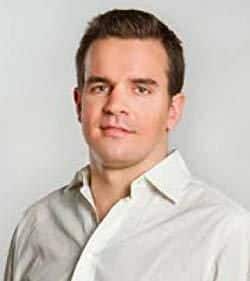
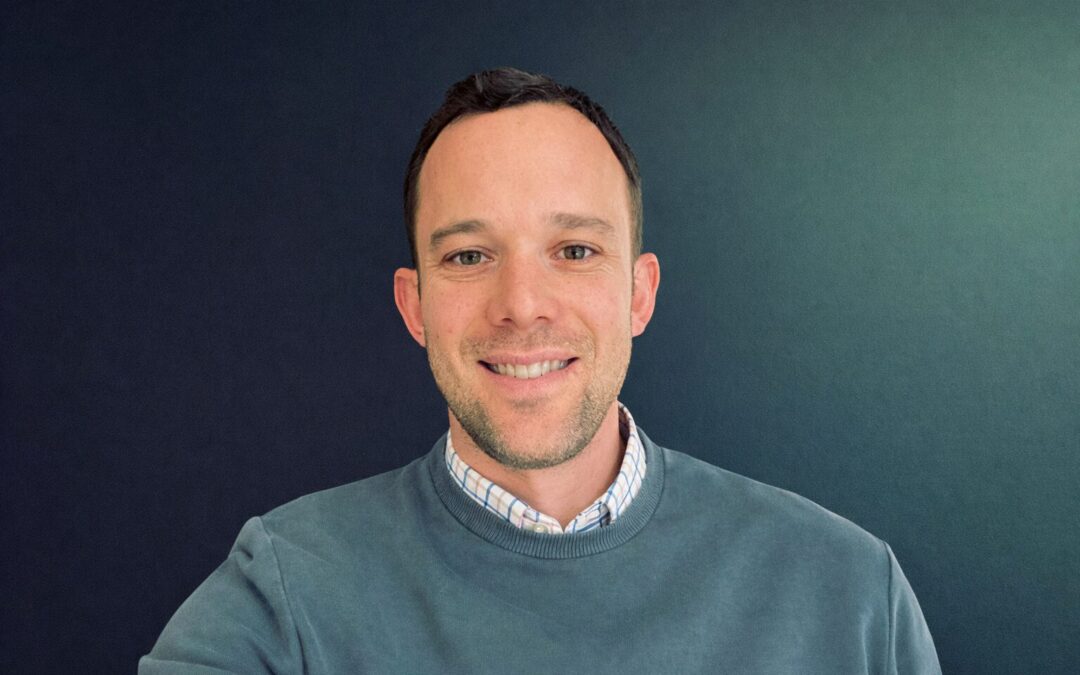
What does it take to go from $100K in startup capital to $100M in annual revenue—and finance and execute $750M worth of projects along the way? For Dylan Rudney, founder of Verano Energy, it isn’t just about vision or timing; it’s execution and adaptability.
Verano Energy has raised funding in a combination of debt and equity from investors, such as Societe Generale, Scotiabank, Sumitomo Mitsui Banking Corporation, Lumina Capital Management.
In this episode, you will learn:
- Execution—not capital or vision—is what turns $100K into a $100M business.
- Emerging markets reward operators who can navigate complexity, not avoid it.
- In infrastructure, de-risking projects creates far more value than building financial models.
- Owning more of the value chain is what unlocks exponential growth.
- Solar alone isn’t enough—storage is what makes renewable energy truly competitive.
- The biggest opportunity isn’t energy itself but powering AI and data infrastructure.
- Control your costs early, or they will control your decisions later.
SUBSCRIBE ON:
 iTunes
 Google Play
 Stitcher
 TuneIn
 RSS
RSS SoundCloud
 Spotify
Keep in mind that storytelling is everything in fundraising. In this regard, for a winning pitch deck to help you, take a look at the template created by Peter Thiel, the Silicon Valley legend (see it here), which I recently covered. Thiel was the first angel investor in Facebook with a $500K check that turned into more than $1 billion in cash.
*FREE DOWNLOAD*
The Ultimate Guide To Pitch Decks
Remember to unlock for free the pitch deck template that founders worldwide are using to raise millions below.
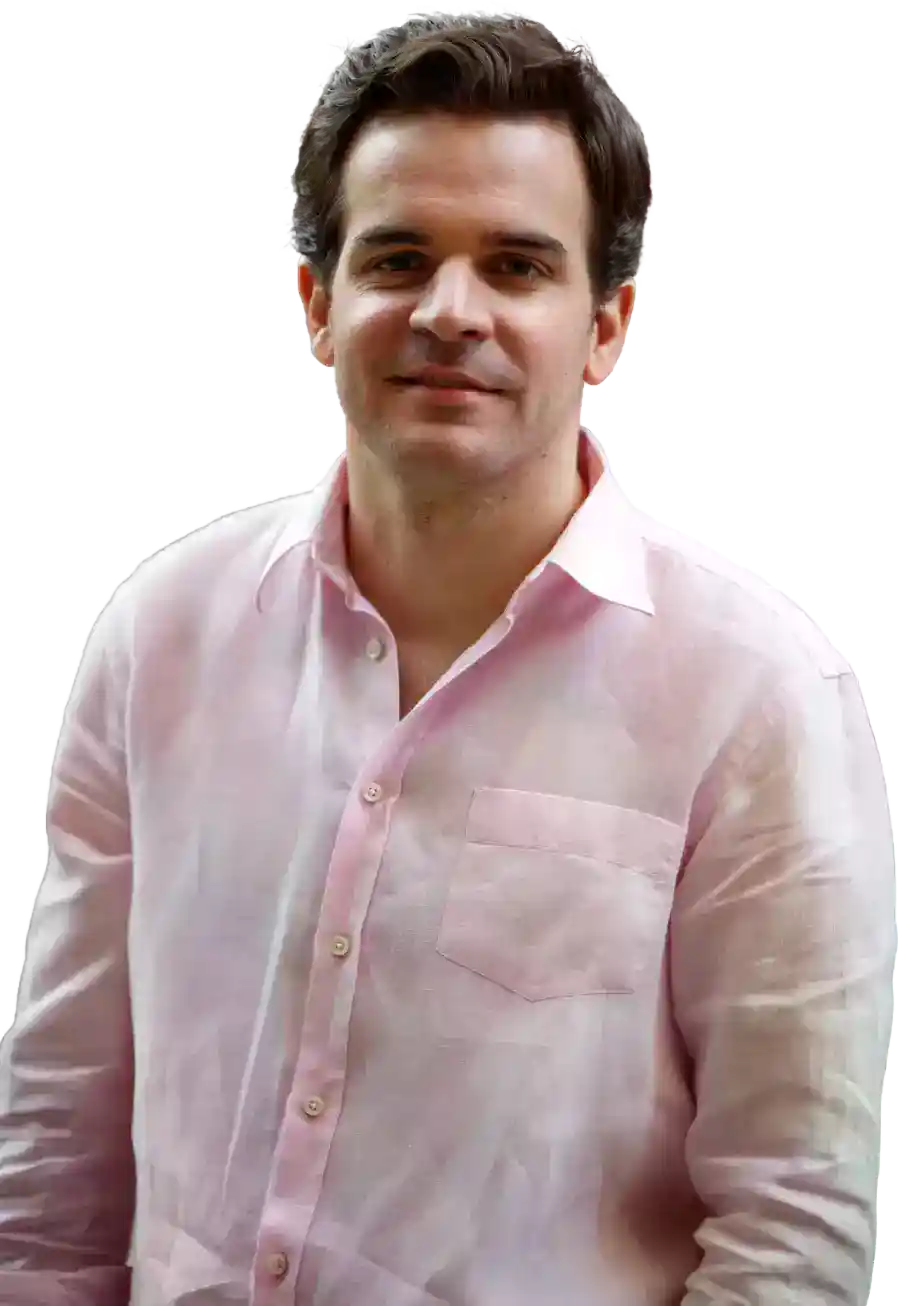
About Dylan Rudney:
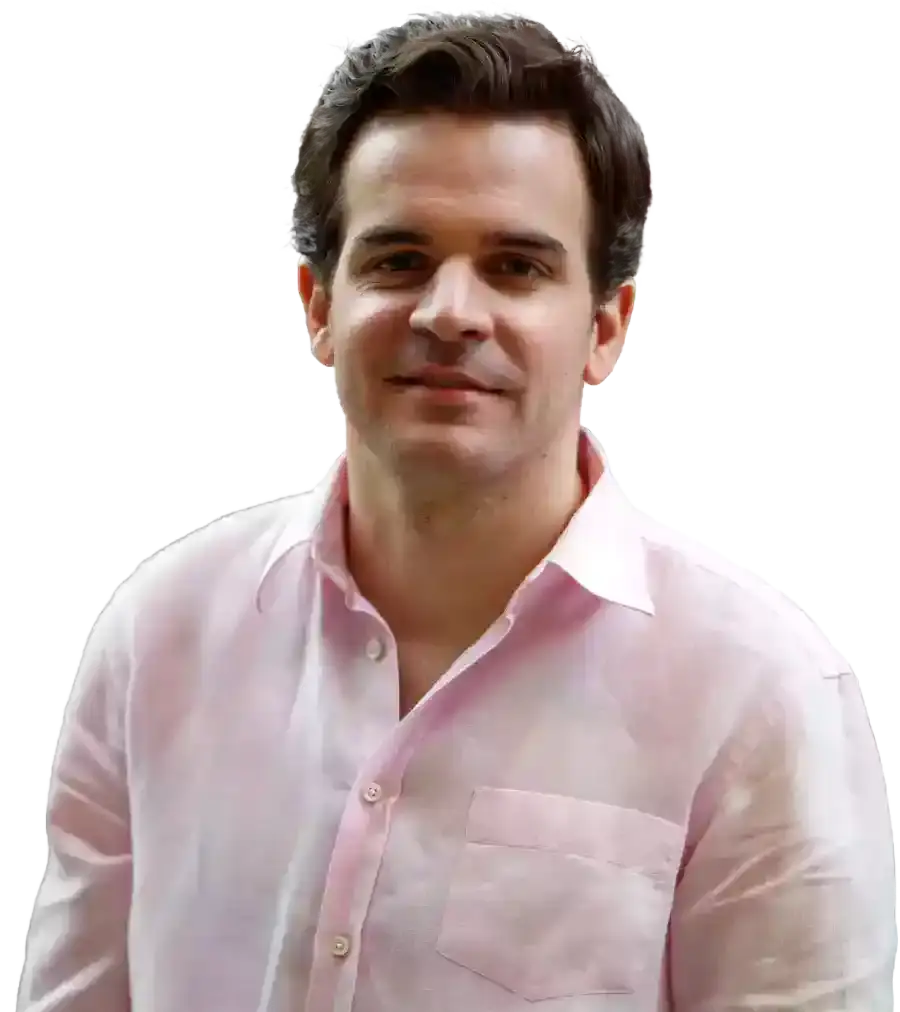
Dylan Rudney is of American and Chilean nationality and the founder of Verano Energy. He has over 14 years of experience in the energy industry. He possesses extensive expertise in the development and financing of renewable energy projects, having played a leading role in the business’s expansion through project development and raising over $1 billion dollars to finance projects.
Raise Capital Smarter, Not Harder
- AI Investor Matching: Get instantly connected with the right investors
- Pitch & Financial Model Tools: Sharpen your story with battle-tested frameworks
- Proven Results: Founders are closing 3× faster using StartupFundraising.com
Connect with Dylan Rudney:
Read the Full Transcription of the Interview:
Alejandro Cremades: All righty. Hello, everyone, and welcome to the DealMaker Show. Today, we have a really amazing founder joining us. I mean, we’re talking about a founder who got started with $100,000—that’s it.
Alejandro Cremades: And last year, they did $100 million in sales. They’ve raised $750 million for their projects. I mean, it is unbelievable. We’re going to be talking about the building, the scaling—you name it.
Alejandro Cremades: I think the conversation today is going to be quite inspiring. And without further ado, let’s welcome our guest today, Dylan Rudney. Welcome to the show.
Dylan Rudney: Hey, thanks, Alejandro. I appreciate the time.
Alejandro Cremades: So, born in D.C., you’ve been around quite a bit. You’ve traveled all over the place, all over the world too. So tell us, how was life growing up for you?
Dylan Rudney: Yeah, born in D.C., grew up in a small farm town in Iowa. So it’s been interesting. From Iowa, I went to school in California. I’ve lived in Colombia, Mexico City, and I’ve been based here in Chile, in Santiago, for the last 13 years.
Alejandro Cremades: So give us a little glimpse because you’ve traveled quite a bit—whether it was D.C., then Farmington, then California. You’ve been all over the place, and now, obviously, Latin America.
Alejandro Cremades: As a kid, those changes may have been a little tough, but they also build you up. You had to start again, make friends, and things like that. So how do you think that shaped who you are?
Dylan Rudney: Yeah, I think what really changed me was my introduction to Latin America. That’s been where my focus has been and where I’ve spent a lot of time.
Dylan Rudney: And it actually happened by chance. I didn’t even speak a word of Spanish coming out of high school. I went to school in California, where there’s obviously a lot of Spanish. I remember some of my university friends used to make fun of me in Spanish.
Dylan Rudney: So I said, I have to learn at least a few basics, right, to defend myself. I started taking some Spanish classes and really fell in love with it. Then, as I was studying business and finance, I saw the opportunities in Latin America and decided that was where I wanted to focus my time.
Dylan Rudney: And like you said, I moved around a bit. I wasn’t scared of that. I eventually moved to Chile by myself to start this business.
Alejandro Cremades: So Latin America, out of all places—that’s quite far from the U.S., especially Chile and Mexico, where you were.
Alejandro Cremades: What do you think really captured your attention about Latin America? What was so exciting about the region for you?
Dylan Rudney: Yeah, I think it kind of chose me as well. My first job was in Mexico City at PricewaterhouseCoopers. Later, I was recruited into private equity, which was more of an angel investor group investing in South America, and they had an office in Chile.
Dylan Rudney: So it started because I was sent there and had the chance to see Chile and understand what it was.
Dylan Rudney: It’s a market I knew almost nothing about. And for those who know Chile, when you land here, it’s not at all what you expect. It’s a beautiful, very well-developed country. Services work, the economy works—it’s a level playing field.
Dylan Rudney: For me, it’s always been a land of opportunity for a foreigner—a very serious market. So we started in Chile, and from here, we’ve grown a lot. A lot of our growth has been based on opportunities in other markets.
Dylan Rudney: But the consistency we’ve had has been the Chilean market. It’s been an incredible learning experience for us as a company. Personally, it’s a place I love. I love living here—it’s very comfortable.
Dylan Rudney: I can’t say enough good things about Chile and the experience I’ve had here, both personally and professionally.
Alejandro Cremades: What do you think about the private equity experience? Because you went from being on one side of the table to the other, now as an operator.
Alejandro Cremades: What do you think those PE years really taught you?
Dylan Rudney: It was very interesting. The group I was with had made money in tech in the early 2000s, so they came from a strong finance background—very successful individuals, but with no experience in energy or infrastructure.
Dylan Rudney: We learned the hard way that executing projects on the ground is very different from running a financial model. We all came from finance, investment banking, or similar backgrounds, where it’s easy to present a beautiful model and projections of an incredible business.
Dylan Rudney: But when you actually get into execution, you realize that a good project and strong execution are more valuable than the money itself. There’s always money.
Dylan Rudney: It’s an asset-driven business, and good assets are driven by strong offtake agreements and long-term contracts. That’s what I’ve focused on in building this company.
Alejandro Cremades: So tell us about the industry and the company. What was the immediate step that pushed you to take action and start Verano Energy?
Alejandro Cremades: Because that’s quite the leap—taking ownership of your future and moving away from a stable job, especially after private equity and PwC.
Alejandro Cremades: What really pushed you to take that leap of faith?
Dylan Rudney: I’ve always been attracted to entrepreneurship. I come from a family of entrepreneurs—my grandfather and my father.
Dylan Rudney: In every job I’ve had, I’ve asked myself: could I do this? Could I replicate this? How can I do this on my own?
Dylan Rudney: At the time, I was working on mini hydro, run-of-river projects. The financial models looked great, but execution was extremely difficult. You have community issues, environmental issues—you’re literally intervening in a river.
Dylan Rudney: Construction and civil works are also very difficult.
Dylan Rudney: Around 2012, I saw the cost of solar dropping very fast. Compared to hydro or thermal plants—coal or gas—which were increasingly hard to get approved, solar made more sense.
Dylan Rudney: I said, if this trend continues, this is the way to go.
Dylan Rudney: I presented it at the company I was at, but they weren’t interested. So I said, I have the contacts, I know how to do this, I’ve learned along the way, and I can do this with a small amount of capital plus my savings.
Dylan Rudney: And I did. I took the leap. I don’t know if it was smart at the time, but it worked out. Looking back, I feel good about it.
Alejandro Cremades: So for people listening, what ended up being the business of Verano Energy? How do you guys make money?
Dylan Rudney: The business has evolved a lot. What we started with, we don’t even really do anymore. One of the major lessons I’ve learned is the importance of adapting and moving quickly.
Dylan Rudney: We started as a pure renewable energy developer, similar to real estate developers. You do the early, high-risk work—locking up land through leases or options, getting permits, securing interconnection, environmental approvals, and municipal permits.
Dylan Rudney: These are things funds don’t want to spend time on because they’re risky. So if someone like me de-risks the project, they can come in with larger capital and pay a multiple—five, ten, even twenty times the initial investment.
Dylan Rudney: That’s how we started. We developed projects in Chile, where permitting is challenging, with a very small amount of money.
Dylan Rudney: We started with $100,000 from friends and family, structured as preferred equity because I wanted to retain control and eventually buy them out.
Dylan Rudney: Which we did. A few years later, everyone was happy, and we retained 100% ownership.
Dylan Rudney: We started developing small solar projects in a market where solar was just emerging. Costs were dropping to the point where, during the day, solar could compete with other energy sources.
Dylan Rudney: Chile imports all its fuels—coal, LNG—so energy is expensive. Solar was just reaching parity during the day, which is an important point.
Dylan Rudney: We developed two or three projects. One failed. After about a year, we ran out of the $100,000.
Dylan Rudney: I had to take out another $65,000 loan. After about two years, we finally made our first sale—selling two projects to a fund.
Dylan Rudney: With that, we repaid the preferred equity, paid off the debt, and reinvested what was left into larger projects.
Dylan Rudney: We later expanded into other countries.
Dylan Rudney: And then, as time went by—please stop me if I’m going into too much detail.
Alejandro Cremades: Man, keep going.
Dylan Rudney: We evolved. We realized that while development had high margins, we were losing a lot of the value. We wanted to build and operate as well.
Dylan Rudney: Becoming a bankable EPC company is very difficult because project finance banks are conservative.
Dylan Rudney: We fought hard to get our first EPC deal. Eventually, we got a small distressed project where we were the only option. They had to go with us or lose the project.
Dylan Rudney: We built it under tight timelines. That proved we were bankable.
Dylan Rudney: Once we had developed, built, and operated a project, I went out and sold that story.
Dylan Rudney: I said, come to Latin America with a checkbook—we’ll handle everything.
Dylan Rudney: And that’s when we started growing like crazy.
Alejandro Cremades: And what was that pivot, and how did it impact growth?
Dylan Rudney: The pivot was moving from smaller, high-margin development to larger, lower-margin construction.
Dylan Rudney: Development is about 10% of revenue. Construction is about 90%.
Dylan Rudney: So we combined both—sell the asset and build it, then operate it for recurring revenue.
Dylan Rudney: That allowed us to guarantee large construction revenue—about 10x what we were doing before.
Dylan Rudney: That’s when we started growing exponentially. We sold one project, then three, and eventually over 20 projects in a $200 million deal.
Dylan Rudney: That’s when exponential growth really began.
Alejandro Cremades: It sounds like the early days were crazy. As you navigated Latin America, what were the key differences compared to the U.S.?
Alejandro Cremades: Whether in execution, culture, hiring—what did you have to adapt to?
Dylan Rudney: Well, to be honest, I haven’t done much work in the U.S. When I was based here, I was mostly focused on Chile at the time and a couple of other markets we were exploring. So I could probably better compare what we do in Chile to what we’ve done in Argentina. We have projects operating in Argentina, which is going to—let’s put it this way—every market has its own set of challenges.
Dylan Rudney: Argentina fluctuates a lot. It’s very difficult to find investors willing to put capital inside of Argentina because you never know when that will be restricted and you can’t get it out. Luckily, we were able to flip some assets there and then exit. We’re in Peru too, and Peru has a whole other series of problems or difficulties.
Dylan Rudney: Especially, I would say, land in Peru and title studies are very difficult. You also have a lot of political instability in Peru, although what I think is interesting about that market is that the economy seems almost unfazed by what’s happening in government. It’s amazing. I mean, you can have three presidents within a month and nothing changes at all in your business, right?
Dylan Rudney: And then you have Colombia, which for us has been a—let’s put it this way—it’s been a very big challenge on our patience in a lot of ways. It tends to move at its own speed, although Colombia is an amazing opportunity, one of what we’re calling our island markets that we see as a unique opportunity.
Dylan Rudney: And then me coming as an American, I would say culturally, different markets work more or less like where one is from.
Dylan Rudney: Chile, to me, has a similar culture to the U.S. when doing business, which I would say is a relatively cold, straightforward way of doing business, and I’m actually quite comfortable with that. Other markets tend to be a little bit more emotional, a little bit more personal.
Dylan Rudney: If you don’t stop at the beginning of the call and ask how everyone’s doing, you’re not allowed to start asking questions yet, right? So little things like that have been learning experiences along the way.
Alejandro Cremades: Obviously, you guys have raised for the CAPEX on the projects about $750 million. How do you go about raising money for those projects as part of the Verano Energy operation? What does that look like?
Dylan Rudney: Yeah, so this has been our most recent shift, which I’m really excited about. We started by selling projects. So that’s kind of a normal sales process, which we would either do on our own or we’d hire an investment bank to help us run a competitive process.
Dylan Rudney: And then we started selling the assets to funds, you know, with the construction, with kind of the turnkey. That we tended to do more with different investment banks in the region, either boutique or larger, that would basically put us in front of the top, I don’t know, maybe 10 PE or infrastructure firms or strategic investors that are interested in these kinds of assets.
Dylan Rudney: Usually, there aren’t a lot for each market. Then what we’ve done most recently, which I’m most excited about, is around three years ago, we said, you know, if we’re able to do everything—if we’re able to source the projects, get the permitting, do the engineering, build, be a bankable EPC firm, operate the projects, close the PBA or the offtake agreement with the buyer of the energy, and we also know how to finance the project finance—
Dylan Rudney: Why are we giving so much value to the equity rather than just raising it ourselves and doing it ourselves? And that was when we decided we wanted to become an IPP, or an independent power producer, and compete with the biggest guys around, right? The largest energy companies.
Dylan Rudney: So we challenged ourselves to play on the bigger fields and in the big leagues. And we found a fund, which was a Brazilian debt fund that came in and supported us. It’s called Lumina Capital.
Dylan Rudney: A really smart group of young guys out of São Paulo. And we raised $100 million of growth equity to fund projects. And we were able to, at that point,
Dylan Rudney: control the entire process from the very beginning until the operation or the flip of the asset. And that was very cool, and we were able to grow our internal pipeline by almost 10 times in two years.
Dylan Rudney: So now, rather than selling our assets at some stage of the development process, we’re able to get to operations, be selling energy with a long-term cash flow guaranteed, and then look at opportunities of divesting. And by doing that, we get access to institutional capital through project finance.
Dylan Rudney: Project finance is a way that we’re able to finance the construction at basically much cheaper rates than you would ever find for equity or MEZ or dev funds or anything. So what we try to do is lever as much as we can with banks through project finance.
Alejandro Cremades: So then, in terms of the way that you guys are seeing things unfolding with all this craziness around AI, how do you see that coming through, and how do you guys see embracing it for, let’s say, the future of Verano as well?
Dylan Rudney: Yeah, look, I consider myself a fortunate guy because I feel like I’m kind of in the right place at the right time with this industry. One thing I often say that surprises people is, as someone who founded a solar company, I don’t believe solar is a great solution on its own.
Dylan Rudney: I never have. In markets like the U.S., I think solar generally tends to increase the cost of electricity and it creates problems with the grid.
Dylan Rudney: And that’s because I kind of like to think of two different types of markets. You’re either an exporter or an importer of energy. Exporters of energy, like the U.S., which exports gas,
Dylan Rudney: don’t really need renewables. Gas tends to be a cheap, very quick-response, and relatively clean energy, for example. And then you have the importers, and this is where we saw the opportunity, which would be Chile or Colombia or Peru, once you get to the threshold of how much gas is locally available.
Dylan Rudney: Where you’re importing, and at that point your price is usually around doubled right from the beginning if you’re having to import coal or gas, right? And for those markets, what we started with was saying, let’s sell solar because during the day we can lower their cost of energy, and that’s worth it to some people.
Dylan Rudney: I always like to say, forget about green marketing. I’m not here to hope that I get a subsidy. I’m here to sell the cheapest energy possible. I happen to sell a clean product, which makes it easier for me to sell. It’s better for the world.
Dylan Rudney: Great. But I actually want it to be the best as well. That’s important to us. And when I say best, I mean the cheapest, right? Because an electron is an electron. So we came to these markets that we focused on, where we could beat them on their own terms.
Dylan Rudney: And what happened was that you get to the point where you get a certain saturation of solar, right? And once you get to that certain saturation point, which is maybe 30%, you’re no longer adding value to the system by putting more solar into the system. You’re actually creating a problem for the system because you have to be able to ramp up in the afternoon, ramp down in the morning, and that creates a problem. So what we originally looked at was green hydrogen, and particularly green ammonia, and we said if we can export green ammonia, it’s a way that you can take advantage of cheap electrons and actually export them—cheap green electrons, right?
Dylan Rudney: And this was all the talk in energy two or three years ago, that green ammonia and green hydrogen were going to change the world. Now, unfortunately, that didn’t happen. I would say that there was a huge wave of excitement around green hydrogen and green ammonia, which unfortunately didn’t really… There were no offtakers, right? The governments weren’t willing to subsidize, or the companies weren’t willing to switch to a green product.
Dylan Rudney: And they saw it as risky. So as that market didn’t work, we were so lucky that batteries came along, and batteries, for me, are a game changer. And again, it’s not that it’s a new technology. It’s the same battery technology that’s always been there, but the cost of batteries has dropped at an incredible rate while solar has also gotten cheaper.
Dylan Rudney: And that, what I would say is kind of a one-two punch, has allowed us to deliver 24/7 energy for the first time at a truly competitive rate.
Dylan Rudney: And us personally, I mean, we just sold a 24/7 contract, to go back to public knowledge. And it was the first time that I’ve seen that, on a free-market basis, solar and batteries beat conventional imported fuel. And that, for me, is so exciting.
Dylan Rudney: And so then, to your question about AI and data centers, again, we’re lucky to be in energy generation at a time like this. Everyone’s talking about the boom of AI and data centers. It’s a great opportunity, but I feel like an almost better opportunity is whoever’s going to power them.
Dylan Rudney: Right. And I think I’m not the only one to think this. You look at what BlackRock did with AES a couple of weeks ago. I mean, it’s the power behind these that is actually a simpler business plan, if you ask me, based more on execution of large-scale generation assets, right?
Dylan Rudney: Where there happens to be a lot of demand from these companies that want clean energy. Because if you want clean energy and you need 24/7 power, what didn’t used to be possible—solar delivering that energy—is now becoming possible when you have batteries, right?
Dylan Rudney: So to close out my long-winded idea, what we used to think could happen with hydrogen or ammonia, in terms of exporting it, we now think in the future you can export cheap renewable energy through AI. So at the end of the day, as long as you have certain conditions—and you need certain conditions to be met, right?—you need to be able to have the infrastructure to actually do it, you know, the underwater cables to be able to get around the world, which luckily Chile has a lot of these ideas or infrastructure projects happening.
Dylan Rudney: If we’re able to use cheap 24/7 green energy to power AI centers and essentially export renewable energy through artificial intelligence, that’s a very cool opportunity for how Chile could lead the world. Chile, of course, has the highest solar radiation in the world.
Dylan Rudney: So we feel like we’re in the right place at the right time, and we’re really excited about that.
Alejandro Cremades: So let’s say I put you into a time machine, Dylan, and even better than that, let’s say you go to sleep tonight and you wake up in a world where the vision of Verano Energy is fully realized. What does that world look like?
Dylan Rudney: I would say that one thing that needs to happen here, and one thing we’re working on quite a bit now, is that we need longer-term capital. So we’re in the middle of a process right now to raise capital because we don’t want to be restricted or constrained by capital anymore. And we believe once we have that, we can—we’re very good at coming up with a strategy for how to reach the biggest markets.
Dylan Rudney: And so when I wake up, and I hope to be able to have this reality in a few months, with the capital and the smart partners behind us to get access to some of these partnerships with massive AI offtakers, for example, we want to power the future of growth and innovation with clean energy from our region.
Dylan Rudney: So let’s—I mean, obviously, when I wake up, right, I want to talk about what my dreams are. And so my dream is going after and competing with the biggest energy companies in the world. That’s always been our goal. It’s what we’re doing now. I mean, we’ve—
Dylan Rudney: We’ve been awarded some very large contracts against much larger companies than ours that have been around much longer. And I believe that the way we’re doing business—being very smart about procurement, engineering, and finding the right type of offtakers—we’re generally a lean company compared to competitors.
Dylan Rudney: I believe we’re unbeatable. And if you add that with competitive smart capital, which is what we’re working on closing now, I think that we can be a household name as the most competitive, clean, solar-battery-focused energy company in the world to drive the innovation of data centers and AI.
Alejandro Cremades: So let’s say I bring you back in time too, and now you’re able to have a chat with that younger Dylan coming out of the private equity firm before launching a business. What would you tell that younger Dylan and why? Give me what you know now.
Dylan Rudney: Oh man, we’ve learned so many lessons along the way. I think number one is, don’t be fooled by how attractive a business plan looks on paper.
Dylan Rudney: I think you often believe that you’re within 10% or 15% of your projections. I find that your costs tend to be much higher than you expected and your revenues tend to be much lower than you expected.
Dylan Rudney: So our planning at the beginning was consistently off, and that’s why we had to go back and raise money. We weren’t able to sell as fast as we wanted.
Dylan Rudney: So everything was distorted, generally speaking, right? I mean, against your best wishes. So I wish I had had better planning and project projections.
Dylan Rudney: And the other thing I tell entrepreneurs when they ask me is: be very careful with fixed costs, especially if you don’t have a big backer at the beginning like we never had. I wish I had been more careful about hiring, spending, and anything month to month that you have to pay for.
Dylan Rudney: The impact on how successful you have to be—and how it might push you to make bad decisions—is driven by how much spending you have to make. I wish I was more cautious in that way.
Alejandro Cremades: I love that. Well, Dylan, for the people who are listening and would love to say hi and reach out, what is the best way for them to do so?
Dylan Rudney: Yeah, they can email me on the website. They can shoot me an email directly. I’m happy to respond to anyone, especially if I can help anyone who’s in the same entrepreneur world and knows how challenging it is. They can just email me. Yeah, dylan at verano dot energy.
Alejandro Cremades: Easy enough. Well, Dylan, thank you so much for being on the DealMaker Show today. It has been an absolute honor to have you with us.
Dylan Rudney: Likewise. Thanks a lot, Alejandro. Appreciate it.
*****
If you like the show, make sure that you hit that subscribe button. If you can leave a review as well, that would be fantastic. And if you got any value either from this episode or from the show itself, share it with a friend. Perhaps they will also appreciate it. Also, remember, if you need any help, whether it is with your fundraising efforts or with selling your business, you can reach me at al*******@**************rs.com
Podcast: Play in new window | Download
Subscribe: Apple Podcasts | Spotify | TuneIn | RSS | More
Facebook Comments