

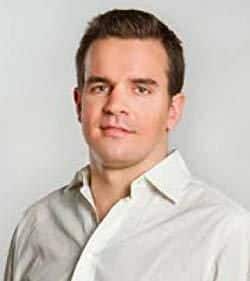
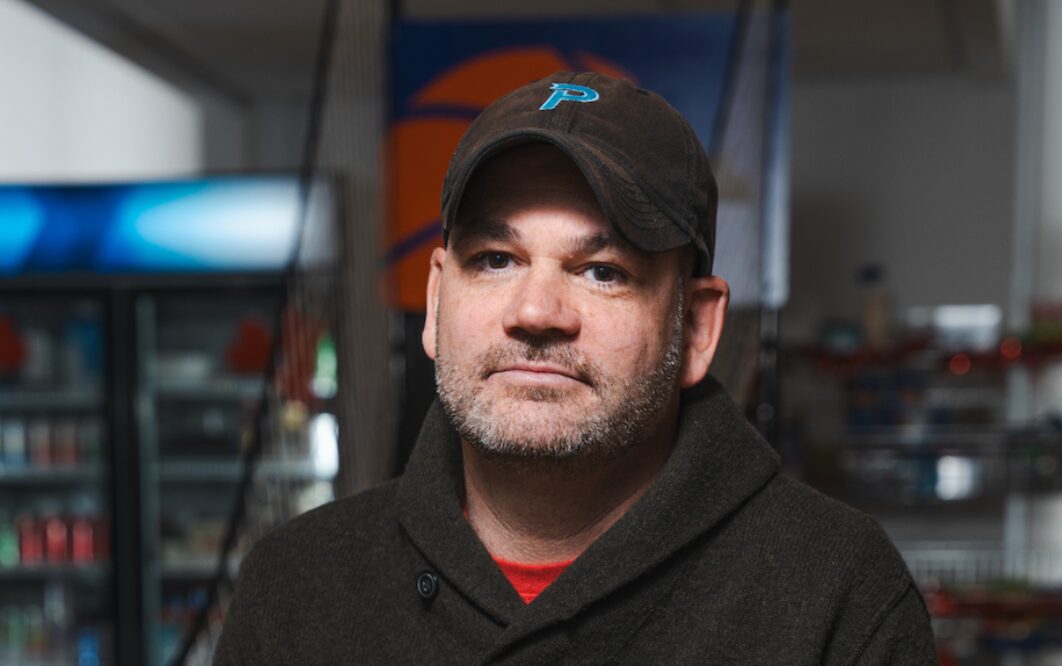
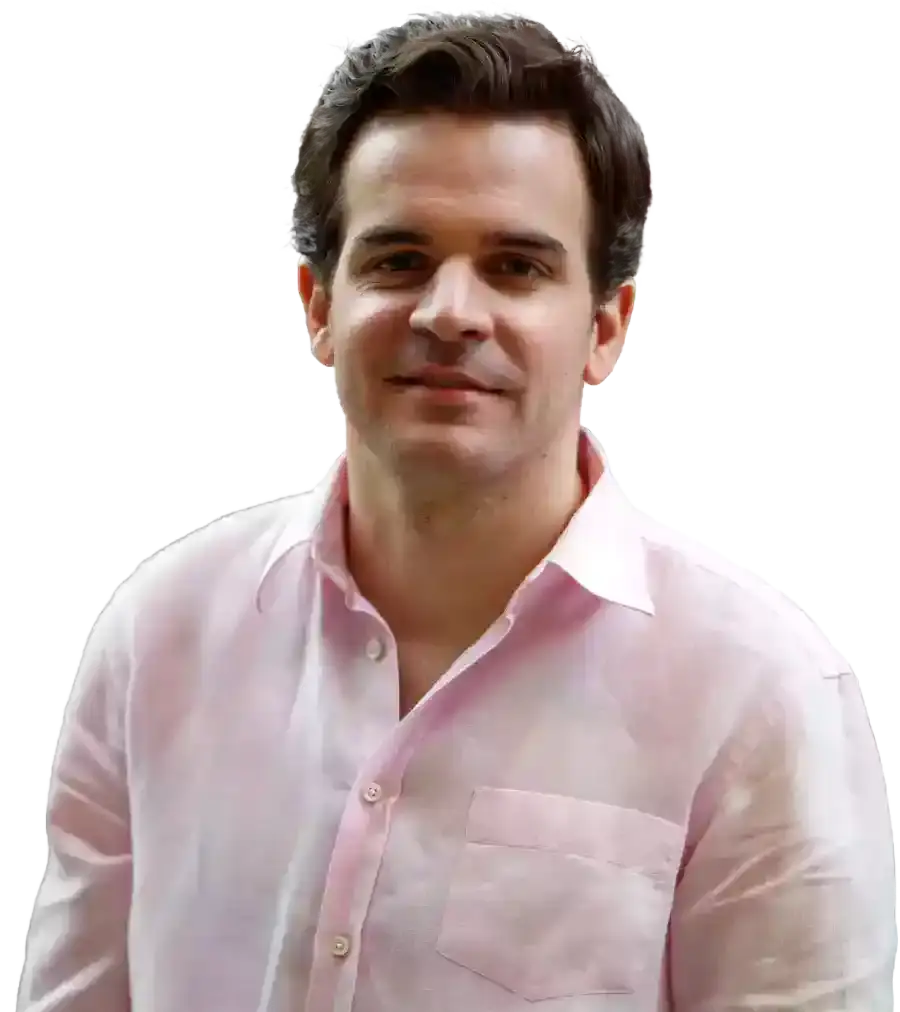
David Metz is the founder and CEO of Prizeout, a fintech platform that powers rewards and monetization programs for financial institutions, David has raised over $64M and built a company on the brink of profitability. But his journey there was anything but linear.
Prizeout has secured funding from top-tier investors like Reseda Group and 21 credit unions, many of them active partners with $30B assets under management (AUM).
In this episode, you will learn:
- Early exposure to sacrifice made risk feel normal, which became David Metz’s operating system as a founder.
- Entrepreneurs are both born and made: risk tolerance is innate, but resilience and ownership are built through lived experience.
- The “locker room” matters: winning in startups comes from team chemistry, shared accountability, and competitive execution.
- Trust is a founder skill: from managing others’ money at 19 to leading companies, credibility is built by performing under pressure.
- Not all exits are failures: even an acquihire can be a finish line that compounds into future leverage and better judgment.
- Family + business blurs boundaries fast, so protecting relationships can be the highest-ROI decision you make.
- Prizeout was born from a pivot insight: turn a withdrawal cost center into a profit center, then fund growth with investors who bring empathy, distribution, and real skin in the game.
SUBSCRIBE ON:
 iTunes
 Google Play
 Stitcher
 TuneIn
 RSS
RSS SoundCloud
 Spotify
Keep in mind that storytelling is everything in fundraising. In this regard, for a winning pitch deck to help you, take a look at the template created by Peter Thiel, the Silicon Valley legend (see it here), which I recently covered. Thiel was the first angel investor in Facebook with a $500K check that turned into more than $1 billion in cash.
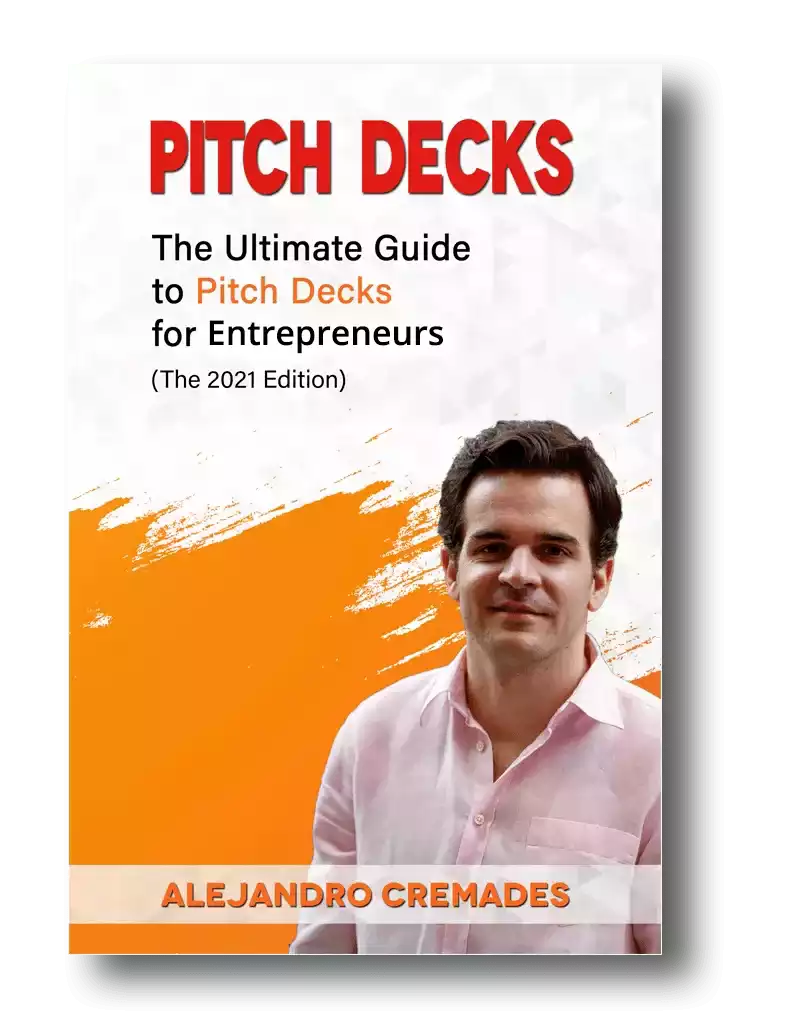
*FREE DOWNLOAD*
The Ultimate Guide To Pitch Decks
Remember to unlock for free the pitch deck template that founders worldwide are using to raise millions below.
About David Metz:
David Metz is the Founder and CEO of Prizeout, an adtech company that partners with various industries to optimize money flow and put money back into consumers’ pockets. A career entrepreneur, David started his first company, Flugpo, in 2006 after a 10-year stint in financial services and equity trading.
Prior to Prizeout, David was the CEO and co-founder of a mobile trivia app called FleetWit where users could take bets on their trivia skills. His broad leadership experience in finance, marketing, and tech across both large firms and startups put him at the ideal intersection to lead an industry disruptor like Prizeout.
David attended Drexel University and lives in New York City with his wife and two kids.
Raise Capital Smarter, Not Harder
- AI Investor Matching: Get instantly connected with the right investors
- Pitch & Financial Model Tools: Sharpen your story with battle-tested frameworks
- Proven Results: Founders are closing 3× faster using StartupFundraising.com
Connect with David Metz:
Read the Full Transcription of the Interview:
Alejandro Cremades: All righty, hello everyone, and welcome to the DealMaker Show. Today we have a founder who has done it multiple times. There are going to be quite a bit of lessons learned that we’ll be discussing in this story. We’re going to be talking about building, scaling, financing—you name it.
Alejandro Cremades: Also starting companies with family members, transitioning from different fields and segments—there’s a lot of really good stuff here. Brace yourself for a very inspiring conversation.
Alejandro Cremades: Without further ado, let’s welcome our guest today, David Metz. Welcome to the show.
David Metz: Thank you. I appreciate you having me.
Alejandro Cremades: So, originally born and raised in Long Island, New York. Give us a walk through memory lane. How was life growing up for you?
David Metz: Awesome. I grew up with parents who are still together and still alive, knock on wood. I have an older brother and a younger brother. My parents were entrepreneurs themselves—they owned an irrigation business.
David Metz: So I definitely grew up not knowing what the word “entrepreneurial” meant, but knowing the work that it took to get them where they got to. I was always steeped in what entrepreneurship meant and is.
Alejandro Cremades: So are entrepreneurs born or made?
David Metz: It’s a good question. Probably a little bit of both. I think risk tolerance is not something that’s learned. You either have it or you don’t, and you certainly need it to be an entrepreneur.
David Metz: Also, what it takes—my parents sacrificed a ton. I saw that there were Christmases where we didn’t get presents because it was a choice whether to keep somebody on payroll or let them go. Seeing those hard decisions, they became normal for me. I thought that was how everyone lived.
David Metz: Not until I grew up did I realize otherwise. I grew up in a pretty blue-collar town. I never knew doctors or lawyers or executives—they didn’t exist where I lived. So entrepreneurship was the only way that I knew.
David Metz: It definitely became more normal to me, whereas for most people, the risks that entrepreneurs take probably seem crazy—especially when you look at the odds, like nine out of ten startups fail.
Alejandro Cremades: Now for you, obviously, you were quite competitive. You played lacrosse, and that really got you through college and all of that.
Alejandro Cremades: How do you think that competitiveness has served you when it comes to ambition and having your own projects?
David Metz: I’m 48 now, so my athletic career is way behind me. The closest thing I get to those highs of wins is when you close a deal or something big happens at the company. It’s pretty similar.
David Metz: But if you ask me if I could go back to 19-year-old David, when I was playing Division I lacrosse, would I rather be in the locker room or on the playing field—it’s probably the locker room. That team camaraderie and having a team here at Prizeout is the closest thing to having that locker room.
David Metz: Having a goal, achieving something together, and everyone doing their job. It helps to be competitive because you want to win. I’ve tried to replicate my experience in athletics here at the company, and there are a lot of similarities.
Alejandro Cremades: And we’ll talk about the company in just a little bit. But leading into that, you’ve started a few companies. Right out of college, you went to Wall Street and got your chops there.
Alejandro Cremades: Then eventually you started your first business. Walk us through the sequence of events that led you to say, “I’m going to test this thing out and launch my own company.”
David Metz: I’ve always done entrepreneurial things. When I was in college, I worked for a financial advisory firm. This was around 1999–2000, when the stock market was going crazy. I was doing stock market challenges and doing well.
David Metz: I started talking to some of the financial advisors, and they said, “Wow, you’re really doing well.” I somehow convinced them—being 19—to give me access to their Ameritrade accounts.
David Metz: I would trade for them, and they would give me 20% of their profits. I was managing about 20 Ameritrade accounts while still in college. None of that was legal. I’m sure it went against every SEC law, but I did quite well.
David Metz: From there, not having any experience whatsoever, I wanted to learn how to properly be a trader. But that was my first entrepreneurial journey.
David Metz: First, I had to sell them—convince someone to give a 19-year-old access to their Ameritrade account. I came up with the 20% by accident, before I even knew what two and twenty was in the hedge fund world.
David Metz: Then I had to execute. When I didn’t have a good trade and they asked what happened, I had to have tough conversations. That was my first official startup.
David Metz: I didn’t have an LLC or anything like that, but I was doing something sophisticated and figuring it out as I went.
David Metz: After working on Wall Street, I had an idea for online classifieds. In the mid-2000s, Craigslist was everything. You wanted to find an apartment, sell your couch, go on a date—it was taking the newspaper model and bringing it online.
David Metz: Craigslist hasn’t changed. It’s literally the same thing. I took that model and added a social element to it, like reviews, because if someone said they were going to buy your couch, you trusted them to come into your apartment and not kill you.
David Metz: That company was called Flugpo. At our height, we had over 1.5 million listings, predominantly in the New York area. I started it in 2006, and then 2008 happened.
David Metz: Funding dried up. We exited at a nominal amount, but it was my first real taste of entrepreneurship. Once I had that experience, there was no looking back. I could never go back to working for another company.
Alejandro Cremades: At the end of the day, getting it to the finish line is still an outcome. There are great lessons to take away from it.
Alejandro Cremades: In this case, it was an acquihire. How should founders think about acquihires?
David Metz: Acquihires take on different meanings across decades. They’re all the rage right now, but today’s acquihires are for real money, largely because of AI.
David Metz: AI is such a new industry. Nobody went to school for it—it’s mostly self-learned. Back then, acquihires were more about assets and people, and usually not everyone was kept.
David Metz: Nowadays, acquihires can be extremely profitable because the skill sets, especially in AI, are incredibly valuable. Companies are getting bought for $200–$300 million in acquihires because that talent is real. It’s very different today.
Alejandro Cremades: After that, you went into business with your brother. You started a board game and sold around 30,000 units.
Alejandro Cremades: Between that experience and seeing your parents’ irrigation business, what did you take away from building a business with family?
David Metz: One of the reasons we started was because we were both not really doing anything, so we said, “Let’s do something together.” As it grew and became more successful, it became more about the future and the money.
David Metz: It got to a point where I had to ask myself what I valued more—the potential upside or my relationship with my family. I chose my family.
David Metz: People always say never go into business with family, and you think they’re talking about someone else. It’s not negative about family members—it’s just two different worlds.
David Metz: My parents had a company together, and there were a lot of arguments at the dinner table. When you come home, you want to talk about other things. Home should be your sanctuary.
David Metz: When you invite family into business, the waters get muddied. My brother and I both learned that lesson, and we decided it was better to move on and take the experience with us.
David Metz: Thousands of people have our board game in their homes, and that’s pretty cool. It checked something off our bucket list.
Alejandro Cremades: After that came FleetWit. You built a trivia app, raised money, and were doing about a million dollars a month.
Alejandro Cremades: Then Warner Brothers came knocking. Walk us through what happened and how that led to Prizeout.
David Metz: FleetWit was a skill-based trivia app where you could challenge friends or strangers and wager money. The skill was how much you knew.
David Metz: We had hundreds of categories, from sports to history. Some of our most popular categories were things like Harry Potter and Friends. Those categories drove massive growth.
David Metz: One day we received a cease-and-desist email from Warner Brothers for using their intellectual property. When we had to shut those categories down, our CAC skyrocketed.
David Metz: Around the same time, users who won money needed a way to withdraw their earnings. They often chose digital gift cards.
David Metz: I was also spending heavily on Facebook to acquire users. I realized that when someone withdrew winnings via a Nike or Olive Garden gift card, those brands were effectively acquiring a new customer.
David Metz: I went to my board and said, “Don’t kill me, but we’re going to shut down FleetWit and start a new company focused on gift cards and monetizing that process.”
David Metz: They were incredibly supportive. I gave my investors the same equity percentage in the new company, even though legal said I didn’t have to. That’s just who I am.
David Metz: We started Prizeout about six years ago. It’s taken off since then. Nothing is straight up and to the right—there are zigzags—but we’re in a great position today.
Alejandro Cremades: For people listening, what is Prizeout today? What’s the business model?
David Metz: We started as a withdrawal option for gaming. If you won $100 on a platform like DraftKings, instead of withdrawing via PayPal or ACH, you could withdraw through digital gift cards.
David Metz: The catch was that if they withdrew their winnings to digital gift cards, they would get a bonus. So if you won $100, you might get $110 to Nike or $120 to Cheesecake Factory. You’re getting more money.
David Metz: We would also pay our partners a revenue share. Typically, when people withdraw money through PayPal or something similar, PayPal charges fees. Instead, we would pay our partners a rev share, turning what is usually a cost center into a profit center. For some of our partners, that has meant millions of dollars of incremental revenue.
David Metz: That eventually led to us partnering with financial institutions and running their entire rewards programs, which is where we are today. There were many steps from that point to here, but that’s the evolution.
Alejandro Cremades: One thing that’s pretty interesting here is that you’ve raised about $64 million, and obviously you’re not a big fan of raising from VCs.
Alejandro Cremades: I’d love to hear about your journey raising money and your perspective on venture capital. Walk us through that.
David Metz: Yeah, it’s funny. I’m in a position now where a lot of young founders reach out for advice, and I remember being on the other side of that.
David Metz: Everyone asks for help with fundraising—fundraising, fundraising, fundraising. Everyone thinks it’s a science.
David Metz: They ask, “Tell me the secret. What’s the silver bullet?” And there is none. I’ve got stories of flying to meet an investor who promised money, getting left at the airport, and having to fly home. I went into credit card debt just to make those flights. There are millions of those stories.
David Metz: It’s not that I don’t like VCs. I think a lot of VCs—not all—are run by people with mostly theoretical knowledge. Especially early in your entrepreneurial journey, you really need someone who has felt the pain you’re feeling.
David Metz: I’ve preferred raising money from founders. Today, you have people who’ve sold companies for a lot of money, high-net-worth individuals, and family offices. Twenty years ago, you didn’t have many places to go other than VCs.
David Metz: In terms of empathy for the entrepreneurial journey, I prefer raising from ex-founders. It’s served me well, especially during the really hard times.
Alejandro Cremades: If you’re not raising in the traditional VC way, how did you think about aligning financing cycles with the company’s life cycles and the value investors bring, whether that’s know-how or network?
Alejandro Cremades: How did you think about that while raising the $64 million?
David Metz: It’s interesting. In our last round, our Series C was led by 21 credit unions. Some of these credit unions manage $30 billion in assets—they’re pretty massive.
David Metz: We partner with credit unions, so by taking money from your partners, you’re not just getting capital, you’re also getting customers. You’re killing two birds with one raise.
David Metz: Venture capital can make introductions, but unless there’s skin in the game, it’s different. If your partners invest, of course they’re going to go live with your product. Of course they’re going to use it.
David Metz: I’ve preferred that method. Not everyone can do this—different models require different funding approaches. We’re now close to profitability, which is where you want to be so you can control your own destiny.
David Metz: You never know what’s going to happen. I always say it’s better to have it and not need it than to need it and not have it. When people ask me how much money they should raise, I usually say, “I don’t know—double it.”
David Metz: It’s better to have the money in the bank than to put yourself in a situation where you need it. When that happens, you lose leverage, and that shows up in the terms and everything else.
David Metz: You’re at a huge disadvantage. So raise as much money as you can. But the only real way to avoid that situation entirely is to get profitable as quickly as possible.
Alejandro Cremades: When you think about value beyond capital, what does value from investors look like to you?
David Metz: Two things. One is introductions. Once someone writes a check, they have an inherent motivation to help. People who write big checks usually have significant networks, but you have to be proactive.
David Metz: Nobody knows what problems you’re facing unless you say it. A lot of times, a casual conversation turns into, “I know the CEO there. I’ll make an intro.” But you have to ask.
David Metz: The other is advice. As a CEO, I really have two jobs—one internally with employees, and one externally with the board and investors. That can feel isolating.
David Metz: When your investors are fellow entrepreneurs, they can share real stories. I’ve had investors who sold companies for massive sums tell me about moments when they were in terrible situations.
David Metz: In one case, they had to go to a bank for a loan and put their houses on the line. The banker asked them to come back the next day with their wives.
David Metz: The banker then asked the founders to leave the room and told the wives, “Don’t do this. You’re going to lose your house.” And the wives said, “We’re doing this.”
David Metz: Three years later, they sold the company for a massive amount. When you meet someone with money, you often assume it was an easy path. Hearing stories like that reminds you you’re not alone.
David Metz: Not everyone has those experiences. If you went to Yale, then Harvard for your MBA, then straight into VC, you didn’t live that risk. You can read about it, but unless you’ve lived it, it’s different. For me, that perspective has been incredibly valuable.
Alejandro Cremades: Investors, customers, and employees are all betting on the future and the vision. If you woke up tomorrow in a world where Prizeout’s vision is fully realized, what would that world look like?
David Metz: A world where it doesn’t need me anymore.
David Metz: I describe where we are like a three-year-old child. Imagine a three-year-old climbs onto a piano and starts playing Mozart. You think you have a virtuoso. But the child still needs diapers changed, food, and care.
David Metz: I think we’re leaving that stage. One day I’ll walk out of the subway on my way to work and realize the company doesn’t need me anymore. If I weren’t here, it would just keep going.
David Metz: My more selfish dream is that years after an acquisition, former employees get together, rent out a bar, and catch up on what everyone’s doing. This person is leading a company, that person started one.
David Metz: If Prizeout was the springboard that launched all of that, that would be an incredible outcome.
Alejandro Cremades: Looking back with reflection, if you could stop your younger self just before starting out and give one piece of advice, what would it be?
David Metz: There’s a saying—Oscar Wilde or Mark Twain—that goes, “I’m not young enough to know everything.”
David Metz: The hardest part would be getting my younger self to listen. I’ve always learned best through experience.
David Metz: If I could give one piece of advice, it would be to start earlier. In your twenties, you need very little. You can survive on a futon and ramen.
David Metz: As you get older, responsibilities grow. Your parents want you to live a risk-free life. But if you’re going to do this, start earlier.
Alejandro Cremades: David, for people who want to reach out or learn more about Prizeout, what’s the best way?
David Metz: Just email da***@******ut.com
Alejandro Cremades: Easy enough. David, thank you so much for being on the DealMaker Show. It’s been an absolute honor.
David Metz: Thank you.
*****
If you like the show, make sure that you hit that subscribe button. If you can leave a review as well, that would be fantastic. And if you got any value either from this episode or from the show itself, share it with a friend. Perhaps they will also appreciate it. Also, remember, if you need any help, whether it is with your fundraising efforts or with selling your business, you can reach me at al*******@**************rs.com
Podcast: Play in new window | Download
Subscribe: Apple Podcasts | Spotify | TuneIn | RSS | More

Facebook Comments