

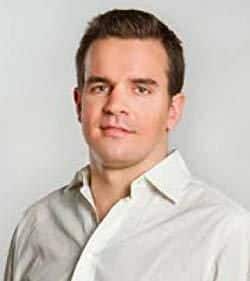
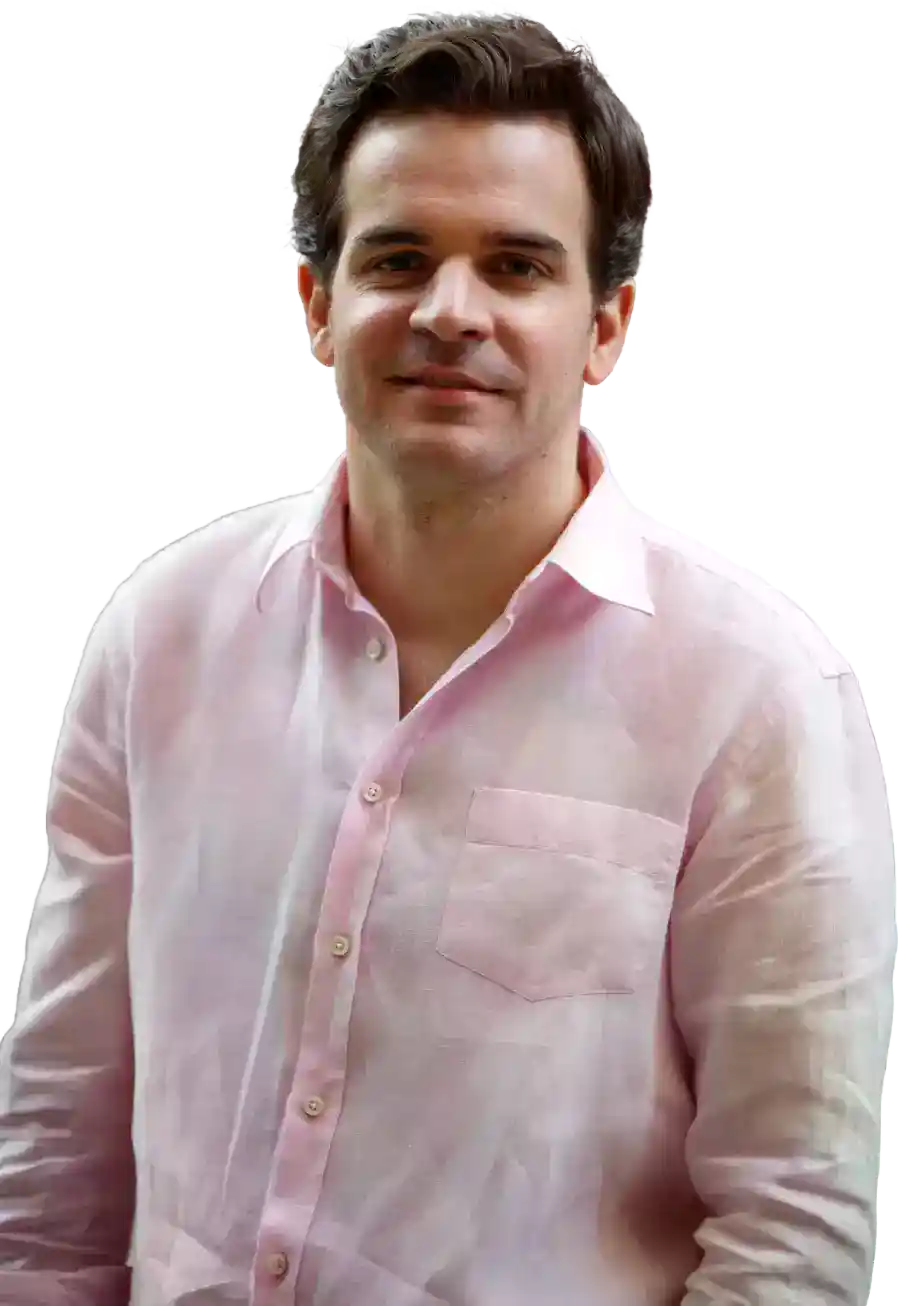
Dan Wertman retraces his path through building, scaling, and raising financing for his company, Noetica, meeting his cofounders, and learning how to differentiate in the crazy world of AI.
He also talks about finding product-market fit and weighing the option of an acquisition vs. continuing on the hypergrowth trajectory. Noetica has secured funding from top-tier investors, such as Lightspeed Venture Partners, Company Ventures, Bling Capital, Flybridge, The LegalTech Fund.
In this episode, you will learn:
- Adversity early in life can build the resilience that fuels entrepreneurial drive.
- Cross-disciplinary experiences create unique advantages when building companies.
- The best startup ideas often come from firsthand frustration with broken systems.
- Timing matters—AI unlocked what was previously impossible in data extraction at scale.
- Product-market fit comes from starting narrow and doubling down with early customers.
- Fundraising follows strong fundamentals, not the other way around.
- Founders win by trading cash for speed and making bold, conviction-driven bets.
SUBSCRIBE ON:
 iTunes
 Google Play
 Stitcher
 TuneIn
 RSS
RSS SoundCloud
 Spotify
Keep in mind that storytelling is everything in fundraising. In this regard, for a winning pitch deck to help you, take a look at the template created by Peter Thiel, the Silicon Valley legend (see it here), which I recently covered. Thiel was the first angel investor in Facebook with a $500K check that turned into more than $1 billion in cash.
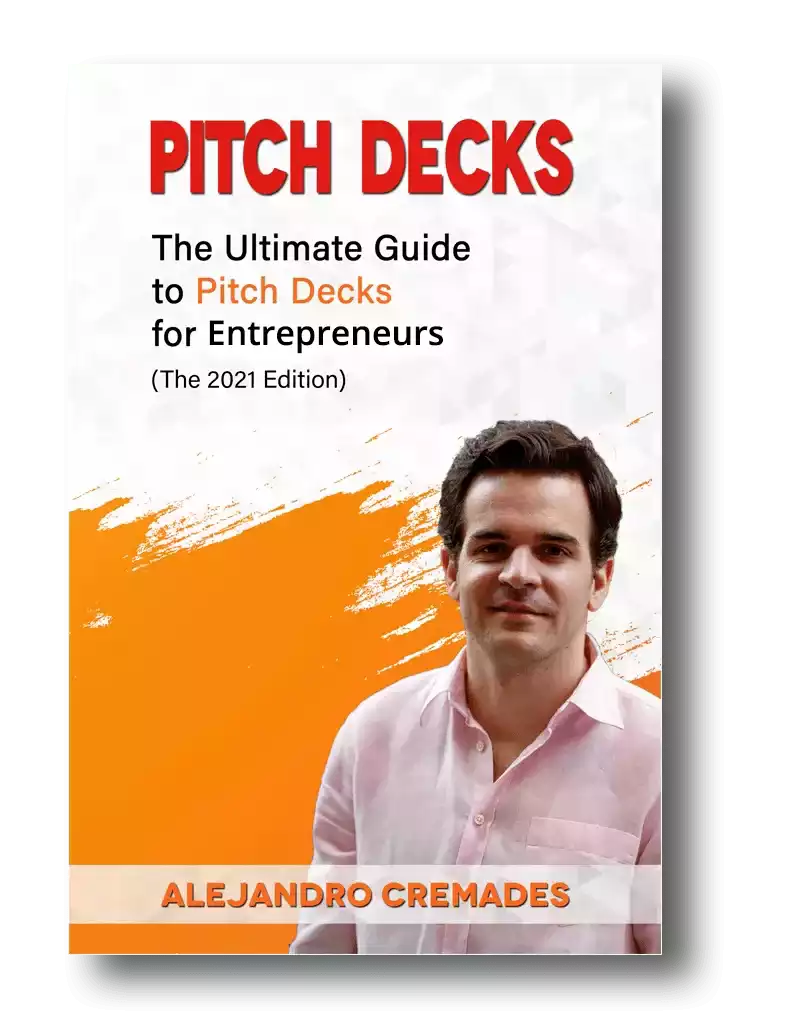
*FREE DOWNLOAD*
The Ultimate Guide To Pitch Decks
Remember to unlock for free the pitch deck template that founders worldwide are using to raise millions below.
About Dan Wertman:
Daniel Wertman has a diverse work experience that spans across various industries. He is currently the Co-Founder and CEO of Noetica AI, a position he has held since May 2022.
Prior to this, Dan worked at Wachtell, Lipton, Rosen & Katz as an Associate from October 2017 to January 2022. He also had a previous role as a Summer Associate at the same company from May 2016 to August 2016.
Before joining Wachtell, Lipton, Rosen & Katz, Dan gained legal experience as a Legal Intern at the U.S. Securities and Exchange Commission from July 2015 to December 2015. He also worked as a Summer Associate at JONES DAY® during May 2015 and June 2015.
Dan has experience in the financial sector as well. He worked as an Analyst in US Product Management and Development at BlackRock from February 2013 to June 2014. He also had a previous role as a Summer Analyst in Product Management and Development at BlackRock from May 2012 to August 2012.
Additionally, Dan has legal internship experience at Gruber, Schwartz & Posnock, LLP where he drafted pleadings and analyzed medical records and transcripts during June 2011 to August 2011.
Earlier in 2011, Dan owned and managed Revolution Prep Ivy Summer Branch Franchise, handling various business operations, client interaction, revenue/cost modeling, and marketing. Under his management, it became the 4th largest branch countrywide.
Dan attended Marlboro High School from 2005 to 2009. After graduating from high school, he pursued his undergraduate studies at the University of Pennsylvania, where he obtained a Bachelor of Arts degree in Political Science in 2012.
During his time at the university, Dan also minored in History. Following his undergraduate studies, he continued his education at Harvard Law School, where he earned a Doctor of Law (J.D.) degree in 2017, specializing in the field of Law.
Raise Capital Smarter, Not Harder
- AI Investor Matching: Get instantly connected with the right investors
- Pitch & Financial Model Tools: Sharpen your story with battle-tested frameworks
- Proven Results: Founders are closing 3× faster using StartupFundraising.com
Connect with Dan Wertman:
Read the Full Transcription of the Interview:
Alejandro Cremades: Alrighty, hello everyone and welcome to the DealMaker Show. So today we have a really spectacular guest. Literally, his company got acquired last month, so it’s quite recent.
Alejandro Cremades: And again, you know, building and scaling, and financing—we’re going to be listening about it: how he met his co-founders, how he went about raising his first round of financing, also how to differentiate yourself in this crazy world of AI and finding product-market fit, or even going through the acquisition process and why—going through that process versus continuing on the hyper-growth path of raising more money and doing it on their own. So again, the conversation today is going to be quite inspiring. So brace yourself for it.
Alejandro Cremades: And without further ado, let’s welcome our guest today, Dan Wertman. Welcome to the show.
Dan Wertman: Thank you. Great to be here.
Alejandro Cremades: So give us a walk through memory lane. Born in New Jersey—how was life growing up there?
Dan Wertman: Yeah, I mean, I can’t complain, right? I grew up in a middle-class family in a town called Marlboro, New Jersey. It’s kind of a quintessential New Jersey suburb—strip malls, a large public high school, block kickball games, and the like. I actually come from a family of immigrants. My dad immigrated from Canada, and my mother from Australia.
Dan Wertman: You know, it’s funny—reflecting back on my experience growing up, I think there were probably a lot of things about my childhood that could have shown that I would become a founder someday.
Dan Wertman: The first thing about my upbringing that’s kind of interesting—and maybe this would be interesting to folks—is that I grew up with a dad staying at home, right? And my mother actually working. So my dad did all the stuff that moms were doing at the time.
Dan Wertman: He brought me to school, made my lunch, came to the soccer games, led the carpools. And I think when you’re growing up in the ‘80s and ‘90s, and less than 1% of dads are doing that, it really stands out.
Dan Wertman: It was kind of the first time I experienced that feeling of doing something different—bucking the trend, standing out, paving a new path. And there’s something about your lifestyle being different when you’re a kid that probably seeded an entrepreneurial spirit and began my journey down this path. So that was something about my childhood that was quite interesting.
Alejandro Cremades: And obviously, one thing that I’m sure shaped you was losing your mother as a kid. Typically, in those moments of adversity, you’re able to really shape yourself as a human being. I’m sure that for you, that was a pivotal moment too.
Dan Wertman: Yeah, it’s kind of an interesting thing. When you dig into founders’ backgrounds, it’s probably not uncommon to find that there was some sort of tragedy in their lives. And I don’t know why that is.
Dan Wertman: Perhaps it’s the type of resilience you find in experiencing something really awful that lends itself to starting something successful. And my story is no exception. So when I was still a kid—well before I was a teenager—my mother died in an accident.
Dan Wertman: When that happens to you as a kid, your world is kind of shaken, and it can go one of two ways. One is you dive into something productive—you distract yourself, gain that chip on your shoulder. Or it could go the other way, and you become very insular.
Dan Wertman: I chose the former. I dove into everything I could learn about any topic. I felt like this wasn’t going to define me, and I was going to push through any obstacle and make sure that myself and those around me succeeded.
Alejandro Cremades: How old were you when that happened?
Dan Wertman: Just a kid—probably about 10 or 11. Yeah.
Alejandro Cremades: Wow. So as you were saying, you got into learning about everything. One of the interests you developed was government, which got you into Penn. But funny enough, you didn’t really pursue that because you ended up landing at BlackRock. So that’s quite the sequence of events there.
Dan Wertman: Yeah, I mean, Penn is a great program, and they have a School of Arts and Sciences that allows you to explore a lot of different types of studies. I was so interested in government that I really thought for a minute about going to the Hill.
Dan Wertman: Then I have this amazing memory—I sat down to read Michael Lewis’s Liar’s Poker, and I became incredibly enamored with finance and the world of markets. So I ended up taking a summer internship at BlackRock and then joining as a full-time analyst. My role at BlackRock was actually really interesting.
Dan Wertman: I was in a group responsible for coming up with new financial products in credit markets. So we were developing these new and innovative financial products, particularly in fixed income markets. And it really taught me two big things.
Dan Wertman: One, I learned how to innovate and validate new products. Obviously, these are security products, but the lessons are transferable to any type of product—distilling product feedback, understanding fast iteration—and that became incredibly valuable for my work at Noetica.
Dan Wertman: Two, I learned deeply about the capital markets—how they operate, who the players are, and why they function the way they do. That became super interesting to me and is part of the reason I started Noetica many years later.
Alejandro Cremades: So in your case, you go to BlackRock, then after BlackRock, law school. Then obviously going to Wachtell, which is one of the top law firms. I’m sure that really planted the seed for what would become Noetica.
Alejandro Cremades: I mean, it’s incredible how you go from being excited about government to then going to BlackRock and doing financial products, to another detour into law school. Those are crazy swings, and I think to a certain degree, they give you an advantage. You get knowledge transfer, where you apply things that are completely unrelated into whatever you have in front of you.
Alejandro Cremades: So how did that help you as a founder, and what were the sequence of events leading you to become an entrepreneur?
Dan Wertman: Yeah, it’s a really good question. Working at BlackRock, I was dealing with highly regulated products. So I became very interested in financial regulation policy coming out of the Treasury. I considered doing a JD/MBA, but that would have been an extra year, and I decided I didn’t need the MBA. So I went back and just did the law degree.
Dan Wertman: I was lucky enough to get into Harvard Law School. That’s really where my thirst for entrepreneurship took off. I think I broke the record for the number of credits I could take outside the law school—at MIT Sloan and HBS.
Dan Wertman: I specifically remember taking Jeff Bussgang’s class—he later became a mentor and investor—on launching technology ventures, along with many others, to really understand how to go from zero to one and the mistakes others made so I could avoid them.
Dan Wertman: Out of law school, I joined Wachtell Lipton, as you said. It’s one of the best transactional firms in existence, and actually a very entrepreneurial place. People think of the legal industry as antiquated, but Wachtell is quite the opposite.
Dan Wertman: It’s famous for inventing the poison pill, which fundamentally changed corporate law. And it was really a place where I learned something very specific: the meritocracy of ideas really wins.
Dan Wertman: I remember as a first-year, working on a complicated spinoff, I came to a partner with a new idea for how it could be structured. That idea ended up defining how the transaction played out.
Dan Wertman: That reinforced for me that if your ideas are strong and you can build consensus, you can really change things for the better. And that ingrained even more of that entrepreneurial spirit in me.
Dan Wertman: I was at Wachtell from 2017 to 2020, during the heyday of deal activity. I worked on some of the biggest transactions—T-Mobile/Sprint, UTC/Raytheon, Allergan/AbbVie, and Neiman Marcus’ restructuring during COVID.
Dan Wertman: Working on those transactions showed me what it looks like for industries to be redefined through transformative deals.
Dan Wertman: I have a distinct memory of sitting at my desk as a third-year attorney, working on these high-power transactions, and being hit with the idea behind Noetica.
Dan Wertman: I was looking at a 500-page agreement, trying to figure out whether to push my client toward term A or term B. I got stuck. So I called a senior partner and asked: “Where’s the database where I can see how this term typically looks across deals?”
Dan Wertman: The answer was—it doesn’t exist.
Dan Wertman: And the reason it didn’t exist was because the technology at the time couldn’t aggregate and index these agreements at scale. Contracts were unstructured, and extracting meaning was impossible.
Dan Wertman: That was the first real inkling behind Noetica.
Alejandro Cremades: So then what happened next?
Dan Wertman: Fast forward to 2022. I saw early versions of language models—before GPT really became mainstream. Early 2022, we were already seeing what these models could do.
Dan Wertman: I realized this was a step function in technology—the ability to interpret language in ways that were previously only possible for humans.
Dan Wertman: So I left in 2022 to start Noetica with a simple but novel idea: use language models to comb through vast quantities of transactional agreements—merger agreements, financing agreements, capital markets agreements—and index them at scale.
Dan Wertman: That way, anyone working on a transaction—banks, investment managers, advisors, law firms, issuers—could see how often terms appear and what thresholds the market supports. Instead of guessing, they would have data-backed certainty.
Dan Wertman: Since then, we’ve grown a ton. That was over three years ago. Now we work with a significant majority of the top platforms on the Street. We processed about $1 trillion in transactional volume last year, making us the fastest-growing transactional data platform in the market.
Dan Wertman: Most importantly, we built the largest database of deal terms in existence—over a billion terms. It’s mind-bogglingly large and allows you to pinpoint the data behind transactions—something that was never possible before.
Alejandro Cremades: So then, how did you guys go about monetizing the operation of Noetica?
Dan Wertman: Yeah, well, in mid to late 2022, it wasn’t a foregone conclusion that AI was going to be the next big thing. Everyone was still focused on crypto and smart contracts.
Dan Wertman: We had built an incredible founding team—Tom Effland, a Columbia PhD in AI, and Yoni Sabag, who I’ve known since I was a kid and who worked at Deloitte. We realized the data had immense value if we could aggregate and index it.
Dan Wertman: In early VC conversations, I would explain the product and vision, and people would ask, “How does this relate to blockchain?” And I’d say—it doesn’t. This is about AI.
Dan Wertman: That experience taught me something important: there’s a strong groupthink in investing, and it takes foresight to see where markets are going, not where they’ve been.
Dan Wertman: Later, I met Ben Ling from Blink Capital, who immediately understood the vision. And what we both saw was the magnitude of the market.
Dan Wertman: This is a $50 trillion market by global volume—the largest market in the world. The capital markets ecosystem is massive.
Dan Wertman: And it’s growing rapidly, actually. It’s growing at a massive double-digit CAGR. You can think about this market as being broken down into five major participants. You have companies of all sizes who all access capital markets. They all do transactions. You have advisors—these are law firms, your capital markets consultants, your advisory, your banking advisory. You have your banks—these are your JP Morgans, your Goldmans—these are the folks who are actually underwriting all the deals. And you have your investment managers—these are the BlackRocks, the Fidelitys, the Vanguards. And then you have the hedge funds, the traders, right?
Dan Wertman: Now, the most amazing thing about this market is that they all rely on data sets, whether it’s FactSet, Bloomberg, financial data sets, credit data sets like S&P and Moody’s, and fund data sets like Morningstar and Limber.
Dan Wertman: It’s also the only market in the world where they all look at one thing. All of those participants look at one thing, which is the contract or the agreement underlying the security. Some people call that a credit agreement, an indenture, or a prospectus, or preferred designation—whatever you call it. There’s a document that governs all of the rights and obligations of a security every single time a security is issued, whether it’s in M&A, capital markets, or financing.
Dan Wertman: And nobody had indexed that data at scale. So it’s kind of interesting to think about the monetization of that, right? Because if you build out the data set that is extracting from all of the agreements in the market, well, then you monetize it exactly the same way you would monetize
Dan Wertman: any financial data set, right, whether it’s a FactSet, a Bloomberg, and we did something very similar. So the first step was building out the big data set, and obviously now we have the largest one in existence. Early on, we showed that data set to—in particular, we started with major law firms—and it was pretty much immediate. We were seeing their minds get blown.
Alejandro Cremades: So then talk to us, too, about capitalizing the operation. I know that first round of financing was, say, something else. You guys raised about $29 million prior to the acquisition, but how was it going through the hoops there and through the financings?
Dan Wertman: Yeah, it’s really funny. I’m obviously a finance guy and a legal guy. So I think I come from a world that is kind of outside of the normal startup ecosystem. And so I think one of the interesting things about my experience with fundraising is that I always felt like if you did the right thing on the product and with the customers, the fundraising was always a byproduct of that.
Dan Wertman: And so we actually took that approach from the earliest days all the way up until kind of the latest days of our fundraising. So as I mentioned, Ben Lang at Blink Capital led our first round. That round was actually quite a competitive round. That was our pre-seed round. Interestingly enough, the way I got connected to Ben was, I had someone in my analyst class at BlackRock. And again, I’m coming from outside this world, so I very quickly pinged him. He was at a fund that was kind of more of a later-stage fund. And I said, who are the five best pre-seed investors that I should talk to? And he said,
Dan Wertman: you, Ben Lang, you talk Ben Lang. So I pretty much got a meeting with Ben Lang and laid out the vision. And I think one of the interesting things about the best investors is that they’re very good at assessing not only where the market’s been. So at the time, it was all about crypto and smart contracts, but they’re actually really interested in where the market’s going. And part of what I very quickly explained to many of those early investors is that the credit markets are rapidly advancing, so much so that private credit was going to be a multi-trillion-dollar asset class in the next five years. And I was saying that back in 2022, given my experience in these markets.
Dan Wertman: Now, the infrastructure that they will need, right, from a software perspective and from a data perspective in these markets, is going to be far higher than what exists today.
Dan Wertman: And Noetic is going to be on the forefront of that for documentation. And having that early experience in those fundraising rounds, I think, really honed my ability to understand not just where the market’s been, but where it’s headed.
Dan Wertman: And I think that that’s a hugely valuable thing for all founders to understand. Fast forward a bit, we started signing customers pretty expeditiously. We started working with a few major law firms. And I think when you’re doing those early days of iterating product with your early customers, you have to think about what ultimately is going to be the product that has product-market fit. And then you have to just double down and triple down on that product over and over and over again. And of course, you can outgrow into other sorts of areas as well. But early on, we had a few early design partners—major law firms in the transactional space—which really gave us a ton of feedback on how this data set could be hugely valuable to their practices. And seeing the early traction on some of those design partnerships really gave us a ton of confidence that we were on the right track. And then doubling in all out of the product market, later in 2023, after many of these firms were starting to talk about our data sets,
Dan Wertman: we immediately started to understand that this was upending transactions. Literally, I would get calls from major law firm partners, top 10 partners in the world, saying we utilized this system and the transaction was completely changed as a result.
Dan Wertman: And so I got connected to Lightspeed Venture Partners, which is a fantastic top 10 fund. And they immediately got it. They led our seed round. And then the business was growing so fast that they preempted our next round just nine to 10 months after that. And so I think one of the things that you learn when you’re going through this process as a founder is that
Dan Wertman: fundraising should be a byproduct of what you’re doing really well in the company. And to us, that was making sure the product is right, making sure the team is right, making sure early customers are super happy, and then building from there.
Alejandro Cremades: So, obviously, you’re going through this hyper-growth set of events and motions. And then all of a sudden Thomson Reuters comes knocking.
Alejandro Cremades: Why pursue an acquisition instead of raising another round and continuing to scale the business?
Dan Wertman: Yeah, it’s a good question. It’s really interesting. It’s an exhilarating experience running a fast-growing company. Towards the end of last year, our growth was pretty incredible. We were signing up a bunch of huge institutions.
Dan Wertman: We were seeing reliance on our data increasing at rapid rates. We were growing top line at top 1% type
Dan Wertman: rates. We were releasing a lot of cool and interesting features. We had also only tackled a relatively small portion of our market, which was primarily legal institutions. And we had just really started scaling out to investment managers and corporations.
Dan Wertman: So the momentum was really off the charts. And when that happens, you get a lot of attention. I’m sure you’ve heard this from other founders. You get a lot of attention from investors and potential acquirers. And we got immediate attention from both lead investors in the next round and a bunch of strategic acquirers.
Dan Wertman: And those processes were moving relatively quickly. When it comes down to it, I think what any founder in that position will tell you is what you want is what’s best for the vision of what you’re building.
Dan Wertman: For us, that means building out the best data sets of term data in existence and really upending the transactional market ecosystem with our data, bringing data-driven decisioning to these transactions that really has never existed before.
Dan Wertman: When we were talking to TR, it was clear that if we joined forces, we could do something really, really special together. And that got us crazy excited.
Dan Wertman: And doing it together would be much bigger, actually, than probably doing it alone. In other words, being a part of the TR ecosystem would accelerate really everything we wanted to do with the product, with the team, the overall vision, and changing the way these transactions really operated.
Dan Wertman: T.R. has these incredible products, I mean, in both the legal and financial spheres. We’re talking market-leading products—Westlaw, IQ, co-counsel, practical law, risk products, and the like.
Dan Wertman: And those platforms are pulling decades of proprietary data and content that have been aggregated at scale. So bringing our technology to that ecosystem to utilize those data sets to enhance everything we do in transactional data, that was like a match made in heaven.
Dan Wertman: And it became clear as ever that this is an amazing opportunity for us to accelerate Noetka’s vision. And at the same time, kind of TR’s vision to bring what we would call market-aware AI to every M&A lawyer, every financing lawyer, every investment manager, every corporation in that ecosystem.
Dan Wertman: And that got us crazy excited.
Alejandro Cremades: So now let’s say I bring you back in time, okay? And I bring you to that moment where you’re giving your notice at Wachtel, and you’re able to give that younger self one piece of advice before launching Noetica.
Alejandro Cremades: What would that be and why, given what you know now?
Dan Wertman: Oh man, that’s such a good question. There are millions of things. If you talk to any founder, especially the most successful ones, I’m sure you’ll hear that they wish they had done a million things differently. And every mistake you make as a founder really sticks with you in a very personal way as you go through the journey. So I have many of those.
Dan Wertman: One of the most pertinent lessons that I learned early, that I ended up correcting later on, is that if your business is doing well and customers are really itching for your products,
Dan Wertman: then as a founder, you should always, always, always trade cash for time. In other words, speed is the most important thing to optimize.
Dan Wertman: And the reason I say that is that the faster you can do everything, the more advantage you gain and the more dominance in the market you can create. And the cash is paid back at much higher multiples later.
Dan Wertman: The way this manifested for us is we made a lot of decisions really early on that were designed more to preserve capital at the expense of time. And we quickly realized that was a bad trade, right? And we quickly figured that out within a few months of having to make some of those decisions, which we then corrected and then started seeing much of the fruits of that.
Dan Wertman: I would say trading cash for time is one of the most impactful things I learned from my experience. I think another lesson, one of the most important learnings for me, is that as a founder, you’re constantly calculating risks and rewards and the expected value of certain decisions.
Dan Wertman: And sometimes there’s a tendency to hedge in certain areas or projects. And I think what I learned is that if you trust your judgment and you build impactful products, in every case, it makes sense to take bigger swings and larger bets—
Dan Wertman: higher conviction, and true bet-the-farm type decisions. And I’ll give you a great example of this. At Noetica,
Dan Wertman: we have this amazing window into deal terms, which is this amazing thing, right? We have this rich alternative data set hidden within 500-page transactional agreements that nobody could quantify except for our software.
Dan Wertman: And that reflects actually the anxieties and the optimisms of transactional counterparties, buyers and sellers in M&A, lenders and borrowers in credit markets.
Dan Wertman: And so we actually track on the platform spikes and troughs of things that are good for acquirers and bad for lenders, and good for borrowers and bad for sellers. That is a super unique window into the mindset of the U.S. economy.
Dan Wertman: Right now, with this window, obviously, we see things earlier than most people see them. We know certain things that are happening in the market well before the public markets know it. And we see it during negotiation of a lot of these deals because we see the documentation itself.
Dan Wertman: For a long time, we avoided making market calls based on this data. So I think we had this view that we shouldn’t stick our neck out and tell the market where it’s going based on the data set.
Dan Wertman: And that’s the hedge decision, right? Because you never want to be wrong if you make a big market call, and you’re worried that that might blow back on the company. In October of last year, we changed that.
Dan Wertman: We saw large spikes in certain protections in credit transactions on the platform. And it showed us that lenders were getting very, very nervous about distress in the private credit markets. So I published an op-ed in the Washington Street Journal in October where it was called The Private Credit Winter Is Coming. And what I specifically said in the op-ed was the data that we were seeing on the platform shows us that lenders’ smart money is preparing for more distress than the markets are pricing now.
Dan Wertman: Lo and behold, at the end of 2025, massive outflows in private credit markets, huge amount of turmoil this quarter in private credit markets, which I’m sure you’ve been tracking, and many, many of these markets have lost a ton of value. We knew that was coming because the deal term showed us that. And we were kind of too hedged in prior cycles to tell that to the market.
Dan Wertman: And by virtue of making that bull call in advance, we got a ton of inbounds from investment managers, major law firms. Hey, how do we utilize this data set to help our clients get better deals, to make better decisions in investing decisions? And so I guess all that’s to say is make bigger bets, right? If I’m talking to my former self, make bigger bets with solid judgment behind them.
Dan Wertman: And I think any founder who considers that will probably be happy that they did so.
Alejandro Cremades: I love it. Well, Dan, for the people that are listening, I would love to reach out and say hi. What is the best way for them to do so?
Dan Wertman: Yeah, you can ping me at dan at noetica.ai.
Alejandro Cremades: Amazing. Well, easy enough. Well, Dan, thank you so much for being on the Dealmaker Show today. It has been an absolute honor to have you with us.
Dan Wertman: Thank you. Thanks for having me.
*****
If you like the show, make sure that you hit that subscribe button. If you can leave a review as well, that would be fantastic. And if you got any value either from this episode or from the show itself, share it with a friend. Perhaps they will also appreciate it. Also, remember, if you need any help, whether it is with your fundraising efforts or with selling your business, you can reach me at al*******@**************rs.com
Podcast: Play in new window | Download
Subscribe: Apple Podcasts | Spotify | TuneIn | RSS | More
Facebook Comments