

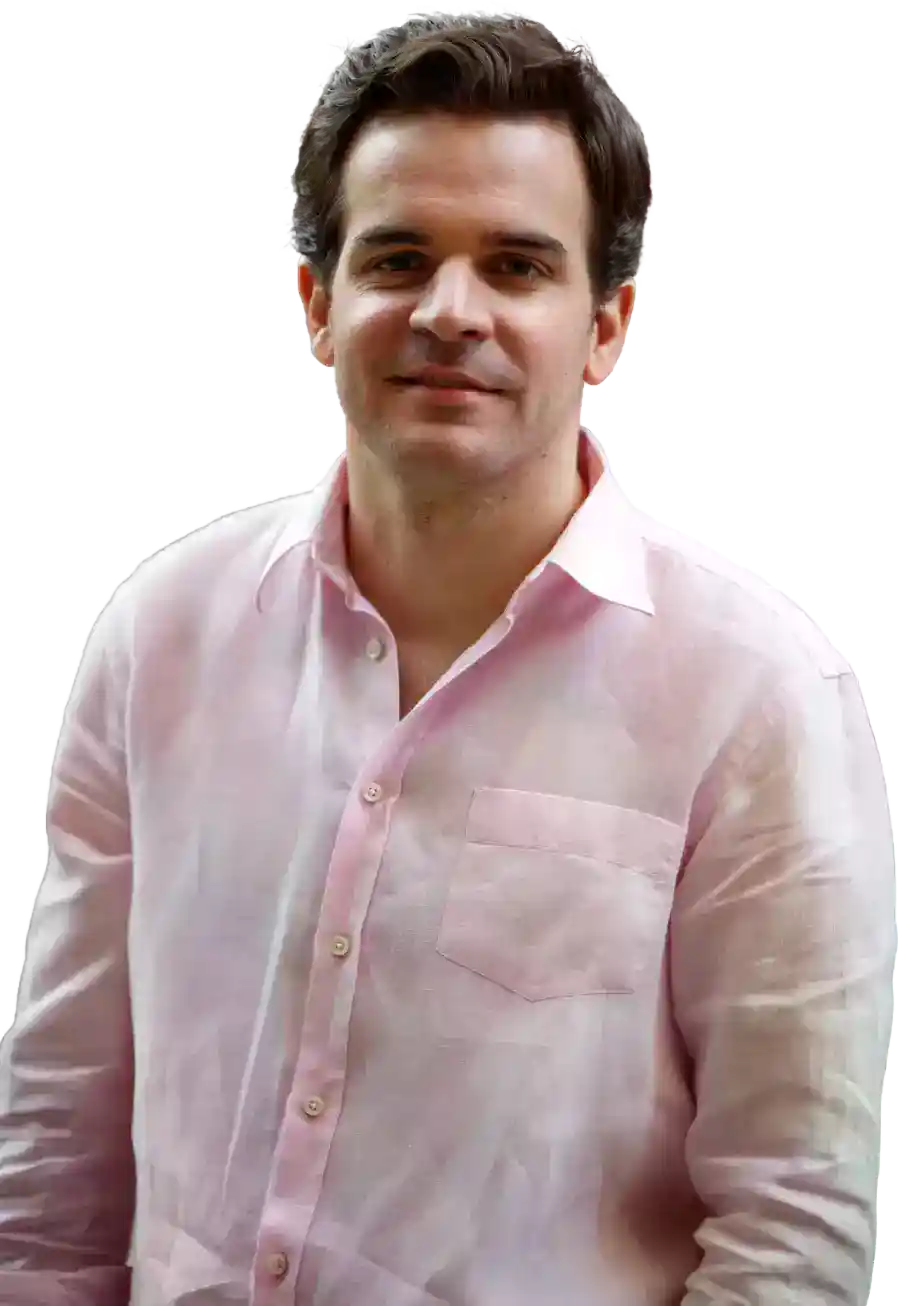
Bill Lenihan’s entrepreneurial path didn’t start as an engineer, product builder, or early startup operator. Instead, his career began in the structured world of finance—investment banking and private equity—before evolving into technology operations and eventually entrepreneurship.
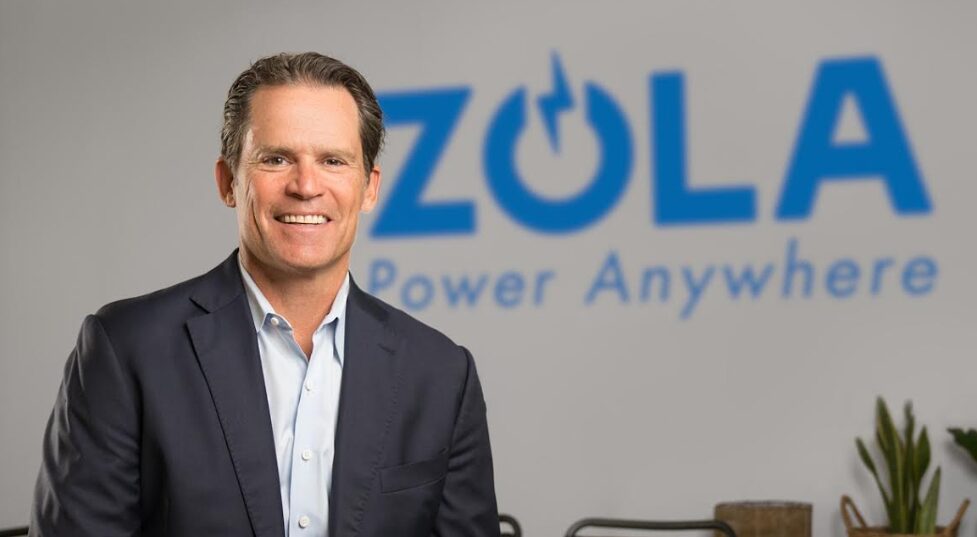
Today, Bill Lenihan is the Founder and CEO of ZOLA iNTELLIGENCE (ZOLAi), a company that has secured funding from top-tier investors such as International Finance Corporation, Tesla, Helios Investment Partners, responsAbility Investments AG, and Idinvest Partners.
In this episode, you will learn:
- Trust your instincts when choosing between investing and operating if you feel drawn to building companies.
- Patience is critical because operators often have only one major opportunity, unlike investors managing portfolios.
- Finding the right opportunity matters more than moving quickly into the wrong one.
- A founder’s career is often a “rifle shot,” requiring focus on a single mission rather than diversified bets.
- Passion and belief in the mission are essential to sustain the challenges of building a company.
- Alignment between skills, patience, and purpose significantly increases the odds of success.
- Without conviction, patience, and mission alignment, the entrepreneurial path becomes far riskier.
SUBSCRIBE ON:
 iTunes
 Google Play
 Stitcher
 TuneIn
 RSS
RSS SoundCloud
 Spotify
Keep in mind that storytelling is everything in fundraising. In this regard, for a winning pitch deck to help you, take a look at the template created by Peter Thiel, the Silicon Valley legend (see it here), which I recently covered. Thiel was the first angel investor in Facebook with a $500K check that turned into more than $1 billion in cash.
*FREE DOWNLOAD*
The Ultimate Guide To Pitch Decks
Remember to unlock for free the pitch deck template that founders worldwide are using to raise millions below.
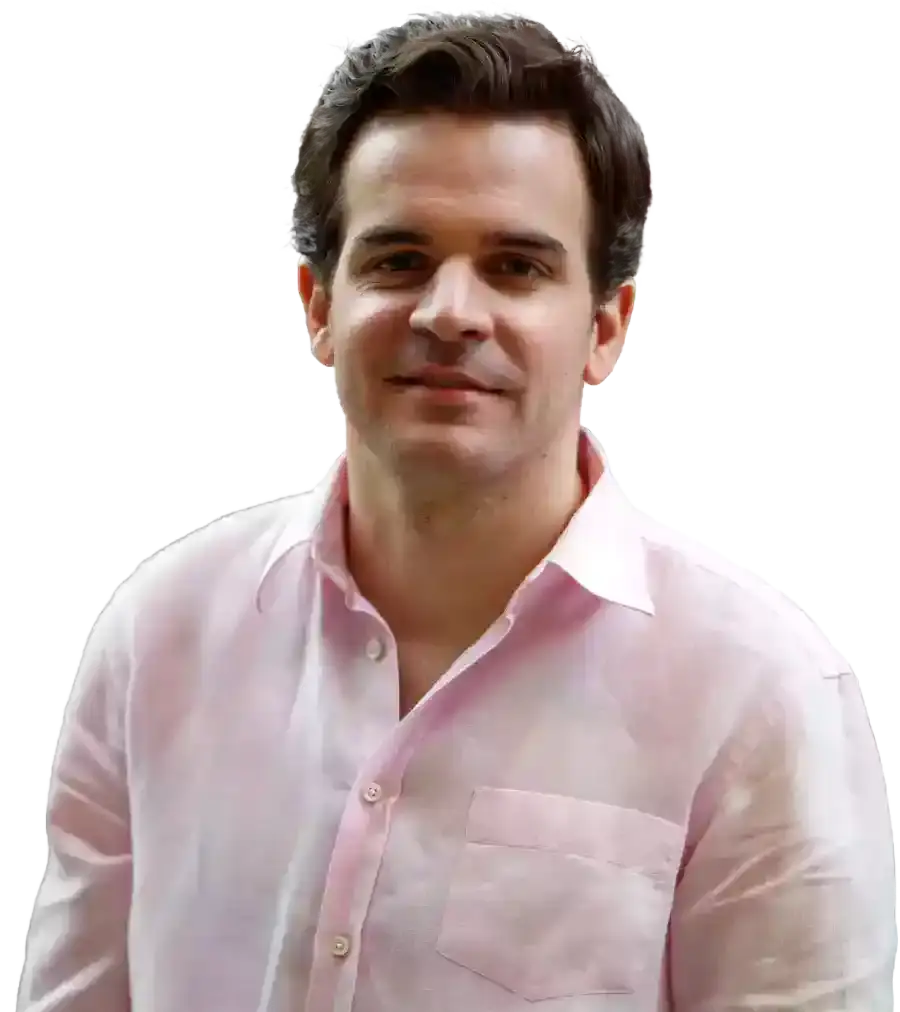
About Bill Lenihan:
Bill Lenihan has a diverse work experience spanning over several industries. He is currently the CEO of ZOLA Electric, a company that provides power solutions to communities without access to affordable and reliable energy.
Prior to this, Bill worked as a Senior Advisor at Tile, where he played a key role in formulating and executing the company’s go-to-market strategy. He also served as a Board Member at IPS Corporation.
Bill was the Executive Vice President, International at Switch Lighting, where he led the international Profit & Loss and successfully initiated international operations. He co-founded and served as the CEO of LL Golf Corporation, raising $200 million in equity for distressed golf course acquisitions.
Bill worked as a Managing Director at Calera Capital, a middle market private equity firm. He began his career as an Associate at Goldman Sachs and worked as a Summer Associate at Bain & Company. He started their professional journey as an Analyst at Credit Suisse.
Bill attended UCLA from 1987 to 1992, where he obtained a Bachelor of Arts degree in Business and Economics. Following this, he pursued further education at The Wharton School from 1994 to 1996, earning an MBA with a focus on Strategic Management and Finance
Raise Capital Smarter, Not Harder
- AI Investor Matching: Get instantly connected with the right investors
- Pitch & Financial Model Tools: Sharpen your story with battle-tested frameworks
- Proven Results: Founders are closing 3× faster using StartupFundraising.com
Connect with Bill Lenihan:
Read the Full Transcription of the Interview:
Alejandro Cremades: All righty. Hello, everyone, and welcome to The Dealmaker Show. So today we’re going to have a really great founder. You know, we’re going to be talking about that interesting transition from the investor side of the table to really becoming a founder, being on the operator side of things—building, scaling, financing, I mean, you name it. I think that you guys are going to find the conversation today quite inspiring.
Alejandro Cremades: And without further ado, I’d like to welcome our guest today, Bill Lenihan. Welcome to the show.
Bill Lenihan: Alejandro, thanks for having me.
Alejandro Cremades: So you grew up in Southern California. Bill, give us a walk through memory lane. How was life growing up over there?
Bill Lenihan: It was great. It was great. I grew up in Whittier, California. It was a smaller town outside of Los Angeles, more East LA.
Bill Lenihan: My parents were great parents. I had two great sisters. I went to a rather large public high school and then made my way to UCLA. But Los Angeles was a great place to grow up—super diverse and connected well to some of the things that I’m doing now.
Alejandro Cremades: And quite the competitive spirit early on, playing water polo. So where did that come from?
Bill Lenihan: That came from swimming. I started swimming as a kid, really young. And then I found my way to a sport that was a little more fun, a little more team-oriented, and started to play in high school, and then took those sports to college.
Alejandro Cremades: And talking about your studies too, in your case, I mean, you ended up doing your MBA at Wharton, a great school. But one thing that is true in your career is that you’ve done a couple of shifts or changes of gear that I think may have been very helpful in terms of knowledge transfer.
Alejandro Cremades: You started out more on the investment banking side with Credit Suisse, and then from there more into private equity via Goldman Sachs. And then from there, obviously, private equity to now being a founder. But walk us through how you did that transition and how you used the MBA as well to be able to switch gears like that.
Bill Lenihan: Yeah, no. I really think about it more as just one transition—from finance to operations. But you’re right. I started as an analyst out of undergrad.
Bill Lenihan: I worked for Credit Suisse, and I worked in the M&A department. We spent a lot of time with private equity firms, and I really thought highly of that model. I was interested in that business model, particularly as an investor.
Bill Lenihan: And so the transition to private equity was really catalyzed by my move to business school. At the time—it’s different now—private equity wasn’t really coming to Wall Street investment banks to find people.
Bill Lenihan: So I needed to go get my MBA. In my MBA, I focused on operations, general management, and finance. I was a dual major.
Bill Lenihan: And I felt that private equity—what is it? It’s investing in businesses. So you’re evaluating operations, you’re evaluating strategy, what opportunities exist, and then you’re valuing companies based on risk.
Bill Lenihan: So it’s really a mix between operations and finance, as I saw it. I got my dual degree at Wharton, and Wharton allowed me access to a lot of private equity firms. Not that they were really recruiting there, but there was a good alumni network. I leveraged that alumni network and ultimately leveraged it into a role at Goldman Sachs, where I was working in their private equity practice.
Bill Lenihan: And then on the private equity side, I spent almost 15 years. I started at Goldman, and then I worked at a firm called Fremont Partners. After that, I moved from New York to San Francisco.
Bill Lenihan: Fremont Partners was run by the Bechtel family—Bechtel Construction Engineering. And I was really attracted to that model. That’s a hundred-plus-year-old, four-generation family management organization. And the way that they invested in and bought companies was different. It was really more operating-oriented.
Bill Lenihan: What’s the risk in the business model today? How can you build it and make it greater in the future? It was a different approach to private equity. I gravitated toward it. I did that for a number of years.
Bill Lenihan: And then I got an opportunity to join an operating partner from Fremont Partners. At that point, Fremont Partners had transitioned into a company called Calera Capital.
Bill Lenihan: We had spun out into a different entity with different investors. And one of our operating partners went to work for a company called Switch, which was a technology company here where I live in the Bay Area.
Bill Lenihan: And the CEO of the company asked if I wanted to come join. He thought maybe he saw something in me that a lot of private equity people don’t have an interest in, and that’s general management.
Bill Lenihan: And I think I was 40 at the time. And I thought, well, what the heck? If I’m ever going to try something different, this is the time. And I felt there was no real downside to it. I felt like if I went out and was a great operator, it would only make me a better investor.
Bill Lenihan: And maybe I come back into private equity, maybe I don’t. So I joined him. And from there, my technology operating career has now also been about 15 years.
Bill Lenihan: And currently, I’ve changed from being a financier and investor to an operator, and now to a founder and CEO of Zola Intelligence.
Alejandro Cremades: Now, one thing that is really interesting here is that I see people going from one side of the table to the other.
Bill Lenihan: Yeah, hope that answers your question.
Alejandro Cremades: I find that from venture capital to founder, it’s a close jump. I think that from private equity to founder, it’s a little bit farther. But I think it gives you more of an advantage because of the perspective and the education that you get about making and optimizing for profitability at the end—because EBITDA is everything when it comes to private equity.
Alejandro Cremades: But I think that given the times that we’re in now with venture capital—especially after COVID—where it was growth above everything else before. If you were a great company, very profitable, but not growing like crazy and burning, then you were not as sexy. Then you went from that to the burning, and now it’s all about profitability again. Now the companies that were good became bad, and the ones that were bad became great.
Alejandro Cremades: I think that ultimately gives you a tremendous advantage as a founder and operator—to really understand what moves the needle when it comes to building a solid and profitable business. How do you think that private equity experience for 15 years has shaped the way that you tackle execution?
Bill Lenihan: Yeah, I think of them as very different skill sets, but also complementary. What it takes to be a great investor is that you have to be broad.
Bill Lenihan: You’re almost a mile wide. You have to understand pattern recognition. You have to be able to price risk and opportunity.
Bill Lenihan: And it is very, as you point out, data-oriented. To be a great operator, there are similar skills—you have to set strategy.
Bill Lenihan: But so much of operations, as I’ve learned, is organizational development. It’s how you organize properly around that strategy, set targets, and manage the team to ultimately execute.
Bill Lenihan: And to your point, when I first started on the operating side, I thought I was going to be great. I think a lot of PE people think they’re going to be great operators.
Bill Lenihan: I would say the vast majority aren’t built for it. I learned very quickly what I didn’t know. Very quickly, I learned this is a different deal altogether.
Bill Lenihan: But the skills I developed on the operating side—organizational development, execution against strategy—were really complemented by what you said: the data, the facts. What is the data telling you about performance?
Bill Lenihan: Even simple things like capital allocation. A lot of being a CEO is allocating your scarce resources—particularly capital—to the highest return, lowest risk efforts. That could be a new product, a new market, or a new hire.
Bill Lenihan: That analytical capability is something you really refine on the private equity side. It has really helped shape how I lead and has been incredibly beneficial.
Bill Lenihan: And I would say the opposite is true as well. For people who go from operations into VC or private equity, there is so much you don’t know. But you do learn.
Bill Lenihan: Because you’re assessing value—you’re assessing and pricing risk and opportunity. And so much of risk and opportunity in a business is the strategy, the organization around that strategy, and the initiatives.
Bill Lenihan: It’s also the pattern recognition around whether those initiatives are fruitful or not. That helps you become a strong investor. So it really does go both ways.
Bill Lenihan: It probably took me 15 years on both sides to develop those skills, and they’ve both served me well.
Alejandro Cremades: So how do you go from being on the investor side to becoming an operator at Switch, and then to saying, “You know what, I’m going to go at it on my own and become a founder”?
Bill Lenihan: Yeah. Boy, that’s a great question. I don’t think I’ve ever thought about that before. But I can tell you how I ended up where I did, and maybe that’s the answer.
Bill Lenihan: I moved to what was then called Off Grid Electric, now Zola Intelligence. I was looking for something after my first operating role. I loved technology, and I really enjoyed the organizational dynamics of a company relative to private equity.
Bill Lenihan: I was looking for a COO or CEO role, specifically in a technology company. I wanted to do something big and impactful, and I was okay with risk.
Bill Lenihan: Off Grid Electric came up. I didn’t think it was for me. It was a renewable energy company based in Africa, and I knew nothing about Africa, the consumers, or the business environment.
Bill Lenihan: The company was essentially doing IoT distribution—installing small lithium-ion batteries and solar panels for off-grid rural farmers in the Serengeti. They were replacing kerosene lanterns with connected devices that required mobile payments.
Bill Lenihan: I thought it was interesting, but I had no idea if it was viable. Then they made me an offer to join. Initially, I was going to join the board, but they suggested I visit Africa and see it firsthand.
Bill Lenihan: That was the moment I knew I needed to do this. I saw a massive problem—three billion people lacking reliable, affordable energy. I saw a unique solution tailored to those markets.
Bill Lenihan: I had no idea if it would generate returns or become sustainable. It was far from sustainable at the time. But I had this experience where I met one of the earliest customers—a “mama” who had a system powerful enough to run a TV.
Bill Lenihan: It was a huge leap from kerosene lanterns, and that moment really stuck with me.
Bill Lenihan: And I went out, and we had this experience with this one, which was not a great experience. It wasn’t a great customer service experience for her. The system wasn’t working. But ultimately, we solved the problem by getting a new system out. And we lit it up. We lit up this hut.
Bill Lenihan: In the middle of the night, it was like nine o’clock or 10 o’clock at night, dark, and we lit this up. And the next thing I knew, the whole community had surrounded the house, and all the kids were kind of playing outside, and all the adults were socializing inside this hut. And what struck me was the impact. What struck me was the customer experience of bringing light to a place that did. So that’s when I knew I kind of needed to do it, even though I had no idea. I sort of felt it might last two years.
Bill Lenihan: It was either, you know, that it probably wasn’t going to work, or it might work, but it was just too big to pass up. Now, 10 years later, I’m still here.
Bill Lenihan: And I think, you know, when you ask the question about what transitioned my experience from being an operator to a founder, I’m going to say it was the same reason.
Bill Lenihan: It’s a mission. We’re a mission-oriented company, and I believe deeply in our mission, and I believe we can change the world here.
Bill Lenihan: So, you know, I joined because of that reason. I stayed because of that reason. And ultimately, what we did when we transitioned from that model—distribution IoT—to what the model is now, which is agentic technology… We’re an enterprise company now. We sell our technology to big companies, who then go out and look to solve the problem on the ground for their countries. It was just, you know, I believed in it. And I just felt we needed to give the world a chance to see if we can solve this big problem.
Bill Lenihan: So again, that was a long answer to it.
Alejandro Cremades: So I guess to dig in a little bit deeper there, or double click on Sola Intelligence, what ended up being the business model? How do you guys make money there today?
Bill Lenihan: Yeah. Well, you know, and I think this is a good point. My determination was that the former model of hardware distribution, even if it’s IoT, was part of the problem in these markets. These markets are all hardware. It’s a grid that is unreliable, and then it’s gapped with diesel generators and inverters and solar panels and batteries and all that kind of stuff.
Bill Lenihan: That’s the way 80 countries across the globe get their energy. These 3 billion people get their energy, and it just doesn’t work. It’s got no ROI to it. The model doesn’t have an ROI. The distribution of hardware models doesn’t have an ROI. Grids don’t have an ROI to them.
Bill Lenihan: And it’s a terrible customer experience. So we did a lot of work in getting that to be more connected and intelligent and that kind of thing. But there’s only so much you can do as a distributor.
Bill Lenihan: So my view was that we have the technology—and I’m getting to your question in a second—we have the technology to build an agentic energy-as-a-service company. So what I did was, three years ago, I raised a $20 million round
Bill Lenihan: to build the enterprise technology platform to help build agentic energy-as-a-service companies. So our technology today is a platform. It’s not just hardware with some level of connectivity.
Bill Lenihan: Our platform is the hardware with batteries and inverters. There’s a control layer to control all of these systems. And there’s the application layer for our customers to manage their workflow.
Bill Lenihan: So what we transitioned this industry to was from hardware distribution to agentic technology-enabled energy as a service. Now what our customers do is they don’t just sell them hardware.
Bill Lenihan: They actually sell them leases. They sell them energy as a service. And customers pay for their energy, just like we pay for our energy in America. We pay for it monthly. We don’t worry about how to make it, and we don’t maintain our own hardware. Someone else does that. We just pay for it. We enable that, but we enable that with highly efficient agentic software.
Bill Lenihan: So, for example, I’ll give you an example on this. We have an underwriting agent that, when our customers underwrite a customer to install a system into, say, a school, they have to underwrite that customer.
Bill Lenihan: They have to assess the credit.
Bill Lenihan: We give them a tool to do that in an agentic way. So they take in the KYC, the know-your-customer information. They take in credit information. And our model, our underwriting model,
Bill Lenihan: assesses the credit and approves the credit. It also can price the credit so that our customer can get the return on investment from that customer that they need. So that’s just a real efficiency tool. It drives up credit quality. It drives down defaults. It drives efficiency of underwriting.
Bill Lenihan: And that’s what we’re pushing into this model, because ultimately, all of these companies, if they’re going to solve the problem of driving energy access across 3 billion people, it’s got to have an ROI to it.
Bill Lenihan: It’s got to have ROI to it.
Alejandro Cremades: And how was the journey of raising money? Because, I mean, you guys have raised over 20 million bucks. Obviously, you’ve been on the other side, so I’m sure that you were very intentional on who you were bringing in and why you were bringing them in. So how did you go about raising money?
Bill Lenihan: Yeah, well, and I’m going to answer the question as: how do I raise money for an emerging market technology company? And that’s really an important distinction, because raising money for developed markets is totally different than raising money for emerging markets. So,
Bill Lenihan: you know, and this is kind of a key challenge for any company that operates in emerging markets, or any company like us that provisions technology or anything for and sells in emerging markets, is that you really need secure and patient and risk-tolerant capital, especially in a company like ours, because
Bill Lenihan: this is deep technology, it’s critical need, and it’s infrastructure. Well, that all takes a lot of time. And in emerging markets, that takes even more time.
Bill Lenihan: So the key is to be intentional about the types of investors that you talk to. They have to be patient. They have to somewhat understand emerging markets, so they’re tolerant of investing in them. They have to care about it.
Bill Lenihan: They have to be mission-oriented. If you can find that specification of investor, and then you’ve got a good business model—because the opportunity obviously is what drives the investment, it’s not me or whatever, it’s the business model—if you’ve got a good opportunity, then you have to connect with that type of investor. And if you’ve got both, then you’re going to get something done.
Alejandro Cremades: So obviously those investors, they’re betting on a vision. So Bill, you go to sleep tonight and you wake up in a world where the vision for Sola is fully realized. What does that world look like?
Bill Lenihan: Well, the world looks a lot like… I got some great news today. So we’re—it’s, I can’t announce the name—but we have a new customer. This customer is a telecommunications provider. Telecommunications companies in emerging markets tend to be the biggest, most profitable companies in their countries.
Bill Lenihan: Why? Because they deliver a data service, a connectivity service, and they’re also banks in our markets, payments companies in our markets. They deliver the service that’s most required and delivers quite the experience to the customer.
Bill Lenihan: So we just signed an agreement with them where we’re going to integrate our technology into their technology.
Bill Lenihan: And they are going to, in addition to driving data and connectivity and payments in their country, drive energy into their country and to all their customers.
Bill Lenihan: So they’re going to deliver power as a service, energy as a service, to their customers alongside their connectivity, data, and payment services.
Bill Lenihan: So, you know, what the future looks like, if we’ve done our job, is that we have three to five of those companies doing the same thing in all 80 of the countries that today suffer from unreliable, unaffordable energy.
Bill Lenihan: And those companies are delivering a great customer experience and delivering reliable, affordable energy to the 3 billion people that don’t have it today.
Alejandro Cremades: So imagine now that I’m able to bring you back to that moment where you were thinking about founding your own thing. Or maybe even better, before you were going to the operating seat. And let’s say you’re able to give that younger Bill one piece of advice. What would that be and why, given what you know now?
Bill Lenihan: So I would tell that person to definitely trust your instincts. If you feel that you would enjoy it, drive passion, and be a good operator, then trust that.
Bill Lenihan: I would then give them the advice to be patient in finding the right opportunity. The other big difference in operations versus private equity is, one, you’ve got a portfolio. In the other one, you’ve got one shot. It’s a rifle-shot approach to your career.
Bill Lenihan: So you have to be patient in terms of finding that opportunity. And then my third advice would be to make sure you really are behind what you’re doing, and you’re mission-oriented, and you’re passionate about it.
Bill Lenihan: I think if those things all kind of line up—you feel you’ll be good at it, you’re patient enough to find the right opportunity that really drives you, and you’re driven by that opportunity—then you’re going to be successful, however you define success.
Bill Lenihan: If you don’t do those things, then it’ll be a riskier path.
Alejandro Cremades: I love that. Bill, for the people that are listening that would love to reach out, say hi, and learn more about Sola, what is the best way for them to do so?
Bill Lenihan: Oh, gosh. Well, I’m actually about to launch a new website here, so maybe hold off. I don’t think our current website is that great, but ZolaIntelligence.com. And then I’m on LinkedIn. So you can hit me up on LinkedIn and follow me, and we can be connected that way.
Alejandro Cremades: Well, Bill, thank you so much for being on the Dealmaker Show today. It has been an honor to have you with us.
Bill Lenihan: I loved being here, Alejandro. I enjoyed it very much. Thank you.
*****
If you like the show, make sure that you hit that subscribe button. If you can leave a review as well, that would be fantastic. And if you got any value either from this episode or from the show itself, share it with a friend. Perhaps they will also appreciate it. Also, remember, if you need any help, whether it is with your fundraising efforts or with selling your business, you can reach me at al*******@**************rs.com
Podcast: Play in new window | Download
Subscribe: Apple Podcasts | Spotify | TuneIn | RSS | More
Facebook Comments