

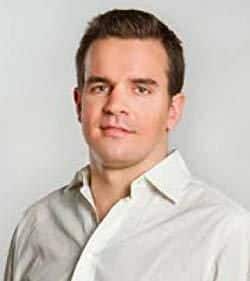
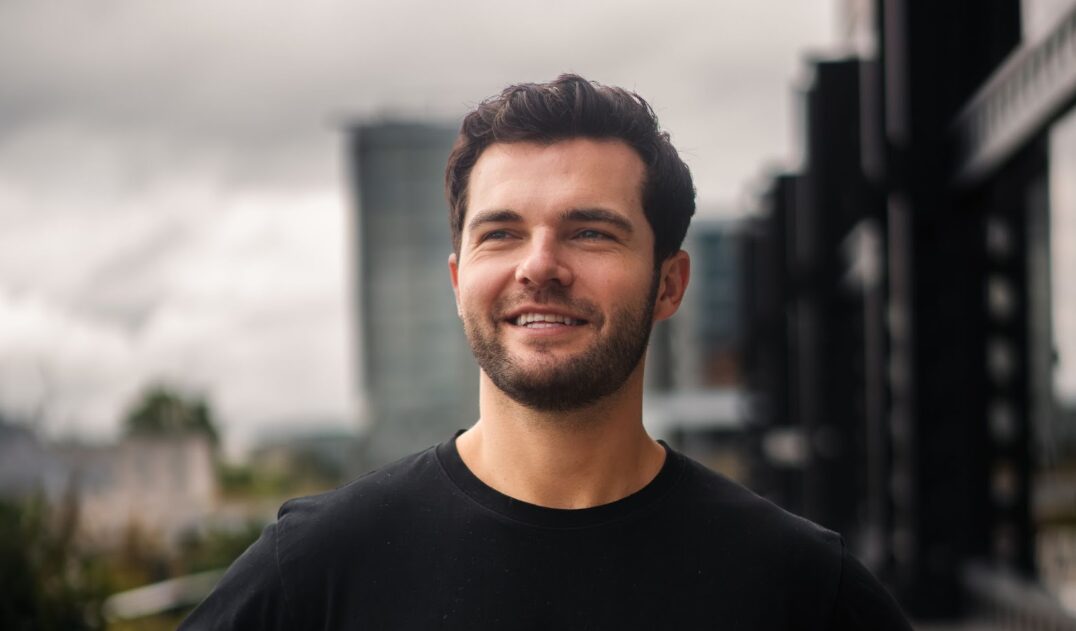
Ben Freeman’s story is not one of overnight success or neatly plotted career moves. It is a story of friction—between old-economy instincts and venture-scale ambition, between external validation and internal conviction, and between momentum and meaning.
What makes Ben’s journey compelling is not just where he landed with Omnea, but how deliberately he learned what not to build, how to build, and when to walk away. Omnea has secured funding from top-tier investors like Insight Partners, Khosla Ventures, Accel, First Round Capital, and Point Nine.
In this episode, you will learn:
- Market selection is destiny, because talent and effort cannot compensate for a structurally capped industry.
- “Follow your passion” is limiting when you’re young, since you can’t solve problems you don’t yet understand or have access to.
- Trust is operational because if you don’t control critical functions, you inherit hidden risks and incentives.
- Linear prestige paths (banking/consulting/) aren’t worth it if you can’t be world-class and the upside is capped.
- Omnea won by choosing simplicity over extraction, using predictable pricing and embedding AI without turning customers into variable-cost experiments.
- The compounding edge is discipline—raise capital as a tool, hire with an extreme bar, and iterate fast rather than waste energy worrying.
SUBSCRIBE ON:
 iTunes
 Google Play
 Stitcher
 TuneIn
 RSS
RSS SoundCloud
 Spotify
Keep in mind that storytelling is everything in fundraising. In this regard, for a winning pitch deck to help you, take a look at the template created by Peter Thiel, the Silicon Valley legend (see it here), which I recently covered. Thiel was the first angel investor in Facebook with a $500K check that turned into more than $1 billion in cash.
*FREE DOWNLOAD*
The Ultimate Guide To Pitch Decks
Remember to unlock for free the pitch deck template that founders worldwide are using to raise millions below.
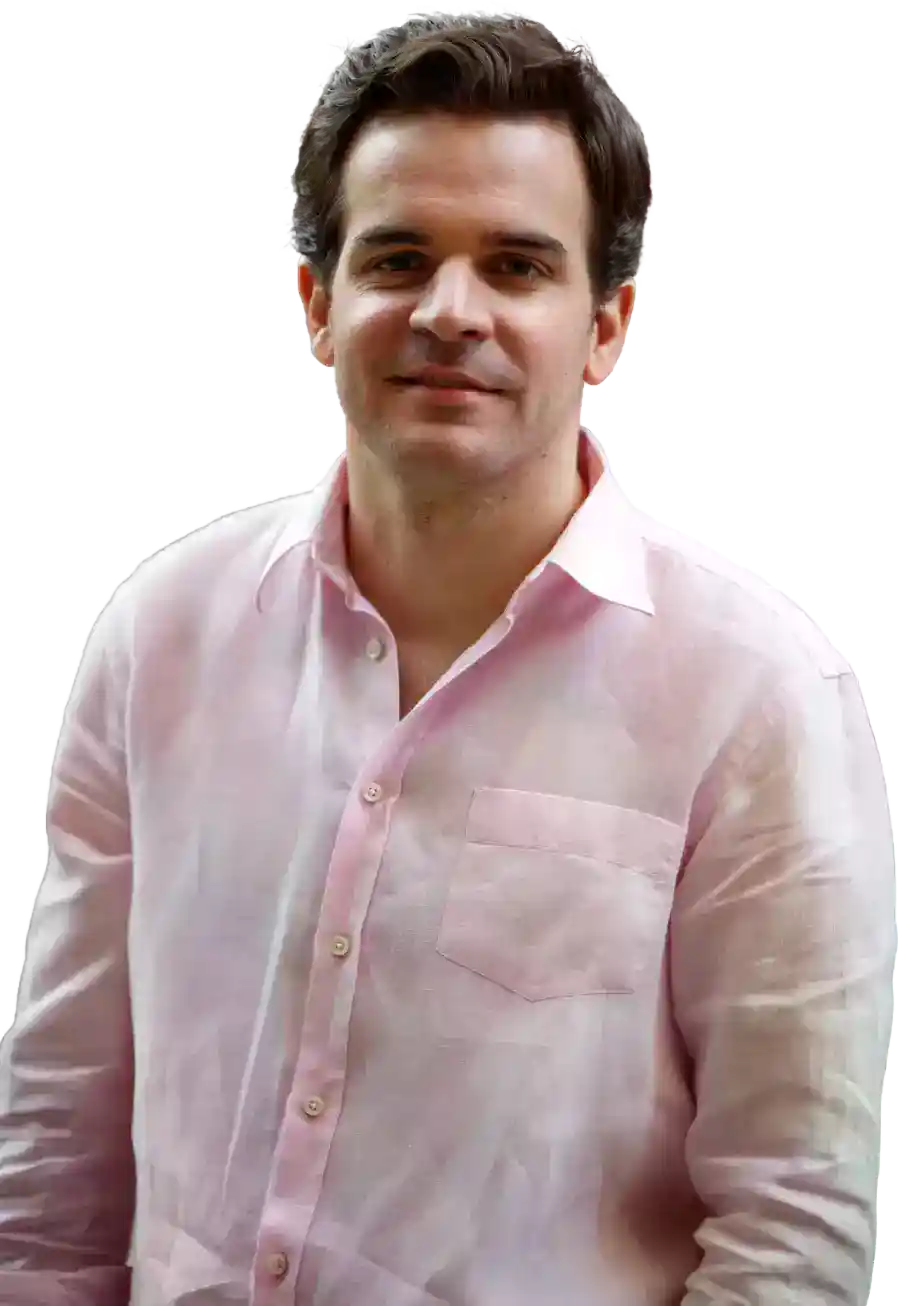
About Ben Freeman:
Ben Freeman is a seasoned entrepreneur and executive with a robust background in growth strategies and business development.
Currently serving as Co-founder and CEO of Omnea since January 2022, Ben also contributes as a Board Advisor at Heward Mills and previously acted as a Go-to-Market Advisor for B2B SaaS companies such as incident.io and Athenian.
Ben’s experience at Tessian, where responsibilities included Head of International Growth and Head of US, involved establishing the company’s presence in the US market prior to raising a Series B round.
Earlier in his career, Ben worked in investment banking at Lazard and holds a Bachelor of Science in Management from King’s College London as well as a degree in Accounting and Finance from the University of Warwick.
Raise Capital Smarter, Not Harder
- AI Investor Matching: Get instantly connected with the right investors
- Pitch & Financial Model Tools: Sharpen your story with battle-tested frameworks
- Proven Results: Founders are closing 3× faster using StartupFundraising.com
Connect with Ben Freeman:
Read the Full Transcription of the Interview:
Alejandro Cremades: Alrighty, hello everyone, and welcome to the DealMaker show. So today we have an amazing founder—you know, a founder that, you know, it’s unbelievable, this story. You know, we’re going be, you know, talking about the building, the financing, the scaling—I mean, all all of that good stuff that we like to hear.
Alejandro Cremades: And I think that today you’re going find the conversation quite inspiring. So without further ado, let’s welcome our guest today, Ben Freeman. Welcome to the show.
Ben Freeman: Thanks for having me.
Alejandro Cremades: So originally born there in Manchester—you know, near near Manchester, sorry—there in England. So give us a walk through memory e lane. How was life growing up for you?
Ben Freeman: Yeah, so I was actually born in Cheshire. That’s where I was brought up, which is about half an hour of Manchester. It’s basically—if you’ve not been—it’s kind of British countryside, particularly our was brought up. So lots of space around me. So a very pleasant place to be brought up.
Ben Freeman: You know, that’s why I love nature and animals today. But you’re near enough to Manchester to understand big cities and what that’s like. Um, and it’s kind of a warm up to London. You know, it’s like a smaller, slightly beta version, um, if you look at kind of the businesses and the way the economy works there. So I love my upbringing, and then I moved to London to study initially, but kept my business in Manchester, so lots of traveling for me in the earlier years.
Alejandro Cremades: And also lots of ideas, lots of projects. You know, even before you turn 18, you were quite the entrepreneur. What do you think that drive comes from for you?
Ben Freeman: Yeah, it’s an interesting one, because I honestly, as a kid, I think I was just obsessed with money. I remember being like—I don’t know when it started, probably like 11 or 12—but I just thought it was really cool to try and get rich. I’d say that’s faded over time. Like now the reasons I do things are less about money, and there are other parameters you consider, right? But in my earlier years, I just liked hustling and trying to make some money. So I was always selling stuff or doing stuff.
Ben Freeman: I think my dad probably ingrained that into me to some degree. He believed in hard work—like he’s a lawyer, so he thought I should be a lawyer—but more importantly, he taught me work ethic. But I chose to do that for kind of ways that could, at the time, make me money, whatever that meant.
Ben Freeman: And it was weirdly—being from kind of Manchester—the businesses are more traditional businesses. You know, a lot of people are in retail or heavy industry. This whole tech and venture backed thing was totally new to me when I moved to London. Like I was clueless at the time. So that meant I was brought up believing in kind of like proper businesses, in inverted commas—you know, like you have to make a profit.
Ben Freeman: You have to look after people a certain way. So I kind of came from a slightly different background that I’ve then tried to bring into tech.
Alejandro Cremades: That’s amazing. Now, we’ll talk about that in just a little bit. Now, one thing that it will be awesome—you know—because on day, on the first real business, you know, you dropped out of school. It was this events business.
Alejandro Cremades: I think that it will be awesome, you know, to really understand what was the biggest takeaway or the biggest lesson that you learned from that business.
Ben Freeman: Oh yeah, there’s a lot. And this was many years ago now. So the story there is: I finished high school, and I’d done some side hustles throughout. I was trading vehicle number plates and all sorts of things to kind of make money here and there. Um, and then my first proper business, as I describe it, was in the summer after I graduated from high school, and it was this events company.
Ben Freeman: And I ended up doing that for quite a few years. Um, and it kind of—suppose what did I learn from it? Look, we got to a decent scale in many ways. The main thing I learned is that you have to select the business you build, to a great degree, based on the market and what it can become. Because a lot of people tell you, you know, follow your passions or do what you understand—solve problems you know.
Ben Freeman: That’s incredibly limiting if you don’t know that much. You know, I was young, and you’d never start a B2B SaaS company, right, if you’re solving problems for corporates. I didn’t know what corporate was. So, like, you know, I think back then I was trying to solve problems I understood.
Ben Freeman: There were so many learnings, because at the time I was employing—I mean, I’ll give you a couple of stories—but I was employing people much older than me. And one problem I had, for example, was: when you run different events, you have to run the doors. You know, you need bouncers or doormen to keep your events secure.
Ben Freeman: And it turns out if you go to companies, those doormen have deals with the local drug dealers or gangs. So they let certain people in, and they’re controlling your door, and they might be making some money on the side. If you’re not in control of that, you face risk.
Ben Freeman: There could be violence that you don’t see coming, or they could take the money, or whatever. So I ended up doing that in-house. We built a security company as well. And, you know, I made a little margin on the doorman I was kind of renting out. So I kind of realized, quite young, the importance of trust and working with people that you can kind of get on with.
Ben Freeman: But yeah, the main lesson, if I have to choose one, is just that it was a shit market.
Ben Freeman: If you look at the most successful events company owners in the world, the magnitude of their businesses—or the scale of the wealth they create for other people and the economy in general—is so much smaller than if you look at even a mid-tier tech company. So I just think there’s an element of choosing your market, decide the impact you want to have on that market, on society, on the economy, on people. And, you know, you can put smart people in a shit market, and the outcome is not going to inspiring.
Alejandro Cremades: I mean, I think that you’re right on. I think that for founders listening, choosing a market that is big enough—choosing a market that also is growing at a really nice rate—makes all the difference. Yeah, and that’s really where magic happens, where you’re able to plug in an awesome team. I guess for you, right after this, you ended up moving to London for university. I mean, you have great schools in Manchester. You know, why going all the way to London? What got you there?
Ben Freeman: Yeah, well actually I didn’t the first time. So I went to—I never tell this part of the story—but I went to Warwick University to study accounting and finance for all of three and a half weeks. And then I dropped out, and I just—at the time—I wasn’t ready to really be back in education. I was so bored of doing exams. I’m deeply competitive. So if I’m going to do an exam, I want to come top, and I’ve never got less than an A. So I’m not that smart, but I’ll work hard and I’ll get the grade.
Ben Freeman: Um, I just couldn’t be arsed going through that process again, jumping straight back into uni. I’d chosen Warwick because it was number one for accounting and finance that year in the kind of league tables or whatever. And that was the—you know—I suppose it wasn’t a deeply thought out decision.
Ben Freeman: I just felt entrepreneurship resonated with me way more. Um, so yeah, so I dropped out of that, I kept the business. And then, that first year of running the events company, I realized: okay, I’m doing quite well—financially I was doing okay. I had good people. There was some good with it. But I realized this wasn’t gonna be my career. Like the problems I was dealing with—the violence, the drugs, the issues you have running events company—I was like, I’m selling myself short here.
Ben Freeman: So I then realized I should go back to uni, but I didn’t want to stop the business. So the next time I applied to uni, I only applied to London universities, um, because I thought I need like an upgrade from Manchester.
Ben Freeman: So I was either going to go abroad or go to London, but I wanted to keep my events company, which I ran the whole way through university. My offices were in Manchester, so it was very busy between London and Manchester. So I ended up getting into lsc, which one could argue is better than King’s academically.
Ben Freeman: But I realized I liked the culture of King’s. I like the people. I really liked the course. I was basically studying management, and part of me also thought I need to keep this business running.
Ben Freeman: I’m working probably, don’t know, 40, 50 hours a week when it’s busy on that, and I’ll have studying and presumably have to revise. So that was kind of my framework for the decision.
Alejandro Cremades: So you went to London, and then you tried a little bit of investment banking. You were also exploring what could be essentially another startup that you could do—another business that you could do. But you ended up joining another startup.
Alejandro Cremades: So walk us through the motions there, through the sequence of events, because obviously joining this other company, Tessian, was quite pivotal, no, because it was the most immediate step possible for you to get started with your baby now, with Omnea, which is a smashing success. So walk us through what happened.
Ben Freeman: Yeah, so back then, I got out of this events business. I ran it for like four or four and a half years or something. I did quite well in the sense I’d made a bit of money, I’d put myself through university, and, you know, I was doing all right.
Ben Freeman: Then I basically went existential. I was like, shit, what should I do? Because I got out of it in good terms. I now identified as an entrepreneur to some degree, but I’d also worked hard at university. I’d got a very good grade. I had all these doors open.
Ben Freeman: So then I kind of got lost in sort of the rat race again. So I applied to MBB—you know, McKinsey, Bain, BCG. I applied to some investment banks. And I thought, right, shall I do consulting or banking? I just wanted to prove I was smart, I think. In the end, I sold myself on the idea of a boutique investment bank being more entrepreneurial, whilst also giving me some prestige.
Ben Freeman: And that’s why I chose Lazard. And I think Lazard’s an amazing institution. And if I wanted to be an investment banker, I’d probably look at Lazard. I think they’re really smart. But within three months of being there, I realized it was not playing to my strengths.
Ben Freeman: There were people around me that would probably pick up financial modeling or whatever faster than me. I couldn’t see how I’d be world class. So then I set about trying to start another company.
Ben Freeman: And I was still in this old economy mindset being from Manchester, where I was like, okay, I’ll start an alcohol brand.
Ben Freeman: How could I pivot my events company? The guy I’d done events with in the later days—this guy called Ben Shalom—he stayed in events and he went on to run kind of boxing events. So he pivoted the business model we had been doing with the festivals and gigs and other things we’d been doing. He did events and he built onto a huge success.
Ben Freeman: But at the time, I couldn’t see that path. And I was thinking, well, I need a different career. I just don’t know what. So I explored for ages. I remember there was no stone unturned. And it was not a fun phase because I was just spending money, not earning any.
Ben Freeman: Everyone’s getting on with their careers, and I felt really, really stuck. Um, and then I met this guy, Tim Sadler, who had founded this business. I mean, at the time, it wasn’t really a business. There were like four or five people with this idea. It was called Czech recipient.
Ben Freeman: So it was a really shit name, and it had an awful logo, which is why I say it was barely a business. But these were these three guys—Tim, Tom, and Ed—who had co-founded Czech recipient, and they’d been kind of bumbling around for two or three years, changing ideas. It’s kind of what to… but they were doing a tech thing.
Ben Freeman: It became email security. But at the time, what I realized is they seemed smart. I liked them. Um, they just seemed like high-integrity, reputable people. And they had a similar opportunity cost to me because they were relentless in their ambition. They wanted to start a business, and they had been bankers.
Ben Freeman: I ended up joining what was kind of the founding team, or the early team, of this company, Czech recipient. And that was just before the seed round.
Ben Freeman: And that, looking back now, is how I learned about this thing—VC, B2B SaaS, that whole model—which was totally alien to me. And I was kind of dragged through it, basically.
Alejandro Cremades: So at what point do you realize, you know, with the journey in Tesco, because there you were in London, and then you also New York, you also experienced a little bit like the Bay Area—at what point do you realize, hey, I think that maybe there’s like something else for me? I think that maybe I’m prepared now for starting because, as they say, once an entrepreneur, always an entrepreneur. I mean, and even all the way up to 18, you were starting your own companies, even though we’re like way before what you did—that first events business, as you were alluding to. But you had it in you.
Alejandro Cremades: But it sounds like you failed, or maybe that you needed to really understand what that transition into tech may look like. It sounds like you were looking to get a little bit more background and educated before making that jump again. What do you think triggered that jump?
Ben Freeman: Yeah, I think, firstly, that’s a very kind way to look at it. Because you could look at it like you’re being dragged through stuff, learning, and then with hindsight connect the dots and make it sound linear. Or you can look at it and think, oh, I needed to learn. I didn’t know at the time I needed to learn this space to be a perfect stepping stone for another thing.
Ben Freeman: And I treated that business as my own. I didn’t own the whole thing, and economically I certainly didn’t, which was painful. But I worked as if it was, and I made deep sacrifice for it.
Ben Freeman: No—there was a point where I started to lose emotional ownership, I think post-Series B at Tessian. So we raised this hype round from Sequoia.
Ben Freeman: We were really hot—great talent density, lots to be excited about. But a lot of decisions started to be made that I disagreed with, and they weren’t all my decisions. And there was a deep sense of frustration with that.
Ben Freeman: And I’m really good friends with Tim and all of the early team there. We’re all good mates. So it was kind of open discussion, but equally, we were all unproven. And there were a lot of first-timers in that room, right?
Ben Freeman: So we started hiring these experienced execs who did this and did that, and I then started to feel like I wanted to do it differently. And I was no longer satisfied. So that was kind of the start of the end in many ways.
Ben Freeman: And we were all going through that journey, but I was getting more and more frustrated. And actually, at Tessian, when I moved out to New York, I pushed too hard, and I ended up becoming horribly depressed—really just in a very dark place for like a year and a bit.
Ben Freeman: So I’d sacrificed such a great deal, and then the upside also wasn’t there in the end economically from a few of the decisions we made. So then, very amicably, I started to plan my way out.
Ben Freeman: And it was kind of like succession planning, in that there were open discussions. I spoke to Tim—he knew my views. And then it was just: what will I do next though?
Ben Freeman: Because Tessian was a great business in so many ways, particularly those early days—very, very special people, and many have gone on to do amazing things. If I was going to do something else, it had to be bigger and better and stronger than that. And that felt quite difficult.
Ben Freeman: And we can kind of talk about that phase—the exploration of what to do next. But I went through a similar journey I’d gone through the first time, but now with what felt like higher stakes and a higher bar for myself. So it was actually more difficult to settle on something.
Alejandro Cremades: So out of all things, why Omnea? How do you stumble across the idea of Omnea, and what was the founding story of it?
Ben Freeman: Yeah, so looking back now, I can give you this in a tighter way. I accidentally knew about procurement from my time building Tessian. The story there is: Tessian, for those that don’t know, was an email security company, and we served large enterprises. So we had pretty amazing customers. You know, most of the world’s leading investment banks, law firms, loads of tech companies—they used our product for email security.
Ben Freeman: And because we sold them our email security, I became exposed to the procurement process, and I hated it. It was awful. It was one of the most broken processes and functions of a business I’d ever come across. And I couldn’t really understand. I thought, why is it so shit? What is going on here?
Ben Freeman: And I felt bad for the people doing it because they were set up for failure and they had the wrong systems. And there were lots of parallels I could draw between that and Infosec—the space Tessian was building in back in 2017—because of GDPR and all of these different regulatory things happening. Cybersecurity was gonna become big.
Ben Freeman: I noticed relevant things happening in the broader economy that would make procurement go bigger. You know, there was a drive for capital efficiency because markets were tanking. There was an increased focus on risk and governance. And there was this AI thing.
Ben Freeman: And that was going to change how we could run a lot of these manual processes. So that is why I ended up on procurement as a space.
Ben Freeman: Although actually, I’m skipping kind of the truthful part of that, which is that’s like the VC shiny story—you know, that’s how it all works together. In truth, there were so many things I almost did before I settled on procurement and Omnea.
Ben Freeman: I had researched so many different ideas, looked at so many different business models. Um, I was pretty disillusioned at the time with venture and tech. I thought valuations went absurd in COVID. I just stopped believing in a lot of the market.
Ben Freeman: So I was looking at roll-up strategies, traditional economy businesses. I almost started a premium ice company where I was buying a manufacturing facility. And so, you know, there were so many things that could have been. And then even in tech, I had term sheets for two different ideas that were not procurement or Omnea.
Ben Freeman: But going back to the point before—Tessian was good, the bar was high—I could disqualify all of these things. And by the way, this is like a year, a year and a half of solid work without anything to show for it. But I managed to disqualify those things.
Ben Freeman: And then realize, right, now this procurement thing is the one. And I had a good foundational understanding of why it was the one, how big it could get.
Ben Freeman: So a lot of people have these founding stories of how the first year of their business was exploring the space, speaking to people. I did that the year before the business—maybe even a year and a half before the business—and it was a really intensive experience. By the time I landed on it and committed, my conviction was high, and I wasn’t going quit.
Alejandro Cremades: So now for the people that are listening to get it, what ended up being the business model of Omnea? How do you guys make money?
Ben Freeman: Enterprise software, basically. So it’s funny—now I could almost say good old-fashioned enterprise software. But basically, we charge—we’ve disrupted the pricing model in the market a bit—because we will look at a company and say: what’s your headcount, roughly? Right, you’re at 5,000 people. What integrations do you need? Here’s the price. You’ll pay that every year.
Ben Freeman: It’s not usage-based. It’s not based on expensive admin licenses like some of the incumbent platforms. And increasingly, we’re embedding a lot of AI automation and workflows in the platform.
Ben Freeman: So there are all these agentic processes now in the platform, but we are not breaking them out separately to charge for them. Because actually, if you’re a large corporation nowadays, you just need to know how much things are going to cost.
Ben Freeman: You don’t want to be told it might be 100 grand, but if you use it loads and somebody uses that agent, it might be 300 grand. How do they plan around that? So we are disrupting the pricing model by allowing them to have certain levels of usage and certain agents with nice, simple pricing.
Alejandro Cremades: Now, for the people listening too—because you guys have raised about $75 million—and you guys are really careful about the valuation. You were talking about it too, and what you were seeing with COVID, which was insane when it came to valuations. And we saw what happened next—companies that were too overvalued, down rounds, resets.
Alejandro Cremades: In terms of, for you guys, the $75 million and the experience and that journey—going through all those different life cycles and financing cycles—how did those rounds come together, and what were you learning from them? Because this is really the first hyper-growth business that you’ve built yourself, like as a founder. So walk us through that.
Ben Freeman: Yeah, I think, firstly, I did have probably an unusual amount of learnings from building Tessian, right? We raised over 130 mil from Sequoia, Excel, and great VCs. So I understood the model, I knew a lot of the people, and I’d seen it. You know, we’d been underwater at a moment in time, so I’d had that feeling too. Um, so there are so many learnings in this.
Ben Freeman: But my journey with Omnea has basically been me viewing fundraising as a rite of passage, and it sort of—let me explain—I don’t want to raise as much as I can because I can.
Ben Freeman: You know, we could go raise another 100 mil now on a really punchy valuation. That doesn’t mean we are any more successful than we are without doing that. And I think personally—when markets are ripping—I might look stupid saying this, and I hope it ages well, but I don’t think that’s a good barometer of success.
Ben Freeman: The way I like to view it is: right, what should a business look like? What do the market benchmarks indicate? Up to Series B, we used to use Christoph Janz’s SaaS napkin for our benchmarks. And it’s like, cool, this is what you need to get to.
Ben Freeman: Maybe you raise a bit before those benchmarks, maybe you raise a bit after. But I want to stay grounded in reality. I want to speak openly as a company about why we value this way and how we value this way.
Ben Freeman: At some point, the music always stops, right? And the markets wake up to the realities and the typical metrics you’d expect. So that’s how I view this.
Ben Freeman: And again, even same for the A—that round was slightly preempted—and similar for the B. So we’ve had a fortunate journey where there’s been investor interest before we were necessarily hunting.
Ben Freeman: But we have still stayed true to what we believe in, in the sense we’ve stayed sensible. And I believe it will become an advantage over time because we have learned to do more with less.
Ben Freeman: Let’s see though, right? When markets are like they are now, it is basically back to COVID times, if we’re honest. In certain pockets of the market, you can get away with a lot.
Ben Freeman: And I think a lot of companies out there are being forgiven for a lot—basically a lack of rigor and not actually executing that well—but from the outside, it looks like it. And I think there comes a time when that becomes obvious, and we want to be really strong in that moment, with a good foundation. And that’s why our fundraising strategy reflects that.
Alejandro Cremades: So obviously, whether it’s investors or employees, they’re always betting on a vision. So to that end, let’s say, Ben, you go to sleep tonight and you wake up in a world where the vision of Omnea is fully realized. What does that world look like?
Ben Freeman: I think there are so many aspects to this, but ultimately we want to be the system—the platform—you go to if you work at a company and need to do something relating to a supplier. Let’s say you work at Spotify. They’re one of our customers, and maybe you’re in Spotify’s marketing team.
Ben Freeman: You want to sponsor a booth at a conference, or maybe you need a new system, or maybe you need to hire a contractor. We want Omnea to be ingrained in people’s minds as the thing you go to in order to get that done.
Ben Freeman: So it makes the process really nice for the end user. There’s AI that acts as a conversational intake, where they just chat with a thing and say, “Hey, I need this.” It suggests similar things and guides them through the process in a really easy way.
Ben Freeman: And then, on the back end, they don’t even know this is happening, but it’s taking the contract to legal. It’s automatically analyzing it for the legal team and saying, “Hey, here are the things to look out for.” Same for the risk team.
Ben Freeman: For the finance team, it cuts the PO and pushes it into the system so suppliers can be paid. So it’s kind of completely automating the back end, and we become the platform everyone thinks of and uses for anything relating to a supplier.
Ben Freeman: We’re allowing companies to turn procurement and supply management into an area of competitive advantage.
Ben Freeman: If you think about it—an analogy I’ll give—what determines the productivity of a business? It’s the people and the systems they use. If you look at the effort companies put into attracting, retaining, managing, and supporting their people, it’s vast. Everyone knows that’s a key focus.
Ben Freeman: Now look at suppliers. How do companies source, manage, choose, and pay their suppliers? There’s a complete disconnect. The process is disjointed. No one likes it. It’s a mess.
Ben Freeman: If you can fix that and become the company that turns it into a competitive advantage, it completely changes the trajectory of the businesses you work with.
Alejandro Cremades: When you said, “imagine you work at a company,” it reminded me of how obsessed you are with hiring. Why is that the case?
Ben Freeman: Yeah, I think this is one of my key learnings from Tessian, but also from that first events business. Everyone says it’s all about the people—and it really is. What does that mean for me?
Ben Freeman: We have a very specific equation for what we’re looking for and how we weigh it. We have values, and we hire against those values. I won’t go through all of them now because it would be a very long explanation.
Ben Freeman: But essentially, we want to be incredibly fussy. We believe it’s a compounding strategy to have the best people—people who are willing to give more to the business, the mission, and the team.
Ben Freeman: We would rather pass on an eight-out-of-ten person, even if we’ve spent ten hours with them and they’re solid and decent. For us, that won’t work at this stage. Ask me again when we’re a thousand people—maybe we need to change how we do it then.
Ben Freeman: But my view, and what the best businesses I know do for as long as they can, is to focus on those special people. Our approach reflects how hard that is.
Ben Freeman: There’s no easy, hacky way to do it. Part of me doing this podcast is about improving employer branding. It shouldn’t be so outbound-heavy. There are some things you can do to make it easier, but fundamentally, good people need to find us, or we need to find them.
Ben Freeman: And when we do find them, it’s a very intensive process. You meet a lot of people, there are practical challenges, and you hold a very high bar. I won’t go through the exact process, but it’s extremely rigorous.
Ben Freeman: If someone gets through and gets an offer, they feel it. It’s not like, “Oh, I wonder if I’ll take that.” You can’t get through the Omnea process and be unsure if you want it. It’s too much effort.
Ben Freeman: You’d quit along the way if you weren’t sure—and that’s partly intentional. We want people who might quit to quit before they join us.
Alejandro Cremades: That’s amazing. We were talking about the future, so now I want to look at the past through a lens of reflection. Imagine I put you in a time machine and bring you back to university, when you were deciding whether to drop out, venture into the unknown, and become a founder.
Alejandro Cremades: If you could give your younger self one piece of advice before launching a business, what would it be, and why?
Ben Freeman: That’s hard.
Ben Freeman: If it’s one piece of advice, I have to keep it simple—though I’ll probably add bits at the end. If I could really talk to myself in a way that I’d listen, it would be this: time spent worrying is time wasted.
Ben Freeman: I’d urge myself to be proactive and just work towards things.
Ben Freeman: The reality is, you don’t know where it’s all going to go. I can connect the dots looking backwards now, and maybe in five years I’ll connect them again and think it was all a shit show. Who knows?
Ben Freeman: The point is, you’ve got to have a mindset of just getting on with it. It sounds trivial, but I spent so long worrying, being existential, and being stressed. Sometimes that made me work harder, so it wasn’t all bad.
Ben Freeman: But generally, having the attitude of “I’m going to get to wherever I’m trying to get to” is about speed of iteration and just getting on with it. Do the thing. Learn another thing. You’ll do events, realize events is a shit industry, and you won’t do that again. Great—the faster you learn that, the better.
Ben Freeman: Just get on with it and move to the next one.
Ben Freeman: I think that mindset makes me a happier person and, hopefully, a more successful one in business. As I get older and see the next generation of entrepreneurs coming up, I realize that all the stress and worrying people put on themselves isn’t always the most productive way to reach an outcome.
Alejandro Cremades: That’s so profound, Ben—being intentional about where you allocate your energy. That’s spectacular. For people listening who’d love to reach out, say hi, and learn more about Omnea, what’s the best way to do that?
Ben Freeman: They can email me—Be***@***ea.co
—or find us on LinkedIn. Yeah, I’m responsive.
Alejandro Cremades: Easy enough. Ben, thank you so much for being on the DealMaker Show today. It’s been an absolute honor to have you with us.
Ben Freeman: Thanks so much. Appreciate it.
*****
If you like the show, make sure that you hit that subscribe button. If you can leave a review as well, that would be fantastic. And if you got any value either from this episode or from the show itself, share it with a friend. Perhaps they will also appreciate it. Also, remember, if you need any help, whether it is with your fundraising efforts or with selling your business, you can reach me at al*******@**************rs.com
Podcast: Play in new window | Download
Subscribe: Apple Podcasts | Spotify | TuneIn | RSS | More
Facebook Comments