



Andrew Jamison, co-founder and CEO of Extend, chose an entrepreneurial path that didn’t involve a bold dive. Instead, he spent years quietly learning, observing, and accumulating enough pattern recognition to know when it’s finally time to build.
Extend has raised more than $70M, built deep network-level trust with card issuers, and carved out one of the most compelling B2B2B positions in fintech. Its investors include Point72 Ventures, FinTech Collective, March Capital, and B Capital.
In this episode, you will learn:
- Growing up across cultures taught Andrew to read people, build trust quickly, and turn early identity confusion into a lifelong business advantage.
- Consulting gave him “entrepreneurship of the mind,” combining problem-structuring with deep technical and accounting skills that later powered his product thinking.
- Twelve years at American Express refined his execution muscle and B2B product instincts, while also showing him when big-company paths no longer fit his strengths.
- A sabbatical, triggered by his mother’s illness, gave Andrew the space to rediscover his love of building products, simplifying complexity, and solving real B2B pain points.
- Extend was born from a simple insight: instead of forcing companies to change banks, overlay modern virtual card and spend tools onto existing issuer infrastructure for SMBs.
- Andrew’s fundraising journey—from friends-and-family capital to $70M+—taught him never to let investors rewrite his story and to prove trust with a real, working MVP.
- Andrew’s core advice to founders is to be “really freaking focused,” build trust but always verify, and remember that the quality of your investor relationships is revealed when the cycle turns.
SUBSCRIBE ON:
 iTunes
 Google Play
 Stitcher
 TuneIn
 RSS
RSS SoundCloud
 Spotify
Keep in mind that storytelling is everything in fundraising. In this regard, for a winning pitch deck to help you, take a look at the template created by Peter Thiel, the Silicon Valley legend (see it here), which I recently covered. Thiel was the first angel investor in Facebook with a $500K check that turned into more than $1 billion in cash.
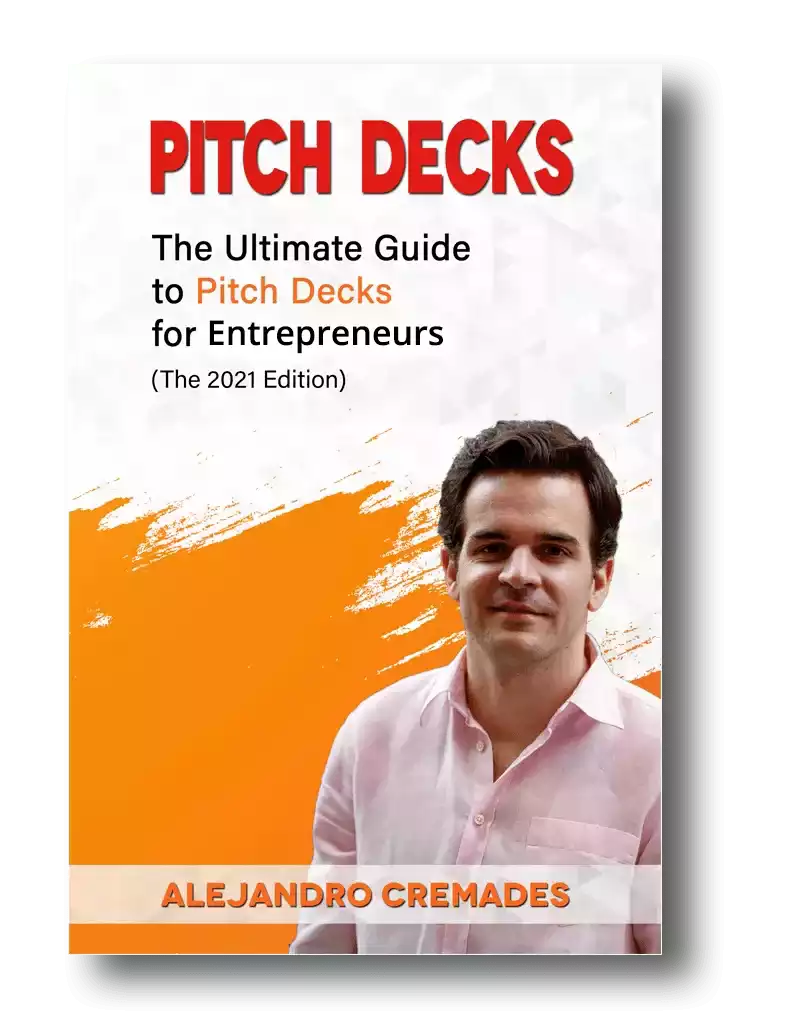
*FREE DOWNLOAD*
The Ultimate Guide To Pitch Decks
Remember to unlock for free the pitch deck template that founders worldwide are using to raise millions below.
About Andrew Jamison:
Andrew Jamison started Extend with a view to fill the gap in modern spend & expense tools for SMBs and their trusted bank partners. Prior to Extend, Andrew was the head of B2B Corporate Payments Products at American Express with a mandate to drive digital payment innovation and adoption.
Over the course of six years, Andrew doubled B2B payment volumes by launching and scaling new capabilities and platforms. Prior to American Express, he spent eight years managing global SAP deployments for large multinational corporations. He earned an MBA from INSEAD.

Raise Capital Smarter, Not Harder
- AI Investor Matching: Get instantly connected with the right investors
- Pitch & Financial Model Tools: Sharpen your story with battle-tested frameworks
- Proven Results: Founders are closing 3× faster using StartupFundraising.com
Connect with Andrew Jamison:
Read the Full Transcription of the Interview:
Alejandro Cremades: Alrighty, hello everyone, and welcome to the DealMakers show. Today we have an amazing guest. It’s been quite the journey—close to a decade—with his startup.
Alejandro Cremades: And again, a decade in the world of startups is a lot. If you compare it to corporate, it’s like dog years. We’re going to be talking a lot about cycles, the way to think about focus, capital raising—all of that good stuff we like to hear when it comes to building, scaling, financing, and everything above. So brace yourself for a very inspiring conversation today.
Alejandro Cremades: And without further ado, let’s welcome our guest, Andrew Jamison. Welcome to the show.
Andrew Jamison: Thanks, Alejandro. Looking forward to the discussion.
Alejandro Cremades: So originally from the UK, I would say, but with parents from Australia and Sweden. You had that interesting combination early on as part of your upbringing. Give us a walk through memory lane. How was life growing up for you, Andrew?
Andrew Jamison: It was confusing. It was confusing, and I didn’t really know where I was from. I had to assimilate to lots of different cultures very, very quickly. It was very clear early on that I wasn’t French despite being in a French system.
Andrew Jamison: And then I went into the English system to go to boarding school. It was really clear that I wasn’t English because I spoke with a French accent. So it creates an interesting play where you really try to figure people out and understand the cultural differences, and how to drive that assimilation. I think that actually served me well later in life. It’s a challenge in the moment.
Andrew Jamison: But afterward, you realize that understanding culture and understanding how people react to different things is super helpful in driving engagement with people, which ultimately drives trust and all these other things that are critical in business. So a bit of an Achilles heel when you’re a kid because you want to be like everyone else, but actually a great asset when you grow up.
Alejandro Cremades: So tell us about the sabbatical and when you were traveling around. You were talking about cultures and understanding people. That’s everything when you’re in business—being able to really listen, listen for concerns, and after you understand someone, really understand what can drive that person given where they’re coming from. What kind of perspective did the travels and cultures give you? How did that help you as an entrepreneur?
Andrew Jamison: Well, I think the best part about traveling when you’re young is you have no money, and so you’re stretching everything. You’re engaging with different elements of society across the board.
Andrew Jamison: I ended up going to Australia because my father’s Australian, and I was working as a storeman and packer—people were storing and stacking boxes for shipments. I then worked on a sheep farm and actually worked there in two different stints: once during the shearing season and once during the castration period.
Andrew Jamison: I was working with people who had never been more than four hours from the farm I was working on. And I was coming from the other side of the world.
Andrew Jamison: And despite being Australian, to them I was very English. I tried to deflect that and said, “No, I’m really French,” because I know Australians and Brits have a bad rap. And of course, at that period, the French had just shot down the Greenpeace ship.
Andrew Jamison: So that didn’t go down very well.
Andrew Jamison: But all in all, you learn. You learn how to relate to people irrespective of where they come from or what part of society they come from. And again, welcome to life.
Andrew Jamison: It’s even more relevant inside a startup because you’re dealing with no brand, and you have to build that brand and trust across the whole ecosystem.
Andrew Jamison: So I think it was really helpful in that guise as well.
Alejandro Cremades: Now, in your case, you went to Bath for university. And right after that, you went into consulting. So why consulting out of all things?
Andrew Jamison: It’s interesting. For me, consulting was a way of discovering what I liked to do. I had a choice of joining one of the three strategic consultancies or going to work with a startup in the SAP space.
Andrew Jamison: SAP was growing really fast in the mid-90s. I remember my father famously saying to me, “Why would you go into strategic consulting? You actually don’t know anything.” It’s not that he was wrong.
Andrew Jamison: You learn different things. And in the first couple of years, I regretted it because I realized quickly that strategic consulting was about two-by-twos, three-by-threes, how to present things, and how to do different things.
Andrew Jamison: But I learned something foundational going into consulting. I learned about coding. I learned about the logic of things and how you relate things back to the database and how that whole piece has to work.
Andrew Jamison: And then I learned a core functional skill—accounting—because I focused on finance. So I learned two core skills that have paid back over time. And I think that’s the most important thing when you’re in the early years: learn something and learn it really, really well.
Alejandro Cremades: What about the way you related to problems? In consulting you take big problems and break them into small ones. What about your relationship to problem-solving?
Andrew Jamison: I think consulting gives you entrepreneurship of the mind. You’re always on your feet, always trying to stay one step ahead of the client.
Andrew Jamison: You also don’t have the legacy of being inside that company, so to some extent you’re a free spirit and can rethink things.
Andrew Jamison: If things are stupid, you’re quickly told that. But you learn how to rethink problems and look at them completely differently. That helps you come up with real innovation in my mind. You’ve got to follow it through, because with consulting you often don’t get the execution.
Andrew Jamison: That’s why I say it’s entrepreneurship of the brain—you’re constantly challenged to stay one step ahead of the client in a discipline they sometimes know better than you.
Andrew Jamison: Later, when I went into enterprise, you get more entrepreneurship around execution, and you can meld the two together. That’s where the startup world comes together for me—bringing the best of the two to keep driving things.
Andrew Jamison: But consulting was truly about being nimble. We were 50 people when I joined; within five years we’d grown to 700 organically.
Andrew Jamison: Suddenly I was flying to the US, sitting in front of one of the boards of Polaroid, talking about how they should think about their systems from a finance perspective, how things should roll up, how they could gain flexibility and get insights into what was happening inside their company.
Andrew Jamison: And I was 27 years old. That’s the benefit of being in a small but fast-growing firm. You get pushed into many things and get a breadth you wouldn’t have gotten at a big consultancy firm.
Alejandro Cremades: You did your MBA at INSEAD, and many people end up launching their own business after. In your case, you went to American Express. Why were you avoiding starting a business?
Andrew Jamison: There are two parts to that. The first was a bit of a comeback to when I went into consulting at a startup. We were 50 people, and yes, it was classic consulting—bums on seats and billings.
Andrew Jamison: But I really missed the idea of sitting behind a massive brand.
Andrew Jamison: I was jealous of people having a brand they could walk into a room with and have instant credibility. We came from a small consultancy firm that grew fast and went public, but it wasn’t a real brand. So part of me wanted to understand what it was like to work for a big brand.
Andrew Jamison: Number two is my father was an entrepreneur.
Andrew Jamison: He went through three or four different businesses. I saw what that world was like. It’s fast, it’s furious in a totally different field. He was mostly into shop-fitting equipment at massive hypermarkets in France—from shelving all the way to digital labels you see on shelves today.
Andrew Jamison: It was hectic and nonstop. It didn’t matter if it was Friday night or Sunday morning.
Andrew Jamison: Meanwhile, I saw my uncle, who was an executive in the pharma space living in Switzerland, and I liked the big brand thing again. Two different worlds.
Andrew Jamison: It was circumstantial. I ended up starting a business. I didn’t leave Amex thinking that. I left for different reasons, which again got me to where I am today.
Alejandro Cremades: You were at Amex for about 12 years. After that, you left because of a family situation. Walk us through the sequence of events that needed to happen for you to say, “Okay, now it’s time. Now I want to bring Extend to life.”
Andrew Jamison: I learned so much at American Express—around structure, culture, execution. It’s a great factory for people.
Andrew Jamison: I chose to leave at a time when Amex was going through its own change. A new CEO was coming in. Ken Chenault had been this huge figure inside the company.
Andrew Jamison: There was a new set of emerging CEOs. Steve Squeri became that and has done extremely well. You look at the share price and it’s eye-popping. Amazing.
Andrew Jamison: But for me, it was time. I was often told, as part of the executive leadership program, “Andrew, you need to go into consumer. You need to see different parts of the business.” I had no interest in that side. I was deeply ingrained in product and B2B.
Andrew Jamison: I wanted to stick with that train because it felt like a TGV. The consumer business felt like a steady local train. I had no intent of moving out of B2B.
Andrew Jamison: But then my mother got sick for the fourth time. It was a life moment—realizing life is finite. She had dodged a bullet 12 years prior.
Andrew Jamison: I’d been living in the States for a decent period and thought, “I just want time out.” A sabbatical wouldn’t give me the time I needed.
Andrew Jamison: What happened in that time out is I actually had time to think. Back to Amex telling me I should go into consumer—okay, but stop all of that. What do I actually like doing?
Andrew Jamison: That takes time because you’re influenced by a million people telling you what you’re good at and what you should do. I had no projects. I asked myself: What is it I fundamentally like?
Andrew Jamison: I realized I liked building things. I like figuring out problems and simplifying what those challenges can look like.
Andrew Jamison: Ultimately, I realized I love product. And I love consulting with clients who have challenges that need to be overcome.
Andrew Jamison: That was the first piece.
Andrew Jamison: Then I started thinking: how do I solve some of the challenges in B2B? It quickly became apparent there were lots of challenges around making technology available to different customer segments, even inside the corporate card world I lived in.
Andrew Jamison: That’s when the idea dawned on me that digital cards had been constrained because of legacy technology. And I was like, “Well, hang on…”
Andrew Jamison: At the end of the day, we all use credit cards, whether we’re consumers, as a household, or essentially we’re a massive organization, a global organization. And so, why should digital credit cards not make their way across the the gamut?
Andrew Jamison: And so then I started going into the idea of like, well, hey, today, companies hire so many freelancers and contractors who can’t use corporate cards.
Andrew Jamison: like, well, what if we now create a platform that would allow that? So the first thinking about it was, hu there’s a huge travel opportunity in actually giving people access to spend on company dollars rather than having to go and use their cards and get reimbursed.
Andrew Jamison: Right. And that’s where we started the company at 2017 timeframe. And we all know what happened a couple of years later. Right. COVID hits. No one’s traveling. Right.
Andrew Jamison: And in fact, most contractors lost their jobs.
Andrew Jamison: But what that highlighted to us then was there was ah there was an even bigger problem in B2B spend of how you tackle sort of the tail end of suppliers and actually how would you handle this massive emerging trend around subscriptions where suddenly employees were signing up for subscriptions, right?
Andrew Jamison: But many of these employees didn’t have a card. And if you look at today and I look at Extend’s business, right, outside of rent and employees, 68% of our expenses go on a card.
Andrew Jamison: Right. My web hosting services go on a card. Right. All of my sort Jira and ticket tracking goes on a card and it’s distributed across the whole team and employees. And so very different world that we live in today when you’re building these products and you’re enabling people through these different tools and solutions just need a different product.
Alejandro Cremades: So for the people that are listening, Andrew, to get it, what ended up being Extend? What is the business model of Extend?
Andrew Jamison: Great, great question. I sort of went straight from zero to 100. Really, at Extend here, we’re we’re really about serving the SMB segment with really spend and expense management tools that are really right size for these companies that are less than 1000 employees, right, less than 100 million in revenue, and really making tools easily accessible to to to those teams.
Andrew Jamison: Right. And what we saw emerge in the US s was was I’d say neo issuers like Brex and Ramp. Essentially, they were facilitating the life of startups who had capital, but no credit history. And and therefore, they still needed to have credit card products.
Andrew Jamison: And I was like, well, why why do people have to change relationships in order to get access to technology? Why can’t we overlay technology onto the existing legacy stack and enable those same software workflows that help businesses become more efficient?
Andrew Jamison: And so spend management for me is about digital cards with controls up front, which says, Alejandro, you can only spend this amount of money over this period of time and potentially with just these type of merchants.
Andrew Jamison: And expense management, great, irrespective what card you use, a digital or physical card, how do I ensure that that spend is compliant? And how do I ensure I can get it into my books and close my books as quickly as possible?
Andrew Jamison: right it’s It’s annoying spend because typically it’s smaller tickets, but there’s so many of them and it just piles up left, and center. So how do you make that nightmare go away? Not just for the users, but actually for the approvers and also for the finance department that has to deal with all of that at the end of the month.
Alejandro Cremades: So also walk us through how was the experience of raising money? I guess you guys have raised about 70 million to date. What has been also the journey of going through the financing cycles too? Okay.
Andrew Jamison: I must admit, for me, that was the most mind boggling piece. Having been in large corporate, you spend your time begging for budgets. right And the cycle starts earlier and earlier. you know When I was there, started in August, you know was approved in December.
Andrew Jamison: Now I feel it starts in May almost. but
Andrew Jamison: So I was used to sort of presenting and sort of putting things together, but I had no idea as to how you went about to raise caps. And so we had we had a couple of failed experiments.
Andrew Jamison: Famously went down um to somewhere near Washington to meet with with one particular partner, said, don’t worry, it’s going to be three of us in a room.
Andrew Jamison: you know But the night before, he he rings up and says, I want you to change your story. I want it to look like this. And so we did that. We got on the train. The train was delayed two hours. We rushed in the door. We’re five minutes late.
Andrew Jamison: And there’s 16 people in the room, not three people. And then we tell a story that, frankly, we didn’t really mesh with. Right. And so you can imagine the train came off the track and it was just ah it was one of these things be like, you know what, if I’d been back at Amex, I’d be fired right now.
Andrew Jamison: But valuable lessons come out of it. Number one, you’re always going to get delayed to get there the day before. Right. don’t Don’t even think, even if you have two hours window, it doesn’t really matter. It’ll get eaten up somewhere along the way. So get there beforehand.
Andrew Jamison: That’s a basic one on one thing. i should have known that a long time before. um But number two is don’t let someone else tell your story. And that’s a really important thing, I think, for entrepreneurs.
Andrew Jamison: right a A little bit different. right I’m unfortunately now in 50s. At the time, I started a company, so early 40s. And at the end of the day, i’ve built experience around this.
Andrew Jamison: doesn’t mean I can’t take input, but the story is different. right The story about the company, why now, why this, has got to be something that the entrepreneur owns and shapes because you need to own the narrative around it.
Andrew Jamison: You can’t have someone else. trying to retell your narrative. um So a huge takeaway is saying, great, I’ll take the feedback, I’ll adjust the story, but I’m not going to rewrite the story to meet your needs of a story because it’s going to ring hollow when we present it. And that’s actually what happened.
Andrew Jamison: And then that’s, you know, in a way that, again, shapes you. You then bounce back and you go through. And and we presented to our first investor was actually.72 Ventures. um And so, know, we eventually ended up meeting up with Steve Cohen, having breakfast.
Andrew Jamison: um and And that was a… An interesting experience in itself is like, don’t worry, it’d be five minutes. And then before we go in there, he says, by the way, he may have a large position in one of the card networks. ah It is no longer also going to be three people. He’s brought the whole extended executive team.
Andrew Jamison: And it wasn’t 15 minutes. It was an hour and a half. But it was a great meeting, really, really great meeting. and And we really sort of dove a little bit more into sort of the the the data behind that we were collecting and kind of what we saw we could do with it over time, et cetera, et cetera.
Andrew Jamison: And so, yeah, three months later, a check came through and and we were off, right? We were off. And that was that was obviously a ah huge milestone. But I forgot one piece, actually, in terms of what the expectation from investors is. And this was a learning was as someone coming out of a large corporate, totally unknown force in the world of of entrepreneurship.
Andrew Jamison: And so there was kind of a mandate, actually, that they wanted you to raise money from friends and family before you even got to the venture capital.
Andrew Jamison: And that was a bit like, cool, we know you did well in corporate, but you actually have people here who would back you into doing your own venture. And so we actually went and raised 250,000. We had 10 people put in checks for 25K from across different parts of the industry, different parts the world, to give us credibility, but also help us to build the MVP, a fully functioning MVP, where we could take a virtual card and go and make a purchase in a shop with a card number on our phone and actually prove that the solution worked by the time we got to 0.72.
Andrew Jamison: And that was another another learning, right, which is this aspect of trust that the investors wanted to see as a sort of stepping stone to actually them putting in three million bucks and say, OK, let’s let’s go build this company.
Alejandro Cremades: What does it look like with investors when trust is present?
Andrew Jamison: Look, I’ve had i don’t know if I’m lucky, but I’ve had a ah phenomenal relationship with with my investors and it’s ah and’s a very
Andrew Jamison: respectful relationship. It doesn’t mean they’re all easy conversations. In fact, quite the opposite. they’re often difficult conversations trying to solve difficult business problems. um and And I think a good relationship with investors is good in bad times, right? and and it’s good And it’s good in good times. Good times is easy, right? The tides are rising, everyone’s raising a lot of money, everyone’s a hero.
Andrew Jamison: But you know and when the cycle comes back and and the water recedes, right that’s when the warts come out.
Andrew Jamison: That’s when people’s real personalities come out. And that’s when you figure out if you have a good working relationship or not, right, is is when that happens. uh and and i and i think a lot of that is built on being transparent with investors you’re not there’s only so much window dressing you can do with your investors and know investors to be fair spend what maybe two days right three days and a quarter actually really thinking about you so they only have a very limited time through which to absorb information so packaging up the information for the board members and And making sure that it’s really easy for them to get through it and really highlighting where the pros are, the good, the bad, and the truly ugly, and making sure that there’s communication there.
Andrew Jamison: Because once the investor invested in you, they’ve got your back. But they’ve got your back if you’ve been honest, right? I think that’s that’s where things fall over sometimes is is kind of if you’ve been telling a different story, and it all catches up with you. And I think then relationships are pretty fraught.
Alejandro Cremades: Absolutely. Now, in your case, you know let’s say you were to go to sleep tonight. you know As we’re talking about investors, obviously, therere there there are two investing and betting on a vision, now as well as the employees or even the customers.
Alejandro Cremades: But let’s say you go to sleep tonight and you wake up in a world, Andrew, where the vision of Extend is fully realized. What does that world look like?
Andrew Jamison: Look, I think you know the big question everyone says is, are you going to get public? are you goingnna you know What is the journey for this? um Look, I think the reality is most companies get bored. um and so And I think you can you have to go through that phase, and then maybe you outgrow that phase, but you could first got to go through the likelihood of being purchased. And I think that the reality of why would you be purchased? I’m not a B2C. I’m a B2B kind of company. and In some respects, I’m B2B2B.
Andrew Jamison: And so you have to realize that there’s massive power in the card networks. There’s massive power in certain issuers. There’s massive power inside of processors who desperately need technology in a world where they still operate around green screens, right? They’ve not fully moved to the cloud yet.
Andrew Jamison: And so I have to recognize by being kind of Switzerland and actually partnering with all the networks, partnering with multiple like massive issuers and smaller banks, at some point the the reality is, do you grow faster in that ecosystem?
Andrew Jamison: Now there’s a couple of outliers that come into this, which is, huh, but software companies are also coming into the game, right? There’s been a bunch of acquisitions that have happened recently right, where different players in this space have have been acquired, right?
Andrew Jamison: And so I think you’re starting to see the blend of financial services having to be more into technology and technology companies realizing they have to be more into payments. And so the worlds are colliding. So you can imagine some of the accounting solutions out there are going to need to do spend and expense management because doing the general ledger won’t be enough over time because others are coming into that space.
Andrew Jamison: So that’s another piece. And then I think because of the underlying ecosystem we built, where we built trust right with the card networks, we built trust with issuers, I think ah AI and agentic AI is also going to be an interesting place here because all we’ve heard about AI so far and about agentic side is really about the shopping experience, but we’ve not heard about any banks right participating. And I think we’re not heard about any banks because at the moment there’s this challenge.
Andrew Jamison: of hang on the agent has destroyed the the liability and the split of liability between merchant and bank issuer right and so how do you bring that back into play and i think there’s a role for someone to step in and say hey i’m going to reach back out to that user and say hey did you mean to make this purchase if yes here’s a digital card to pay for it and it’s only valid for a very short period of time and then it’s it’s over and done with and so i think that’s a role that that we’re already starting to see is developing around us
Andrew Jamison: And so there’s there’s interesting players in there.
Alejandro Cremades: Now, we’re talking about the future. I want to talk about the past with a lens of reflection. Let’s say bring you back in time, you know, maybe, I don’t know, let’s say 10 years ago when you were at Amex. And let’s say you’re able to see that younger self coming out of the building last day in the office, and you’re able to give that younger self one piece of advice before launching a business. What would that be and why, given what you know now?
Andrew Jamison: I would certainly think think narrow, right?
Andrew Jamison: Be really freaking focused, right? Because you have so limited resources. And that’s the the big thing, right? The temptation is to go big and broad. And you’re sort of told when you’re working inside of big companies, you’re like, you to have this big strategy and all these different things.
Andrew Jamison: The reality is things don’t get built that way. And so my view would be like, you know, trust, verify is like a key part, not just with employees, but actually in partnerships and relationships. Right.
Andrew Jamison: You build trust, but you have to verify that there is corresponding trust, corresponding engagement with those partners. And so you don’t end up as the one taking all the risk without actually there being a counterbalancing piece of of those those parties taking risk.
Andrew Jamison: And sometimes that comes in in the way that you shape contracts. Right. But sometimes it also just comes in the way of the amount of resources as you sit behind something. Right. Without there being any tangible results yet.
Alejandro Cremades: Now, for the people that are listening that would love to reach out and say hi, perhaps learn more about Xtend, what can you tell them?
Andrew Jamison: Look, I would obviously i I love having these kind of discussions.
Andrew Jamison: I love meeting new people. And that goes back to curiosity, which is one of our core values and is how I’ve lived my life because of the international nature of things. um They can reach out directly to me.
Andrew Jamison: i’m I’m readily available on LinkedIn. or they can reach out through email, which is andrew at paywithextend.com.
Andrew Jamison: Always really happy to engage with people who are looking for advice of, hey, how do I deal with strategics, right? How should I structure things in a financial ecosystem or in the software world?
Andrew Jamison: Those are two worlds i know really, really well, and I know how they marry themselves together and can certainly help folks avoid different pitfalls that certainly we all encounter along the way. No one builds it perfect first time around.
Andrew Jamison: And so again, always happy to help in in in that in that department.
Alejandro Cremades: Amazing. Well, Andrew, thank you so much for being on the DealMaker Show today. It has been an absolute honor to have you with us.
Andrew Jamison: Thank you very much. Really enjoyed the conversation. Thanks again.
*****
If you like the show, make sure that you hit that subscribe button. If you can leave a review as well, that would be fantastic. And if you got any value either from this episode or from the show itself, share it with a friend. Perhaps they will also appreciate it. Also, remember, if you need any help, whether it is with your fundraising efforts or with selling your business, you can reach me at al*******@**************rs.com
Podcast: Play in new window | Download
Subscribe: Apple Podcasts | Spotify | TuneIn | RSS | More



Facebook Comments