

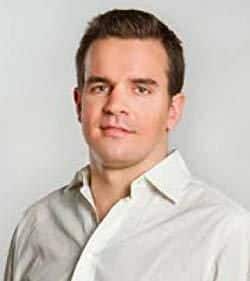

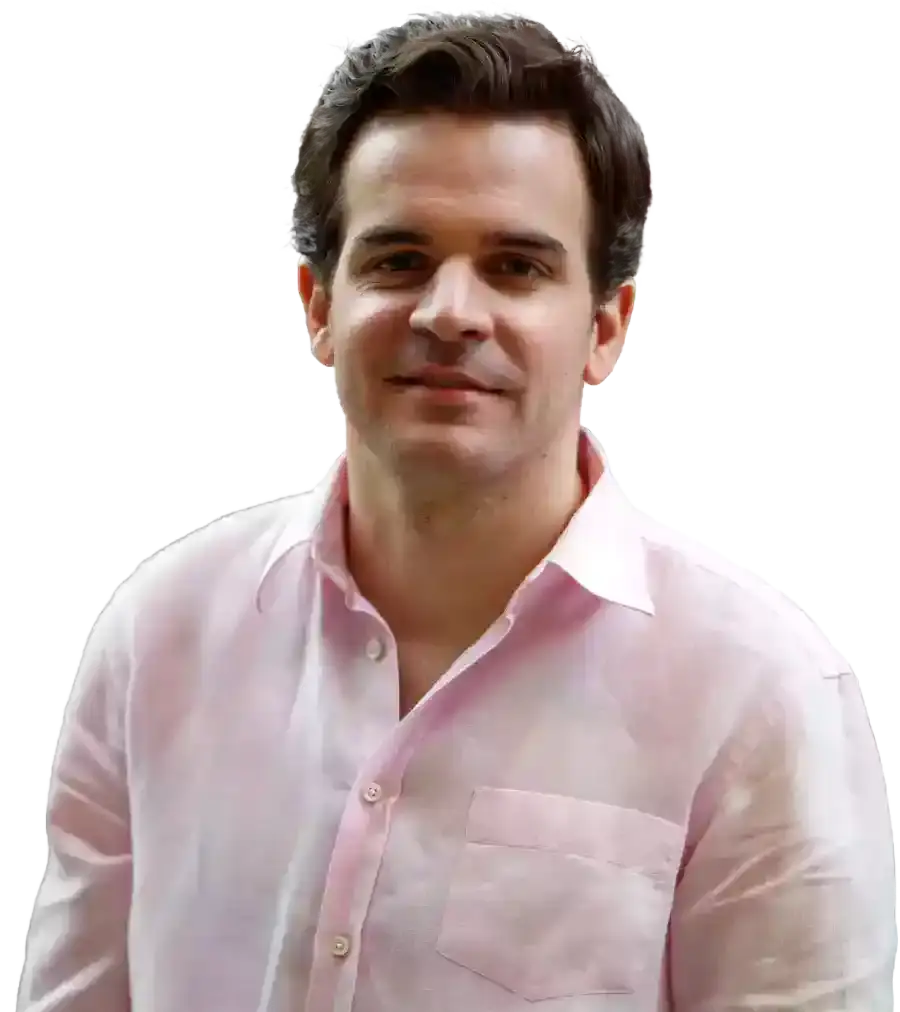
For Andrew Antos, the path to building a successful AI company began in an unlikely place: a family of scientists in the post-communist Czech Republic, followed by a brief career in law, and eventually a leap into the startup ecosystem at Harvard and MIT.
Today, Andrew is the founder of Klarity, which has secured funding from top-tier investors like Y Combinator, Quiet Capital, Picus Capital, Tola Capital, and Elad Gil.
In this episode, you will learn:
- Growing up in a highly competitive family of scientists in the post-communist Czech Republic instilled in Andrew Antos an early obsession with excellence, curiosity, and intellectual rigor.
- His brief career as a technology lawyer exposed him to M&A, venture capital structures, and corporate strategy—knowledge that later proved invaluable in building and fundraising for his startup.
- A pivotal moment came when Andrew met his co-founder, Nischal Nadhamuni, at MIT, where their shared belief that AI would become transformative led them to launch Klarity in 2017.
- In the early years, Klarity survived by operating more like an AI consulting company, solving custom problems for customers while waiting for the technology and market to mature.
- True product-market fit emerged in 2020 when the team discovered a powerful use case automating repetitive accounting and document-processing workflows for large enterprise teams.
- Klarity’s fundraising journey—raising over $91M—demonstrated how venture capital cycles often fluctuate between effortless and extremely difficult rounds depending on traction and market timing.
- Andrew’s biggest entrepreneurial lesson is simple: survival matters—because every additional day a startup stays alive increases the probability that it will eventually meet the right market moment.
SUBSCRIBE ON:
 iTunes
 Google Play
 Stitcher
 TuneIn
 RSS
RSS SoundCloud
 Spotify
Keep in mind that storytelling is everything in fundraising. In this regard, for a winning pitch deck to help you, take a look at the template created by Peter Thiel, the Silicon Valley legend (see it here), which I recently covered. Thiel was the first angel investor in Facebook with a $500K check that turned into more than $1 billion in cash.
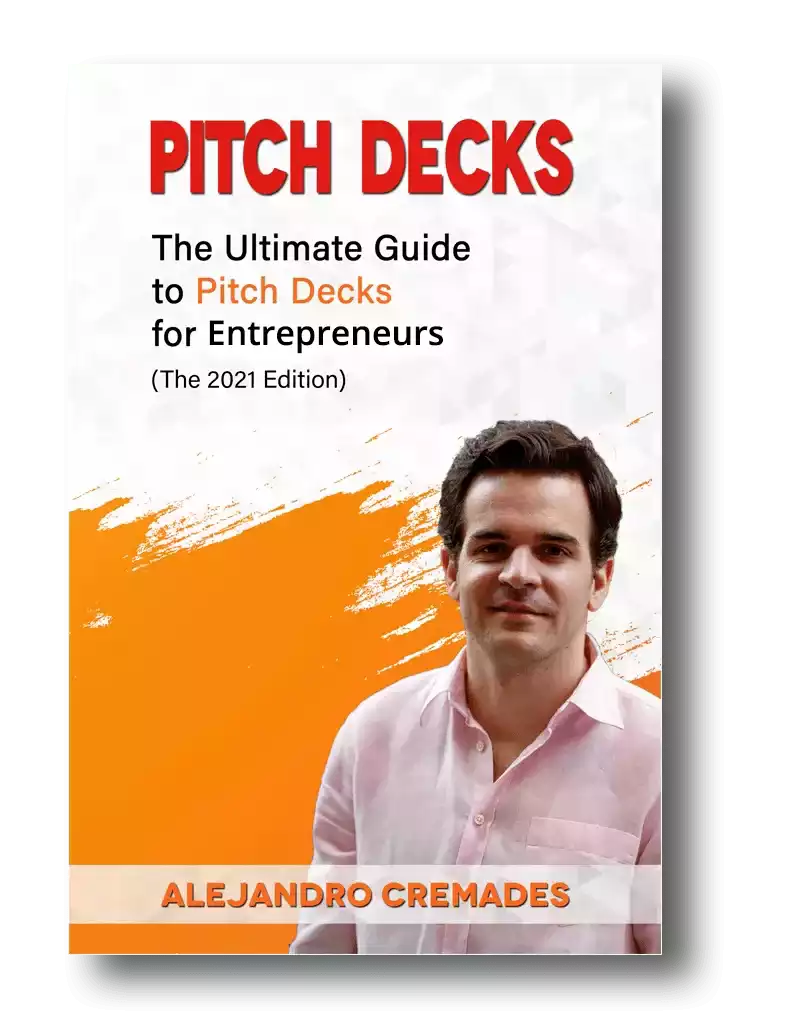
*FREE DOWNLOAD*
The Ultimate Guide To Pitch Decks
Remember to unlock for free the pitch deck template that founders worldwide are using to raise millions below.
About Andrew Antos:
Andrew Antos is CEO & co-founder of Klarity, which builds AI that helps enterprises discover how work actually happens, structure that knowledge into actionable intelligence, and improve continuously — replacing the episodic transformation model with permanent, compounding capability.
Raise Capital Smarter, Not Harder
- AI Investor Matching: Get instantly connected with the right investors
- Pitch & Financial Model Tools: Sharpen your story with battle-tested frameworks
- Proven Results: Founders are closing 3× faster using StartupFundraising.com
Connect with Andrew Antos:
Read the Full Transcription of the Interview:
Alejandro Cremades: All righty, hello everyone, and welcome to the DealMaker Show. So today the guest is, you know, for me it kind of brought me through memory lane because he went through a similar journey. He’s also a recovering lawyer, just like myself, but he’s had a really spectacular journey. And what they’re doing is remarkable. They actually were quite ahead of their time, but they were able to ultimately ride the wave. And now they’re doing great stuff.
Alejandro Cremades: So I guess really brace yourself for an inspiring conversation. We’re going to be talking about his upbringing, being in a very competitive and intense type of environment there in the Czech Republic.
Alejandro Cremades: Also, how he met his co-founder, how they went about building, how they went about raising, as well as their first customers and how they achieved product-market fit. So again, an amazing conversation in front of us. And without further ado, let’s welcome our guest today, Andrew Antos. Welcome to the show.
Andrew Antos: Thanks so much for having me, Alejandro. I’m super excited to be here.
Alejandro Cremades: Born and raised in the Czech Republic. Give us a walk through memory lane. How was life growing up over there?
Andrew Antos: Yeah, that’s right. So I was born one year before the communist regime ended. And I grew up mostly in a family where, for the last four generations, most people have been scientists.
Andrew Antos: My mom is a mathematician. My grandfather was a chemist, and so on. So I kind of grew up in that environment, especially in the 90s. Capitalism was starting to take hold, and I was very fascinated by that. I grew up in this super intense, super competitive environment.
Andrew Antos: And so it really started there. I think those were the years that shaped me, the late 90s and the early 2000s. There was this constant push toward excellence. For example, my mom never got anything other than an A in school all the way through her PhD and postdoc.
Andrew Antos: So it was a super intense environment. There were lots of stories where, if I got a B, it would be a complete disaster. I remember once I said, “Okay, well, I got an A on something.” My mom’s reaction was, “Well, so you’re resting on your laurels?”
Andrew Antos: Right, so it was that kind of environment. And for some reason, at the end of high school, I decided to become a lawyer. Similar stories to you. I felt like if I understood technology well—because I taught myself simple programming in high school—then that would be useful because most lawyers are super bad with technology.
Andrew Antos: So I went through undergrad and focused on everything technology-related. Then I decided to join a US-based law firm to basically work on tech M&A and regulatory matters.
Andrew Antos: And immediately, within about a year, I realized that I can’t be a lawyer. I don’t want to be a lawyer.
Alejandro Cremades: Well, why? What was that moment where you were like, man, this is not for me?
Andrew Antos: It’s that you’re not creating independent value. You’re selling your time for money. That was one really big component. And it just felt so not creative. There are occasional moments where you come up with something new, but 99% of the time you’re searching for something someone else has already done and you’re just doing it again.
Andrew Antos: And it just felt like the combination of not creating independent value in the world and constantly remixing existing work was not inspiring to me.
Alejandro Cremades: But I’m sure that at least you were able to learn quite a bit when it comes to M&A, structuring deals. What was there for you? Because I find that being part of a hypergrowth company and leading it, understanding and anticipating problems and structuring deals gives you a nice edge. So from that perspective, what was your biggest takeaway from the lawyer years?
Andrew Antos: Well, you’re absolutely right. You’re starting from third base on a lot of these things. You already understand how a corporation works, how you issue stock, get an investment, or grant equity.
Andrew Antos: But that’s actually not the heart of the company. You still have huge numbers of companies that become super successful if they find strong product-market fit, even though the founders originally know nothing about these things.
Andrew Antos: So it’s a nice-to-have, but I don’t think it’s a must-have. I actually think the number one thing I learned there was communication, especially written communication.
Andrew Antos: Getting really good at writing emails. I know that sounds funny in the world of LLMs, but being able to write really good emails when you’re reaching out cold to get your first customers is incredibly valuable.
Andrew Antos: Being succinct and articulating value clearly were probably the biggest learnings I got there.
Alejandro Cremades: So here you are in Europe working at a law firm. The whole idea of doing your master’s and coming to Harvard—how did that idea come knocking? And tell us why you thought the timing was right at that point.
Andrew Antos: Yeah, so I think there were two things. The first was growing up in that scientific family. A lot of my relatives invented or started things, but because this happened during communism, their work was taken away from them.
Andrew Antos: For example, one of my great aunts co-invented the soft contact lens people use today. She got a little plaque and hasn’t seen a single penny from it.
Andrew Antos: So I felt that if I wanted to build a business, I wanted to build it in a place with stability, longevity, and a large market. That place was the US.
Andrew Antos: The second part was creating mental space. I was working 100-hour weeks at the law firm, so I needed time to actually think. So I came to the US to do my master’s at Harvard.
Andrew Antos: The first thing I did was cross-register for a startup course at MIT called 15.390 New Enterprises. I cross-registered for the course during my third week in the US.
Andrew Antos: And I met this guy in class named Nischal. We hit it off instantly.
Andrew Antos: He was finishing his computer science undergrad at MIT, focused on machine learning and natural language processing. We hit it off and decided to pair up for the class.
Andrew Antos: Then we talked more and more, and we said, after we graduate, we should start a real company together. We met again after class and spent more than three hours walking around Cambridge.
Andrew Antos: That’s when we decided to build an AI company. The reason we felt we had to do it then was that AI was happening without us.
Andrew Antos: In September 2016 at MIT, people were literally sleeping overnight outside professors’ offices to sign up for machine learning classes.
Andrew Antos: They were all sold out. So we saw that environment and extrapolated it to the whole world. We thought, clearly this is happening everywhere.
Andrew Antos: And obviously, that wasn’t actually the case.
Alejandro Cremades: So then tell us about what happened next.
Andrew Antos: Yeah, so we worked on this first as a school project. Our first idea was applying AI to the legal profession. Could we automate due diligence and other legal workflows?
Andrew Antos: We worked on it as a class project for a year. Then we graduated. In the summer of 2017, we formally started the company.
Andrew Antos: We showed up to the real world saying, “Hey, we’re automating legal work with AI.” And nobody cared one bit.
Andrew Antos: AI really wasn’t a thing in the broader scheme of things. The technology wasn’t working well either. It was way before LLMs. Everything was clunky, heavy, and complicated.
Andrew Antos: So we got into Y Combinator and found a bunch of customers with very individual use cases. There wasn’t much commonality between them.
Andrew Antos: But it was good enough to help us survive for a couple of years. Then in 2020, we found our core product-market fit around automating document-related workflows for accounting teams.
Andrew Antos: If you’re a big enterprise like CrowdStrike or DoorDash, you have huge teams reading documents and reconciling information with ERP systems and writing accounting conclusions.
Andrew Antos: We figured out how to automate that. That was our first real product-market fit.
Andrew Antos: That allowed us to scale to a decent level. We signed a bunch of customers, raised our Series A about a year in, and then our Series B about two years later, which allowed us to scale further.
Andrew Antos: During that time, we realized we were effectively running AI transformation projects for customers. They would hire us, we would map their processes, redesign them for automation, implement the automation, and then do change management so teams could work with AI.
Andrew Antos: That implementation process was always the most painful part of our business. So we started building little agents and tools to make implementation easier.
Andrew Antos: We showed those tools to a few customers as a preview of how we wanted to streamline implementation. Their reaction was, “Can we buy this?”
Andrew Antos: So we launched it as a separate product. Now it’s the core driver of our business. It quickly grew larger than the original product, which we still support.
Andrew Antos: But this new product skyrocketed.
Alejandro Cremades: So for the people listening, what ended up being the business model of Klarity? How do you make money?
Andrew Antos: We’re a subscription enterprise model. We typically define a scope—maybe finance transformation with AI, HR transformation, sales operations, revenue operations, or commercial operations.
Andrew Antos: Once we understand the scope—for example, if a company has 500 people in these teams—we offer a subscription. Then they can use the product as much as they want within that scope.
Alejandro Cremades: You guys started this about eight years ago. Back then, AI wasn’t mainstream. ChatGPT didn’t exist the way people know it today, and companies like Anthropic weren’t around either.
Alejandro Cremades: You were ahead of the curve. That creates challenges because when you’re too early, adoption is difficult. How did you navigate those early years so you could survive until the wave formed?
Andrew Antos: You’re exactly right. We actually started the company even before the “Attention Is All You Need” paper came out, which laid the intellectual foundation for modern LLMs. We started about three months before that paper.
Andrew Antos: So we were way too early.
Andrew Antos: There are two things. First, every company needs to constantly obsess about finding customers.
Andrew Antos: Right. We always had customers. We would always sell, and we would always learn how to sell. We would learn how to support customers and how to drive real value, even though the first couple of years the business looked much more like a consulting business than a product business. Right. We were solving all kinds of different use cases.
Andrew Antos: The one thing that really stuck with us was something we read very early after we started the company. We read a quote—I don’t even remember who said it—but it was about how every single day that you stay in business, your chances of succeeding grow exponentially.
Andrew Antos: Right? Because the market, the preferences, and everything else are moving around you. Technology is moving around you. So the longer you stay in business, the higher your chance of success. And I think that’s something we always kept in mind. We would constantly think about what the next step was, how we could solve the next problem, and how we could move a little bit forward.
Andrew Antos: And eventually, to your point, the technology and the market caught up.
Andrew Antos: Then it was just like, okay, we know how to sell. We know how to talk about AI. We know how to build products that the world’s largest companies can rely on and trust. We know all of these different things.
Andrew Antos: And the market shifted around us, the technology shifted around us, and then it was just like, okay, now we just need to execute.
Alejandro Cremades: So talk to us, too, about the journey of raising money. I mean, you guys have done it all—gone through the accelerator experience, raised money from top, high-profile investors, and done it as a foreigner too, which is not easy, by the way. I’m a foreigner myself, so I know that journey of building networks and being intentional about it. So talk to us about how the journey of raising the money was and what it was like going through the motions.
Andrew Antos: Yeah, one really interesting pattern I’ve noticed is that for every round you can think of, one is really easy, the next one is really difficult, the next one is really easy, and the next one is really difficult.
Andrew Antos: When we first started the company in fall 2017, we just needed to raise a little bit of “ramen money,” basically, just to keep the business afloat and pay rent.
Andrew Antos: That was super easy. It happened in a matter of three days. We had a deck, we had an idea, and that worked really well.
Andrew Antos: Then we decided we wanted to get into Y Combinator. We also wanted to move the company from Boston to Silicon Valley because we felt that all the activity around AI was happening there.
Andrew Antos: So we needed to be there as well.
Andrew Antos: For Y Combinator, we actually applied three times. The first time we were rejected. The second time we were rejected. The third time we were re-interviewed.
Andrew Antos: They did one interview and said, “We’re not sure. You guys made some progress, but we’re not sure.”
Andrew Antos: Then they re-interviewed us, and finally they accepted us. So that process was super hard.
Andrew Antos: After that, we raised our seed round—about $2 million, so a fairly small seed round. Back in 2018, that was still a decently sized round.
Andrew Antos: We raised that in about 24 hours. That was very easy because we had signed some big customers like Salesforce. So raising that round was very straightforward.
Andrew Antos: Then we were just treading water for a couple of years.
Andrew Antos: Our Series A was very difficult because nobody cared about AI in 2021.
Andrew Antos: That was pre-AI hype, so nobody really cared about that space. But then our Series B was raised in three days.
Andrew Antos: So the big meta point is that we learned three things.
Andrew Antos: First, you need very strong traction—good numbers.
Andrew Antos: Second, you need a very clear story. Investors need to understand what problem you’re solving, what’s unique about the way you’re solving it, and then see the traction and the numbers.
Andrew Antos: And the third thing we learned—and I hope this isn’t disheartening—is that a lot of it is random because it depends on investor sentiment.
Andrew Antos: A lot of investors invest based on a thesis. They might say, “Right now I’m investing in vertical SaaS,” or “Right now I’m investing in context graph companies,” which is what we do, and which is a hot space right now.
Andrew Antos: So a lot of it is about timing. Is the investor already thinking about the space and evaluating whether you’re the company they want to bet on? Or are they still trying to understand the market and the opportunity?
Andrew Antos: Those are the three core learnings.
Alejandro Cremades: And what about investor access? Because when you arrive here as a foreigner or immigrant, you don’t know anybody. How did you get access to investors and open the right doors?
Andrew Antos: I think there are a couple of things.
Andrew Antos: The first is that a lot of credit goes to Y Combinator. We established a lot of our early network in the US through Y Combinator. We met a lot of partners and other founders there.
Andrew Antos: It’s kind of like a network effect. You meet one person, they introduce you to three others, and it grows from there.
Andrew Antos: The second thing that is really important—and something that really drew me to San Francisco and Silicon Valley—is that people evaluate you primarily on merit.
Andrew Antos: They ask, are you building something interesting? Are you getting traction? Are you getting enterprise customers?
Andrew Antos: That’s really unique about Silicon Valley. You can get meetings there that I honestly haven’t seen as easily in Europe or even on the East Coast.
Alejandro Cremades: So talk to us about the vision as well. Obviously, when you raise money, investors are betting on a vision.
Alejandro Cremades: Investors, customers, employees—they’re all betting on it.
Alejandro Cremades: Just out of curiosity for everyone listening, what’s the total amount raised to date?
Andrew Antos: 92 million.
Alejandro Cremades: Now obviously investors bet on a vision.
Alejandro Cremades: Let’s say you go to sleep tonight and wake up in a world where the vision is fully realized. What does that world look like?
Andrew Antos: What we do is help large companies and enterprises adopt AI and actually get value out of it through transformation.
Andrew Antos: If you think about the problem every executive in a Fortune 2000 company is grappling with today, it’s this: how do I implement AI in a way that meaningfully improves my operating or financial metrics?
Andrew Antos: How do I grow revenue faster? How do I cut costs? How do I accelerate my business?
Andrew Antos: We call this the 80-20 problem.
Andrew Antos: The 20% part is buying AI tools like GPT, Claude, Gemini, or other licenses.
Andrew Antos: The bigger part is the 80%: change management.
Andrew Antos: How do you teach people to use these tools so they can work faster and better? How do you redesign processes?
Andrew Antos: I was just talking to a customer yesterday who said they had a process that took 60 days on average.
Andrew Antos: After reimagining it with AI and Klarity, it now takes three days.
Andrew Antos: They collapsed the number of approvals and automated much of the execution, especially around marketing asset generation.
Andrew Antos: So the question becomes: how do you redesign processes that were built for a different world?
Andrew Antos: How do you change people’s roles and responsibilities?
Andrew Antos: Many of our customers are doing what we call rollups.
Andrew Antos: For example, if AI can generate marketing content or sales content, do you still need a separate sales enablement person?
Andrew Antos: Instead, you might have what we call a full-stack account executive who owns their pipeline.
Andrew Antos: You may not need a business development representative because agents can handle parts of that work.
Andrew Antos: When you’re selling, you also need less support because agents can generate many of the assets you need.
Andrew Antos: AI can even review negotiations and assist in contract discussions.
Andrew Antos: What we do is take all this complexity around people, processes, and use cases and package it into a series of agents that help enterprise executives get real value.
Andrew Antos: The world we envision is one where our customers build exponential organizations.
Andrew Antos: People are happier working there. They’re more productive. They move faster.
Andrew Antos: And they get more satisfaction from their work.
Alejandro Cremades: That sounds like a beautiful world, Andrew.
Alejandro Cremades: So we’ve talked about the future. Let’s take a step back and talk about the past.
Alejandro Cremades: Imagine going back about eight years to when you were at Harvard and just coming out with a business plan or a pitch deck.
Alejandro Cremades: If you could give that younger Andrew one piece of advice before launching a business, what would it be and why?
Andrew Antos: That’s really hard. Can I cheat and say two things?
Alejandro Cremades: Let’s hear it.
Andrew Antos: The first one is simplify, simplify, simplify.
Andrew Antos: The best and most powerful ideas are really simple and straightforward. You should be able to explain them quickly.
Andrew Antos: I think we tend to overcomplicate things a lot.
Andrew Antos: The second thing—and you hinted at it earlier—is relationships.
Andrew Antos: Every year I ask myself what the biggest lesson of the past year was.
Andrew Antos: And every year the answer is that relationships and networks matter more than I thought they did the previous year.
Andrew Antos: That has been true every year since the start of the company.
Andrew Antos: So my advice would be simplify, simplify, simplify—and build strong relationships early.
Alejandro Cremades: For the people listening who would love to reach out, say hi, or learn more, what’s the best way for them to do so?
Andrew Antos: Absolutely. I’m Andrew at Klarity—it’s spelled with a K.
Andrew Antos: So it’s K-L-A-R-I-T-Y.ai.
Andrew Antos: I’d love to chat.
Alejandro Cremades: Easy enough.
Alejandro Cremades: Andrew, thank you so much for being on the DealMaker Show today. It has been an absolute honor to have you with us.
Andrew Antos: Thanks so much for having me, Alejandro. This was a lot of fun.
*****
If you like the show, make sure that you hit that subscribe button. If you can leave a review as well, that would be fantastic. And if you got any value either from this episode or from the show itself, share it with a friend. Perhaps they will also appreciate it. Also, remember, if you need any help, whether it is with your fundraising efforts or with selling your business, you can reach me at al*******@**************rs.com
Podcast: Play in new window | Download
Subscribe: Apple Podcasts | Spotify | TuneIn | RSS | More
Facebook Comments