

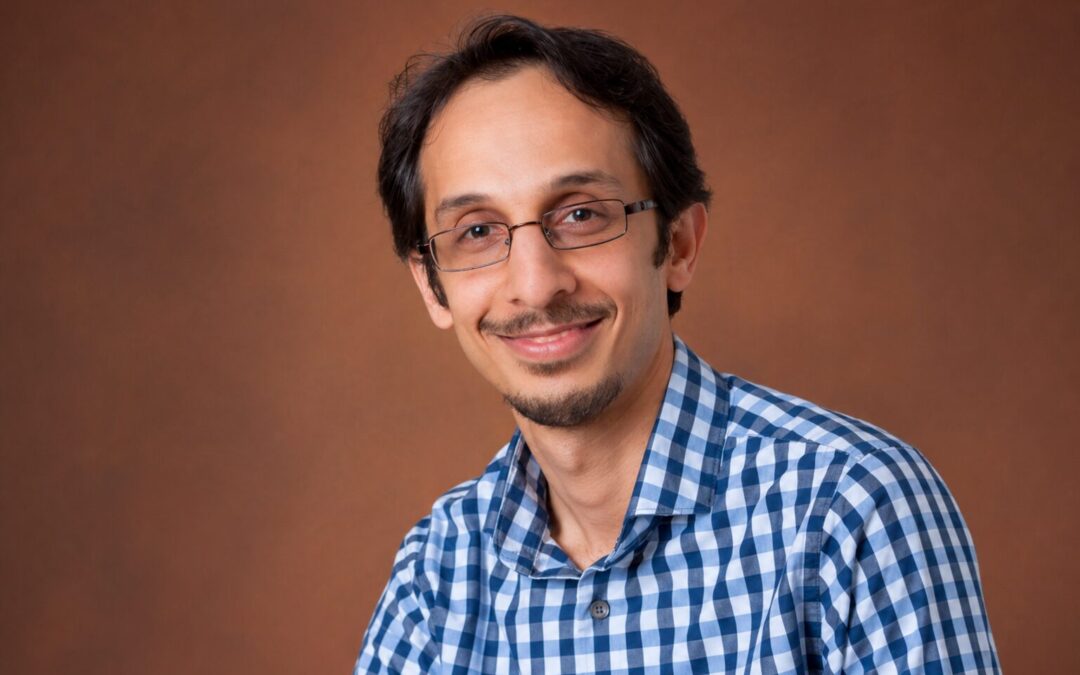
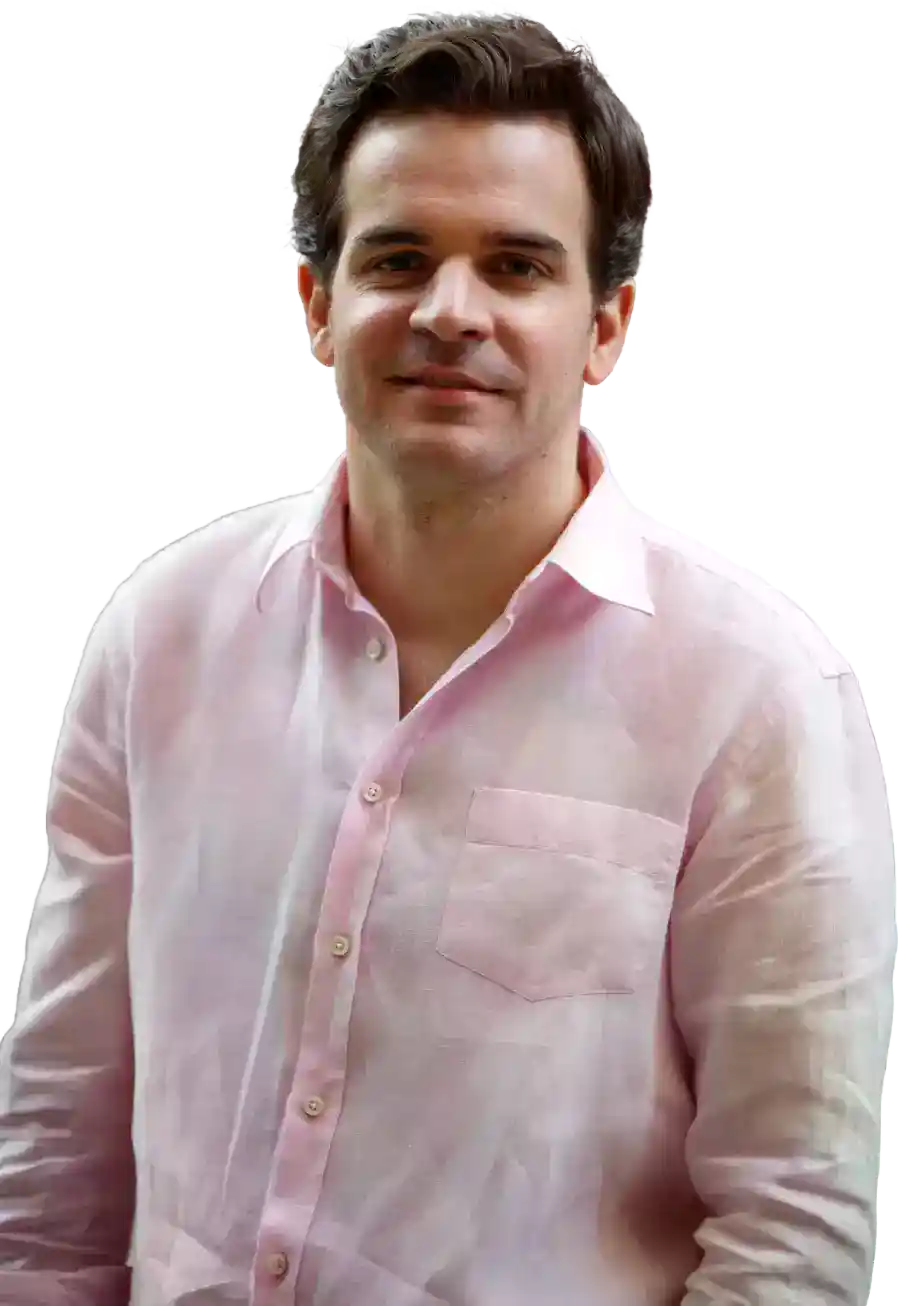
Ali Agha is among the rare founders who have bridged the gap between the fascinating world of theoretical robotics and reliable, real-world applications. He has overcome the challenges in the promising field of robotics, which, up until now, has only been impressive in controlled spaces.
Ali’s venture, FieldAI, has secured funding from top-tier investors, such as Bezos Expeditions, BHP Ventures, Canaan Partners, Emerson Collective, and Intel Capital.
In this episode, you will learn:
- Real-world robotics demands systems that can survive uncertainty, not just perform in controlled environments.
- Ali Agha’s journey shows how deep theory becomes powerful when tested against real-world complexity.
- FieldAI is building robot brains that combine physics, uncertainty, and AI to operate safely at scale.
- The biggest opportunity in robotics may not be hardware, but the software that unlocks its full potential.
- Robots that work without GPS, maps, or perfect data can transform dirty, dull, and dangerous industries.
- Raising $400M gave FieldAI the fuel to accelerate deployment, data collection, and customer adoption.
- For deep-tech founders, technical brilliance matters only when it translates into product value and customer ROI.
SUBSCRIBE ON:
 iTunes
 Google Play
 Stitcher
 TuneIn
 RSS
RSS SoundCloud
 Spotify
Keep in mind that storytelling is everything in fundraising. In this regard, for a winning pitch deck to help you, take a look at the template created by Peter Thiel, the Silicon Valley legend (see it here), which I recently covered. Thiel was the first angel investor in Facebook with a $500K check that turned into more than $1 billion in cash.
*FREE DOWNLOAD*
The Ultimate Guide To Pitch Decks
Remember to unlock for free the pitch deck template that founders worldwide are using to raise millions below.
About Ali Agha:
With nearly two decades of expertise in pioneering AI and autonomy algorithms across diverse robotic platforms, Dr. Ali Agha is leading FieldAI’s strategic vision and product development.
Prior to FieldAI, during his distinguished 7-year tenure at NASA’s Jet Propulsion Laboratory (JPL), Dr. Agha was Principal Investigator for some of the nation’s most high-profile and cutting-edge projects in autonomy, including the DARPA Subterranean Challenge, DARPA RACER (Self-driving off-road cars), NASA’s Autonomous Mars Cave Exploration, and Coordinated Autonomy for Prototype Mars Helicopter-Rover.
Dr. Agha led the CoSTAR team (JPL-MIT-Caltech-KAIST-LTU), which won the Urban phase of 2020 DARPA Challenge focused on exploring unknown complex urban environments. Prior to JPL, Dr. Agha was a researcher at MIT and Qualcomm.
Raise Capital Smarter, Not Harder
- AI Investor Matching: Get instantly connected with the right investors
- Pitch & Financial Model Tools: Sharpen your story with battle-tested frameworks
- Proven Results: Founders are closing 3× faster using StartupFundraising.com
Connect with Ali Agha:
Read the Full Transcription of the Interview:
Alejandro Cremades: Alrighty, hello everyone, and welcome to the DealMakers show. So today we have an awesome founder. We’re going to be talking quite a bit about robotics, so I hope that you’re ready for this journey. Incredible what he’s building now with this company. They’ve raised quite a bit—$500 million plus. And we’re going to be discussing the journey, and also how he went from more of an academic background to really implementing and having that technical depth, and how that looks when you apply it to execution.
Alejandro Cremades: Quite the rocket ship that they’re building. So again, brace yourself for this really inspiring conversation. So without further ado, let’s welcome our guest today, Ali Agha. Welcome to the show.
Ali Agha: Awesome. Great to be here, Alejandro.
Alejandro Cremades: So originally you were in a snowy region of the world, and essentially you had this fascination with math from the very early days. So that fascination—where did it come from?
Ali Agha: Yeah, I mean, as far as I remember, I always loved math. I always loved tinkering with tools and engineering, putting a few batteries together and making a motor start spinning.
Ali Agha: I always loved playing with toys that could do something a little bit on their own, right? Even if it was simple, it was always with me. And I think over time it just grew as I learned more—like, oh, I can actually code and bring something to life, and have these machines do something, have a piece of software do something and create something. It just grew more and more in me over time.
Ali Agha: All of that, I think, led to where I am now. That passion led me to join a robotics team during my undergrad, even from the early years, building robots and programming them.
Ali Agha: From following a line in the very first robot I made, like two decades ago, all the way to small soccer robots kicking an orange ball in RoboCup-like competitions, and just making them smarter and smarter. But that’s how it all started for me.
Alejandro Cremades: So talk to us about coming to the U.S., because coming to the U.S. via Texas, where you were doing your PhD, was quite a pivotal moment.
Ali Agha: Yeah, I mean, like I mentioned, in my undergrad and master’s, I was doing quite a bit of robotics. I did both in a program between electrical engineering and computer science.
Ali Agha: Working on these RoboCup competitions started to instill in me how much work needs to be done on the theoretical side, and how much work is needed to improve the algorithms for these platforms to actually handle real-world performance.
Ali Agha: So during my master’s, even before coming to the U.S., I moved to more sophisticated platforms. Still within robotics competitions, but in a different league where we were building rescue robots—tracked robots with flippers, very complex platforms going over unstructured environments. It was a lot of fun.
Ali Agha: I started to appreciate how critical it is to have robust methodologies to understand the world, understand the state of the robot, where it is, how it makes decisions, how to do those safely, and how it learns over time.
Ali Agha: And from that small school on the other side of the world, we came and won best mobility at RoboCup competitions in Atlanta, Georgia.
Ali Agha: This was around 2006–2007. From there, that appreciation for needing better technologies and theoretical frameworks for robust behavior led me to move to Texas to do my PhD in computer science.
Ali Agha: In my PhD, I actually took more courses from the math department than any other department. That was really to go deep into elements of the solution I believed robots required to operate reliably—beyond what was in textbooks.
Ali Agha: When you go into the real world, you’re not dealing with linear systems or Gaussian noise. A lot of assumptions that are important for building fundamentals don’t directly apply.
Ali Agha: You need to learn them, but then go beyond them to develop solutions that survive off-nominal cases and real-world complexities.
Ali Agha: That appreciation from deploying robots in competitions helped me appreciate the depth of theory. So during my PhD, I went deep into probability theory, stochastic differential equations, understanding risk, and quantifying uncertainty.
Ali Agha: We did some very interesting work, wrote seminal papers, and introduced new frameworks that made robots smarter and able to accomplish tasks beyond what was previously possible. It was a pretty fun time.
Alejandro Cremades: Which was quite a shift too—going from academia, then MIT, to places like Qualcomm or NASA. At what point did you think that making that shift in your career was the way to go?
Ali Agha: I don’t really see it as a shift. I think it was a natural progression. After my PhD, I moved to MIT as a postdoc.
Ali Agha: I worked with an incredible group of people, and started taking what I had done in my PhD—from single robot autonomy—to coordinated operations across teams of robots.
Ali Agha: Flying platforms coordinating with ground platforms in a decentralized manner. That was a deeper level—multi-agent autonomy and multi-agent AI.
Ali Agha: During that period, I met my co-founder. He was one of the best students I supervised as a postdoc, and he later went to DeepMind.
Ali Agha: For me, I moved from MIT to Qualcomm because I became fascinated with building small models that run on resource-constrained platforms.
Ali Agha: Qualcomm was getting into robotics, drones, and self-driving cars, and we were exploring putting algorithms onto their processors. I contributed to bringing perception and autonomy onto their chips.
Ali Agha: We did the first CES show for them on robotics and drones. It was an incredible experience and still a natural progression of my work—just now on constrained platforms.
Ali Agha: That caught NASA’s attention. At the time, the Mars helicopter wasn’t publicly announced, but NASA was exploring Qualcomm’s processors for it. That’s how I transitioned to NASA.
Ali Agha: I was fascinated by this once-in-a-lifetime opportunity.
Alejandro Cremades: What was the level of intensity there? Because I believe it was quite intense.
Ali Agha: Yeah, I think my work at NASA had two parts. On the management side, I was a group supervisor in aerial mobility and later in perception.
Ali Agha: As you know, the Mars helicopter flew with a Qualcomm chip. Watching the NASA JPL team operate at that level of intensity was incredible.
Ali Agha: You can’t move Earth and Mars relative positions. The launch date is fixed. Everything must be done perfectly. I learned a lot about reliability and how NASA operates.
Ali Agha: But the most intense part was pushing my ideas from years of work into real-world impact.
Ali Agha: I started writing grants, got many of them, and initiated over 10 projects at JPL.
Ali Agha: These ranged from sending legged robots into Mars-analog caves with no prior knowledge or communication, to leading DARPA challenges.
Ali Agha: I was PI for DARPA Subterranean Challenge and DARPA RACER—major breakthroughs in robotics.
Ali Agha: In the Subterranean Challenge, we sent teams of robots—wheeled, legged, flying—into unknown environments to map and detect objects.
Ali Agha: You have one hour to run what hundreds of people built over three years. The level of reliability required is unbelievably high.
Ali Agha: Every piece of the team depends on each other. One mistake—a line of code, a loose cable—can impact everything.
Ali Agha: It was a very unique experience. I don’t remember a single weekend during those years. It was day and night work with an incredible team.
Ali Agha: Pre-COVID, we won the global competition. Post-COVID, NASA shut down and we dropped the project, but the learnings were massive.
Ali Agha: We pushed the state of the art across autonomy, multi-agent systems, and unified brain architectures.
Ali Agha: Then came DARPA RACER—large vehicles navigating off-road with no GPS or maps.
Ali Agha: The team moved there, and we pushed the technology even further. These competitions enabled major breakthroughs in robotics.
Ali Agha: The intensity was massive.
Alejandro Cremades: After NASA, when did the idea of Field AI come to you?
Ali Agha: It was a natural progression. At NASA, we were seeing the roadmap ahead, and at the same time hardware was getting commoditized.
Ali Agha: Robots that used to cost millions were becoming more affordable. Edge compute was improving, allowing more processing on-device.
Ali Agha: Talking with my co-founder and colleagues, we saw two ends of the spectrum.
Ali Agha: On one side, foundation models—powerful, generalizable, but prone to hallucination and not grounded in physics.
Ali Agha: On the other side, physics-driven systems—reliable and interpretable, but harder to scale.
Ali Agha: Very capable, but if you move it from one setting to another, you have to tune a bunch of parameters. So we were discussing what architecture would have the benefit of both worlds: deployable, safe, and not hallucinating, while at the same time generalizing very rapidly.
Ali Agha: There was basically an aha moment there from hardware commoditization and the architectural piece. So we started the company with the idea that we would not do the vanilla transformer that has been incredible in conversational AI. Instead, we would bring something to the community that is a totally different architecture, one that, from day one, embeds arcade, physics, and uncertainty quantification into the model’s elements that we were incredibly good at.
Ali Agha: Hence, these are not LLM-like solutions that you later show and find ways for them not to hallucinate, or that need massive, massive levels of data to reach a certain basic level of performance. By baking in all the things that we were good at—physics, uncertainty, quantification, and all that—from day one, could we have a system that is deployable while also bringing the benefit of foundation models so they can generalize?
Ali Agha: So we started a company with that idea. And given that architecture, because that architecture was the key, we were able to very quickly go to customers with it.
Ali Agha: From day one, we have been deploying. And again, not only has the architecture helped us penetrate the market because it was deployable, but it has also helped us attract talent. Whenever we talk to incredible talent from all the institutions that we have attracted talent from, we show that, look, this is a different architecture. This is not your traditional transformer.
Ali Agha: From day one, you get all these benefits, and you learn similar behaviors with a much, much lower level of data. You have much better guardrails around hallucination of these networks, and hence, you can safely deploy these. That has been giving us a lot of momentum in the company.
Alejandro Cremades: So, for the people who are listening, what ended up being the business model of Field AI? How do you guys make money?
Ali Agha: Yeah, at Field, we build robot brains, right? Brains that sit and operate on different types of robots, in different types of environments, and across many different tasks. So it’s a very general-purpose solution. We are a highly horizontal company in that sense.
Ali Agha: Our high-level model is software or robot-as-a-service. Some of our customers, we provide a full solution. For others, we provide the brain, and they basically expand it within their ecosystem and just license the software. Today, we are deploying different types of platforms, from multi-ton, very large vehicles and wheeled platforms, all the way to small dog robots and humanoids.
Ali Agha: So it is highly generalizable across modalities, and we deploy these across different business units, with construction being one of the main ones.
Ali Agha: The other ones are energy and manufacturing sectors, as well as urban operations like last-mile delivery, security, and federal. What we commonly see across these business units is what we call DDD. These are dirty, dull, and dangerous environments. Typically, we are in settings where we don’t necessarily have anybody cleaning up the world for us, or giving us, “Here’s a trajectory. I teach, and you repeat it.” We don’t do that. We don’t need a prior map of the world. We don’t necessarily need GPS.
Ali Agha: You deploy them into the environment like you deploy an intern or a worker, and they understand the context and start from there. The reason we can do that, even if we don’t have billions of tokens of data from that environment, is that the physics piece and uncertainty quantification piece that we have baked into these architectures come in as soon as you’re about to hallucinate.
Ali Agha: They adjust the behavior of the platform, allow you to be safe, and hence allow you to deploy. That creates a flywheel of data because you deploy and collect data. Those are the sectors where we deploy it, and the services we provide in these sectors are things that we see and analyze, things that we carry and move, and things that we modify with hands, from opening doors to picking up objects and all the way to coordinating different assets in a multi-agent fashion.
Alejandro Cremades: So for you guys, Ali, I mean, you have raised $500 million, which is a fair amount of money. Obviously, a business like Field AI requires capital. It could be capital-intensive. How has the journey of raising money been, going through the motions and the different cycles too?
Ali Agha: Yeah, in general, we are actually, again, thanks to the architecture, pretty lean in the sense that we learn with a lower level of data. And because we have deployed, we have revenues flowing in. In general, we are in very robust shape there. Even from our last round, the majority of it is still available resource-wise for us.
Ali Agha: So we are pretty lean there. At the same time, given the requests and accelerated interest in the physical AI world, and people seeing what robots can do and how fast they deliver ROI to them, we are getting a lot of demand. We have expanded a lot of our customers. As a result, fundraising has always been a great thing for us to help accelerate deployment of these solutions, help accelerate penetration into the market, accelerate our data flywheel, and improve the model.
Ali Agha: We have been very fortunate. I think in the last few rounds, it has been mostly inbound interest. From our very early days, big thanks to our partners like Khosla Ventures, Canaan Partners, Emerson Collective, and many others. They came and found us. They heard from our early partners and customers.
Ali Agha: All the way to the later-stage raises, again with incredible partners like Nvidia, Jeff Bezos, Bill Gates, Intel, Samsung, Prism Capital, and so on, we have always had the luxury of getting these requests from all of these names and not having to spend too much time on fundraising.
Ali Agha: We have been heads down on building and pushing on the business side. So it has been a good journey, I would say, so far. Now, the biggest focus of the company is really to accelerate our flywheel between data and model, improve our product, and make that experience for customers so enjoyable that adoption starts getting even faster.
Alejandro Cremades: So obviously, when the investors come in, or when you have employees—you have about 300 plus—they’re always betting on a vision, right? So if you go to sleep tonight, Ali, and you wake up in a world where the vision of Field AI is fully realized, what does that world look like?
Ali Agha: Yeah, the direction we are going in is really ambitious. Again, we are a very horizontal company. We are building brains that sit on many different types of platforms.
Ali Agha: The model doesn’t care about the vehicle dynamics. It builds a world model that sits on different four-legged and two-legged platforms, and similarly goes to different environments. Now we have been on hundreds and hundreds of sites.
Ali Agha: There is very high variation across them, from construction to manufacturing, to urban operations, to federal applications. If you think about it, that’s a very expansive market for us. As the solutions are maturing, the vision we are seeing in front of the company is that, in the next five years, there will be millions and millions of moving machines and robots in the world carrying out many, many different tasks.
Ali Agha: We see the Field AI brain operating on many of these machines and making sure these operations are happening in a safe and responsible way.
Ali Agha: Again, back to the architecture that I talked a lot about. Having that physics awareness from day one, having that uncertainty and risk awareness, allows these models to understand the risks in the environment and operate in a safe way.
Ali Agha: So being able to push these robots into places that have been beyond the limits of traditional solutions and robots is a massive vision for us here. It doesn’t really stay just within the bounds of what we are doing now in the industrial sector.
Ali Agha: If you think about it, multi-agent solutions are coming as another sector. If you’re building a brain that operates across a heterogeneous team of assets, it can basically help you grow and penetrate into markets that were traditionally off-limits for robotic solutions.
Ali Agha: Down the road, from Earth to the lunar surface, we see robots becoming incredibly critical—from construction to operation, to increasing productivity and increasing safety. We are seeing massive labor shortages across many of the sectors we are deploying in.
Ali Agha: So we see ourselves as one of the main key players there, making sure these robots are deployed at scale, in a safe way, and in a responsible way.
Alejandro Cremades: So, talking about key players, do you think the key players down the line will be the ones that get the robot right or the LLM right?
Ali Agha: I strongly believe the main thing we are missing is the software component. Of course, there’s no question hardware needs a lot more improvement, and it’s going to improve a ton. We are going to see a variety of different robots coming out. We are going to see more robust, more cost-affordable platforms coming up.
Ali Agha: But if you think about it today, even with very cost-affordable robots, the physics of the platform can do a lot. If you give it to an expert in teleoperation, they can actually extract a massive amount of value out of it, which means there’s not much limit—or at least, they can do a lot more than what we are extracting out of them even today.
Ali Agha: So the question is: can you build the AI and a solution that does what the world champion in controlling a drone or controlling a robot can do? And the answer is yes. We have seen, and we are seeing, the progress and speed in improving the software. For sure, we are going to see superhuman performance there.
Ali Agha: The moment you hit that superhuman performance across a variety of different tasks, you are unlocking a massive, massive market. All that is to say, I think software is going to be a defining factor moving forward. It’s going to change how we look at these machines, and it’s going to change how we live as physical AI gets closer and closer to its, if you will, ChatGPT-type moment.
Alejandro Cremades: Now, we’ve been talking about the future. I want to talk about the past, but with a lens of reflection. Let’s say I bring you back in time to that moment where you were thinking about stepping down from your position at NASA.
Alejandro Cremades: Let’s say, right before you’re pending your resignation or your notice, you’re able to show up and have a conversation with that younger Ali and give that younger Ali one piece of advice before starting Field AI. What would that be and why, given what you know now?
Ali Agha: I think one of the things we got right, and what I would recommend to the next generation who want to come into entrepreneurship and build a company, is obsession with the product and the customer.
Ali Agha: I think this served us well and best. We, as a technology team, had the risk of being able to solve any problem, which might seem good, but in the startup sector, it could be dangerous. If you’re technologically very capable, you can actually solve any problem somebody throws at you, and then find yourself in a situation where you’ve solved incredible problems and gained a lot of satisfaction from the models and solutions you built.
Ali Agha: But it might be too late to realize, okay, is this actually going to be something people adopt? Because adoption across tens of solutions is very different from adoption across millions. At millions, it’s a very different game from the ROI perspective, from the cost perspective, and from understanding the exact value the customer wants.
Ali Agha: If I were to share one thing, it would be that thinking about those elements early on is extremely important, especially for very deeply technical founders. Otherwise, you risk having too much fun building a solution, and it might be too late at some point to go back and course correct.
Ali Agha: So yeah, I think the obsession with what would actually enable the solution to be deployed at millions, and baking that into your framework, both on the business side and the technology side, would be the most critical thing to build the type of startup that we are building—a deep tech startup.
Alejandro Cremades: So for the people who are listening, Ali, and would love to reach out and say hi, what is the best way for them to do so?
Ali Agha: Very easy. I think from our website, from our team, LinkedIn—many, many different ways. We would welcome people to come to the office. We have offices in different locations in the Bay Area, robots in Irvine, SoCal, Boston, and Pittsburgh.
Ali Agha: Tokyo, Singapore—yeah, we’d love to get emails from them, LinkedIn messages, and not just me, but the rest of the company as well.
Alejandro Cremades: Amazing. Well, Ali, thank you so much for being on the DealMaker Show today. It has been an absolute honor to have you with us.
Ali Agha: Awesome. Amazing. Thank you very much.
*****
If you like the show, make sure that you hit that subscribe button. If you can leave a review as well, that would be fantastic. And if you got any value either from this episode or from the show itself, share it with a friend. Perhaps they will also appreciate it. Also, remember, if you need any help, whether it is with your fundraising efforts or with selling your business, you can reach me at al*******@**************rs.com
Podcast: Play in new window | Download
Subscribe: Apple Podcasts | Spotify | TuneIn | RSS | More
Facebook Comments